




E-1 Visa to Green Card: Your Options & Best Path
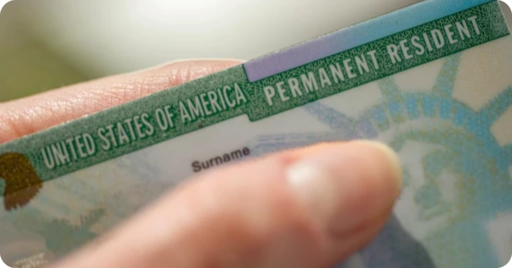
E-1 holders can transition to permanent U.S. residency and get a Green Card, but doing so requires more planning than most work visas.
The E-1 visa allows people from the State Department’s list of treaty countries to enter the U.S. and engage in substantial trade. Unlike some temporary work visas, such as the H-1B or L-1, this nonimmigrant category lacks dual intent, the ability to file for permanent residence while in E-1 status. But that doesn’t mean a Green Card is out of reach.
Many E-1 holders have transitioned to permanent residency by strategically pursuing employer-sponsored, family-sponsored, or investor pathways.
How to go from an E-1 visa to a Green Card
There are three main routes that people under E-1 status can take to become permanent residents, says Manifest immigration attorney Ana Gabriela Urizar: “Since the E-1 does not allow you to file for a Green Card immediately, you’ll need to change your intent from nonimmigrant to immigrant. You can’t just file Form I-485 the way an H-1B holder might.”
Employment-based Green Cards
Through an employment-based Green Card, E-1 treaty traders can obtain permanent residence through an employer sponsor or by self-petition. This pathway can also move quickly, as U.S. Citizenship and Immigration Services (USCIS) allows premium processing for Form I-140, the Immigrant Petition for Alien Workers.
Depending on their individual skills, some categories that could be great fits for E-1 holders include:
- EB-1A: Designed for individuals with extraordinary ability, and allows for self-petitioning
- EB-2 NIW: Allows workers to bypass lengthy labor certification requirements by filing a national interest waiver
- EB-3: For skilled workers and professionals with a job sponsorship
Family-based Green Cards
E-1 visa holders can also become permanent residents through an eligible spouse or family member. By filing Form I-130, American citizens and Green Card holders can sponsor loved ones in their immigration journey.
This pathway depends largely on your exact relationship to the person filing on your behalf. Immediate relatives of U.S. citizens (spouses, unmarried children under 21, and parents) face no annual cap. This means they see faster processing than other family preference categories, such as F-4 siblings, who are subject to yearly limits and often face significantly longer wait times.
EB-5 Investor Green Card
Through the EB-5 program, foreign nationals can use their commercial enterprise to obtain permanent residence. This category can be a great pathway for entrepreneurs thinking of becoming startup founders or business owners in the U.S.
To qualify, immigrant investors need to meet several requirements, including:
- Depositing a qualifying investment: EB-5 applicants must contribute at least $1.05 million in capital, or $800,000 if based in a rural area or place with a high unemployment rate.
- Creating 10 full-time positions: Their enterprise must create at least 10 full-time jobs for U.S. workers within two years.
- Proving their source of funds: Applicants must submit extensive evidence that confirms not only that they have the money, but that it came from legal sources.
| 🤔 Not sure which pathway best suits you? Request a consultation with Manifest today to talk to an immigration attorney about your options. |
Steps to obtain a Green Card from an E-1 treaty visa
Before you can get a Green Card, Urizar says you’ll need to complete several steps to transition to lawful permanent resident status:
- File an immigrant petition.
- Check the Visa Bulletin and priority dates.
- File for an adjustment of status if you’re in the U.S.
- Go through consular processing if you’re abroad.
1. File an immigrant petition
Before you can transition from an E-1 to a Green Card, you’ll need to file for a visa in an immigrant category. For the pathways outlined above, this typically involves:
- Form I-130 (family-based Green Cards): 17 to 170.5 months
- Form I-140 (work-based Green Cards): 3.5 to 24 months, or 15 to 45 business days with premium processing.
- Form I-526 (EB-5 Green Cards): 31.5 months
Keep in mind that processing times are estimates that state how long USCIS takes to process 80% of cases. Several factors can affect case adjudication, including the strength of an initial petition.
Find the latest timelines in our roundup of USCIS processing times.
2. Check the Visa Bulletin and priority dates
Before you can file for an adjustment of status or receive a Green Card, you may need to check the Visa Bulletin. Most types of immigrant visas have annual limits, and if you’re applying for one of those, this monthly chart from the State Department tells you when the government can do two things:
- Allow you to adjust status
- Issue your actual Green Card
Urizar says that even after an I-130 or I-140 approval, you must wait for a visa to become available to you. “If you’re from a backlogged country like India, China, or Mexico, you may have to wait several additional months or years,” she says. “Since you can’t cut the line with premium processing, I would flag this to employers or family sponsors.”
| 👀 Want to learn if your priority date is current? Check out our priority date calculator to learn when you can file Form I-485 or move forward with consular processing, at no cost. |
3. File for an adjustment of status if you’re in the U.S.
If you’re in the U.S. and your priority date has become current, you can file for an adjustment of status through Form I-485.
As of April 2026, the current I-485 processing times are:
- 9 to 35 months for employment-based cases
- 8 to 18 months for family-based cases
Urizar says one of the upsides of adjustment of status is that you can file for advance parole (allowing you to travel while your Green Card application is pending) and an Employment Authorization Document (EAD) concurrently. “Obtaining this before your actual Green Card arrives can be a huge unlock, particularly if your work authorization is currently limited to your E-1 employer,” she says.
4. Go through consular processing if you’re abroad
If you are not in the U.S. while transitioning from an E-1 visa to a Green Card, your case will likely go through consular processing.
There are several steps within this process. Generally speaking, here’s how it works:
- Once USCIS approves your immigrant petition, it will then forward your case to the National Visa Center (NVC).
- Once your priority date becomes current, the NVC will forward your case to your respective U.S. embassy or consular office.
- You’ll then be instructed to fill out Form DS-260 and schedule a visa interview with an immigration officer.
Urizar says processing times for consular processing E-1 cases can be affected by several factors, most importantly, the long wait times for a visa interview. “We’ve seen reports of visa candidates having their consular appointments pushed back months,” she says. “This is something to be wary of, especially if you need to return to the U.S. in a timely manner.”
Tips for a successful Green Card transition
File strong initial petitions across all steps
Small errors, such as missing documents or incomplete petitions, can result in a request for evidence or a denial notice. On top of the added stress of an unfavorable decision, responding to an immigration officer or appealing their unfavorable decisions adds several weeks to an already lengthy process.
Due diligence matters in immigration law, especially for high-evidentiary categories like the EB-1A or EB-2 NIW. If you’re pursuing either of these pathways, consulting with an attorney before filing can make a significant difference in the outcome of your case.
Maintain lawful status while in the U.S.
If you’re within the U.S., maintaining lawful status can help prevent any issues you may have while changing categories. Overstaying a visa and losing status could impact your chances of getting a Green Card. Before you leave the country, verify that your departure will not negatively impact your application or underlying status.
Submit application documents on time
Transitioning from an E-1 visa to a Green Card takes several steps, each with its own forms and processing times. Filing strong petitions as soon as you can helps avoid unnecessary delays.
How Manifest Law can help
For E-1 visa holders, filing a Green Card application often involves multiple agencies, forms, and eligibility standards. The best path varies significantly for every person, and an experienced immigration lawyer can:
- Evaluate your specific situation.
- Help you identify the strongest route.
- Ensure your application is completed fully and accurately.
At Manifest Law, our attorneys have extensive experience handling E-1 visa transitions and all major Green Card categories. Request a consultation today to begin your journey towards permanent residence.
E-1 to Green Card FAQs
Why go from an E-1 visa to a Green Card?
The E-1 visa only allows people to live and work in the U.S. temporarily. While it may take several steps, transitioning to a Green Card gives individuals:
- Permanent resident status, which allows you to work and live in the U.S. indefinitely
- Freedom to change employers or freelance without harming your underlying status
- The ability to sponsor certain family members
- A path to U.S. citizenship, once you meet the requirements
Can my family members also receive immigrant visas?
Yes. In your immigrant visa application, you can sponsor a spouse and eligible, dependent children to immigrate with you and become permanent residents.
What documents are essential for E-1 Visa to Green Card applications?
Most people need to have proof they qualify for the Green Card category they’re filing for. This can be anything from proof of exceptional ability for an EB-2 visa, or evidence of large enough funds for a minimum investment for an EB-5 visa.