


What is a visa stamp and how do you get one? 2026 guide
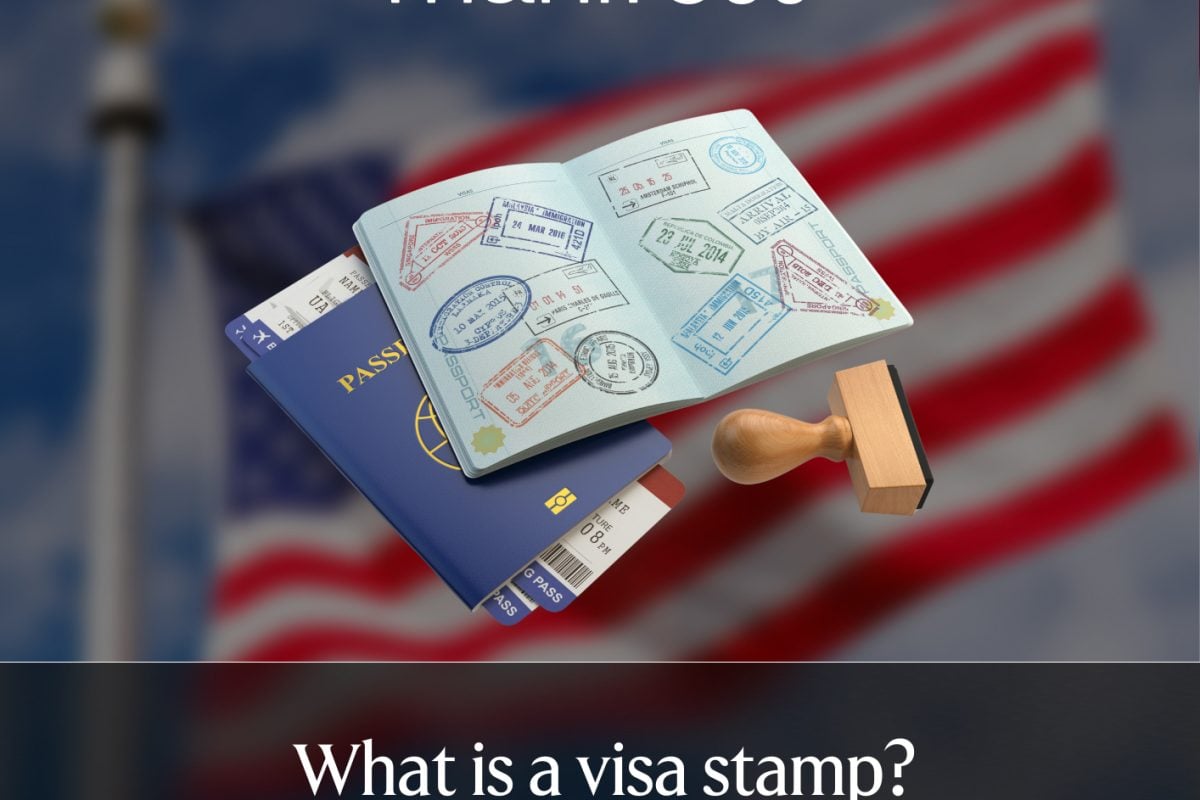
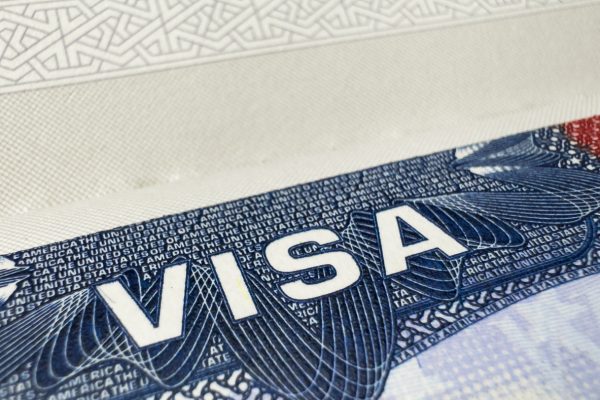
A visa stamp, placed in your passport by a U.S. consulate or embassy, is the official document that allows you to request entry at the border. Understanding the details on your visa stamp, and how it differs from other records like your I-94, is essential for staying compliant and planning international travel.
What details are on a visa stamp?
When you receive your passport, you’ll want to locate your visa stamp and verify that everything listed there is correct.
A nonimmigrant visa stamp includes all of the following fields:
- Name: This will be broken into two fields, your surname and your given name (or first name).
- Passport number
- Date of birth
- Sex
- Issuing post: This is where your visa was issued and refers to the U.S. embassy or consulate that conducted your interview, reviewed your application, and approved your visa.
- Visa type/Class: This field shows the type of visa or category, such as B-2 visa, J-1 visa, or F-1 visa, for example. In most cases, you’ll also see an “R” indicating it was issued in a regular passport, as opposed to a diplomatic or official passport.
- Control number: This is for administrative purposes, and the number won’t be used by a visa holder.
- Issue date: This is when your visa stamp was issued.
- Expiration date: This indicates the last day you can request to enter the U.S., or the date your visa expires. This simply says how long your visa is valid, which is different from how long you may stay in the U.S. once you seek entry. This is also known as visa validity. (See more on this below.)
- Entries: This is how many times you’re allowed to request entry to the U.S. For example, there will be a “1” if your visa allows only one entry, “2” if your visa allows two entries, or “M” if your visa allows multiple entries.
- Annotations: This field is for any additional information regarding your visa. For some visas, this field might be blank. For F-1 visas, for example, this would include an ID number from the Student & Exchange Visitor Information System (SEVIS) and the name of your school.
Learn more about H-1B visa stamping.
What does visa validity mean for a U.S. visa?
Visa validity tells you when you can request entry to the U.S. and how many times you’re allowed to enter the country.
Visa validity periods are set by country, and you can find the current validity period for your country on the U.S. Department of State’s website under Reciprocity and Civil Documents by Country.
Visa validity example: J-1 visa valid for 60 months and multiple entries
A U.S. embassy or U.S. consulate in another country issues a new J-1 visa valid for 60 months and multiple entries to the U.S. The applicant’s visa stamp will show an expiration date 60 months after the visa issuance and they can seek entry to the U.S. any time within 60 months. Once in the U.S., the visa stamp permits the visa holder to leave the country and request re-entry to the U.S., as long as it’s before their visa stamp’s expiration date.
Visa validity example: O-1 visa valid for three months and one entry
A U.S. embassy or consulate issues a new O-1 visa valid for three months that allows just one entry to the U.S. That means the visa stamp shows an expiration date three months after the visa is issued. The visa holder can request entry to the U.S. at a port of entry just one time within those three months. Once in the U.S., the visa stamp does not permit the visa holder to leave the country and request re-entry to the U.S., even before their visa stamp’s expiration date. If the visa holder leaves the U.S., they will need to obtain a new visa from the embassy or consulate to re-enter the United States.
How is a U.S. visa stamp different from an I-94 record?
A U.S. visa stamp shows when you may ask to enter the country and how many times you may request to enter.
An I-94 record is your arrival and departure record created by a CBP officer who determines how long you may stay in the United States and what you are authorized to do while here. The “admit until date” on your I-94 shows when you would need to either leave the U.S. or have filed an application to extend, change, or adjust your status. The “class of admission” controls whether you are allowed to visit, work, or study.
| 💡Your I-94 shows your immigration status. You can view your electronic record online to prove your legal status in the country. It’s important to note that your visa expiration date can pass, but if it’s still before the “admit until date” on your I-94 record, you could have legal status to remain in the U.S. |
How to get a U.S. visa stamp
Obtaining a visa stamp comes at the end of the visa application process.
First, determine if you even need to apply for a visa. If you’re from a country that’s part of the visa waiver program and you’re coming to the U.S. for business or travel, you may not need a visa.
However, if you do need a visa to travel to the U.S., here are the main steps to get a visa stamp:
- If you are applying under a petition-based visa category (e.g. L-1B, O-1A), then you must first receive an approval notice from USCIS. Otherwise, you start the application process with the Department of State in the next step.
- If you’re coming to the U.S. on a nonimmigrant visa, apply for a visa using the Online Nonimmigrant Visa Application (DS-160). If you’re planning to come to the U.S. on an immigrant visa, use Form DS-260.
- Pay your visa application fee.
- Schedule your interview at a U.S. embassy or U.S. consulate in your home country. Most visa applicants will now need to attend in-person interviews with a consular officer. Importantly, you must also attend an interview in your home country or country of residence, unless eligible for certain exceptions.
The consular officer who conducts your interview may let you know whether your visa has been approved, denied, or whether it requires administrative processing. Administrative processing means your case requires additional security or background checks before a decision can be made. In some cases, consular officers may also request more documents to determine eligibility.
| Tip: Be sure to check Global Wait Times to see when visa interview appointments are available. |
It’s never too late to get support for your immigration journey
Whether you’re just starting your U.S. visa application process or have your visa interview scheduled, it’s never too late to consult an experienced immigration attorney.
At Manifest Law, we help professionals like you get clarity on all the steps in the visa process. From understanding visa requirements to preparing you for your visa appointment, we’re here to guide you every step of the way.
Request a consultation to speak with one of our experienced immigration attorneys so you can move forward with confidence.