

DS-260: 2025 Guide to the Immigrant Visa Electronic Application Form
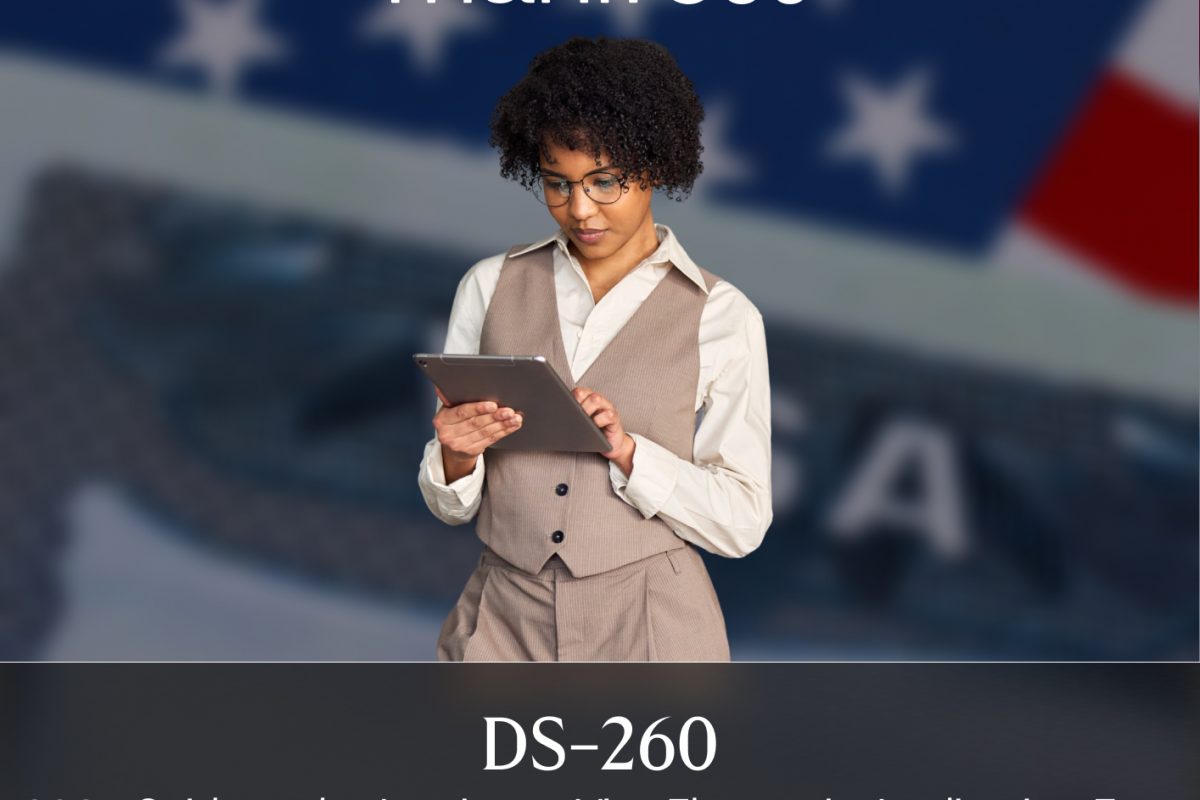
- The DS-260 is the online immigrant visa application required for consular processing outside the U.S.
- You’ll complete the DS-260 after receiving your National Visa Center welcome letter and paying required fees.
- Each applicant needs their own DS-260 and must upload all supporting documents through CEAC.
- After NVC review, your visa interview and medical exam complete the final steps for your Green Card process.
The DS-260 is the electronic application for an immigrant visa, and it’s the form you’d use to apply for a Green Card when you’re outside the United States.
All DS-260 submissions are reviewed by the U.S. Department of State as part of the consular processing system. Submitting the DS-260 doesn’t automatically grant a visa or Green Card. It’s one of the final steps before your consular interview, where a consular officer will make the decision.
What is the DS-260 Form?
The DS-260 is an electronic application that is completed and submitted online if you’re applying for an immigrant visa while outside the U.S.
Because applicants abroad first need permission to request entry to the U.S., they all go through consular processing at a U.S. consulate or embassy. Consular processing allows the State Department to vet anyone who wants to enter the country, whether they’re seeking a temporary visa or on a path to becoming a permanent resident.
| 💡 Note: If you’re applying for a Green Card, be sure you use the DS-260 and not the DS-160, which sounds similar but is used for people applying for a nonimmigrant visa. |
The DS-260 is not the beginning of the immigration process. It comes after the U.S. Citizenship and Immigration Services (USCIS) has approved a petition for an immigrant visa.
If you’re outside the U.S., your approved petition is sent from USCIS to the National Visa Center (NVC). The NVC will then invite you to complete the DS-260 application.
How the NVC fits into the DS-260 process
After USCIS approves an immigration petition—whether it’s a Form I-130 for a family-based visa or a Form I-140 for an employment-based visa—the case is sent to the NVC.
The NVC is the bridge between USCIS and the U.S. embassy or consulate that handles immigrant interviews before issuing a decision on an immigrant visa.
Once a case is in the NVC system, a welcome letter is sent to the applicant by email or regular mail. The NVC welcome letter gives details, including case number and invoice ID, to create an online account with the Consular Electronic Application Center (CEAC). This is where applicants can manage their cases, receive messages, and check their case status.
When you need to fill out the DS-260
After you receive the NVC welcome letter, it’s time to complete the DS-260.
This step applies to anyone going through consular processing, meaning you are outside the U.S. and seeking an immigrant visa. That includes people applying through family-based petitions and special immigrant categories (F1, F2A, or EB-4 for example) or through employment-based sponsorship (EB-1, EB-2, EB-3, EB-5, for example).
People who are already in the U.S. typically apply for permanent residence using Form I-485 for an adjustment of status instead.
The DS-260 is part of the paperwork the Department of State will use to confirm your eligibility before you attend a visa interview in your home country.
Each family member applying for an immigrant visa must submit their own DS-260, even if everyone is included on the same initial petition.
How to fill out the DS-260
Here are the steps to complete your DS-260 after you receive your NVC welcome letter and instructions.
1. Log in to the CEAC website
Visit ceac.state.gov and choose “Immigrant Visa (IV)” to log in. You’ll need your case number and invoice ID number from your NVC letter.
2. Review your case information
You’ll see a summary of your case, including names and petition details. Make sure everything looks accurate before starting.
3. Pay the required fees
Most applicants will see two fees at this step of the process:
- Immigrant Visa Application Fee ($325–$345): Paid for each visa applicant
- Affidavit of Support Fee ($120): Covers Form I-864, paid by the sponsor or petitioner for most family-based and some employment-based visas
These fees must be paid before you can access the DS-260 application. It can take up to 10 calendar days for your payment to be processed and marked as “paid.”
| ➡️ Important: The listed filing fees here are accurate as of November 2025 and are subject to change. We always recommend checking with your consulate or embassy for exact fees. |
4. Complete all required sections of the DS-260 application
After your fees are marked “Paid,” you will need to click “Start Now” under the IV Application section on your summary page.
The DS-260 will ask for detailed information, including:
- Your full legal name, date, and place of birth
- Passport details
- Marital status and family information
- Address history and previous residences
- Employment and education history
- Social media usernames or account names
- Security and background questions
- Petitioner and sponsor information
5. Review and submit
Before submitting, double-check every detail. Errors can lead to delays or requests for correction.
When you’re confident everything looks correct, you can sign electronically and submit.
Once submitted, you’ll receive a confirmation page. You’ll need to print and save it so you can bring the confirmation page to your visa interview.
Documents you’ll need to upload for a DS-260
After you’ve submitted the DS-260, you’ll use the CEAC portal to upload civil and supporting documents. The NVC won’t schedule your interview until all documents are uploaded and accepted.
Here are a few examples of documents that are typically required:
- Valid passport
- Birth certificate
- Marriage certificate (and divorce certificate, if applicable)
- Police certificates from every country where you’ve lived for more than six months (even if you have no criminal record)
- Court or military records, if applicable
- Financial documents from your sponsor, including Form I-864 (affidavit of support) and tax records
If any documents aren’t in English, or the official language of the country from which you’re applying, you will also need to submit a certified translation.
Different countries might have different requirements for civil documents, which can be checked on the reciprocity and civil documents page from the Department of State.
When you’ve gathered all your documents, you’ll scan them into a digital format to submit online. Be sure to scan your documents in color, use one of the approved file types (PDF, JPEG, or JPG), and keep each file size below 4 MB.
You won’t need to mail the documents to the NVC, but you will need to bring your original documents to your interview at a U.S. embassy or consulate.
After you submit the DS-260
After you click submit on the DS-260, the NVC will review your case. You can see review timeframes online, but it’s typically a couple of weeks.
After the NVC reviews your documents, you’ll receive an email letting you know whether any corrections are needed or whether your documentation is complete.
Note that processing times vary depending on the type of visa, demand, and location of the U.S. embassy or consulate.
Scheduling your interview
Once the National Visa Center confirms your documents are complete, the NVC schedules your interview with a U.S. embassy or consulate. An interview is scheduled when your priority date becomes current.
Processing times for interview scheduling can vary depending on your visa category, overall demand, and the embassy or consulate location.
Scheduling your medical exam
Once your interview is scheduled, you’ll need to book a medical exam with an approved panel physician before your interview. The doctor will send your results directly to the embassy or give you a sealed envelope to bring to your interview.
Preparing for your interview
Gather the documents you submitted electronically after you submitted the DS-260.
Be sure to bring:
- Original documents or certified copies
- The DS-260 confirmation page
- Medical exam results, if the physician provided them in an envelope
- New police certificates, if the ones submitted online expired before your interview appointment
- Passport
- Photographs
- Appointment letter
Tips to avoid delays on your DS-260 application
Here are a few quick tips to help avoid delays for your DS-260.
- Make sure all names and dates match across forms and documents.
- Use clear, legible scans for documents.
- Take your time to complete the application, and be sure to save often. You can save and return to it if you need to step away.
- Save every confirmation page and receipt.
- Check your CEAC portal regularly for updates.
- Respond promptly to any requests from the NVC.
Get the support you need to move forward
Filing a DS-260 is an essential part of the Green Card process if you’re applying from outside the U.S.
Staying organized and following instructions closely are key. If you have any questions about the process and would like extra support and guidance, our immigration attorneys can help. At Manifest, we don’t just file paperwork—we help you build a strategy that works.
👉 Request a consultation with Manifest Law’s experienced immigration lawyers and get the clarity you need to move forward.