

The Ultimate Guide to Form DS-160
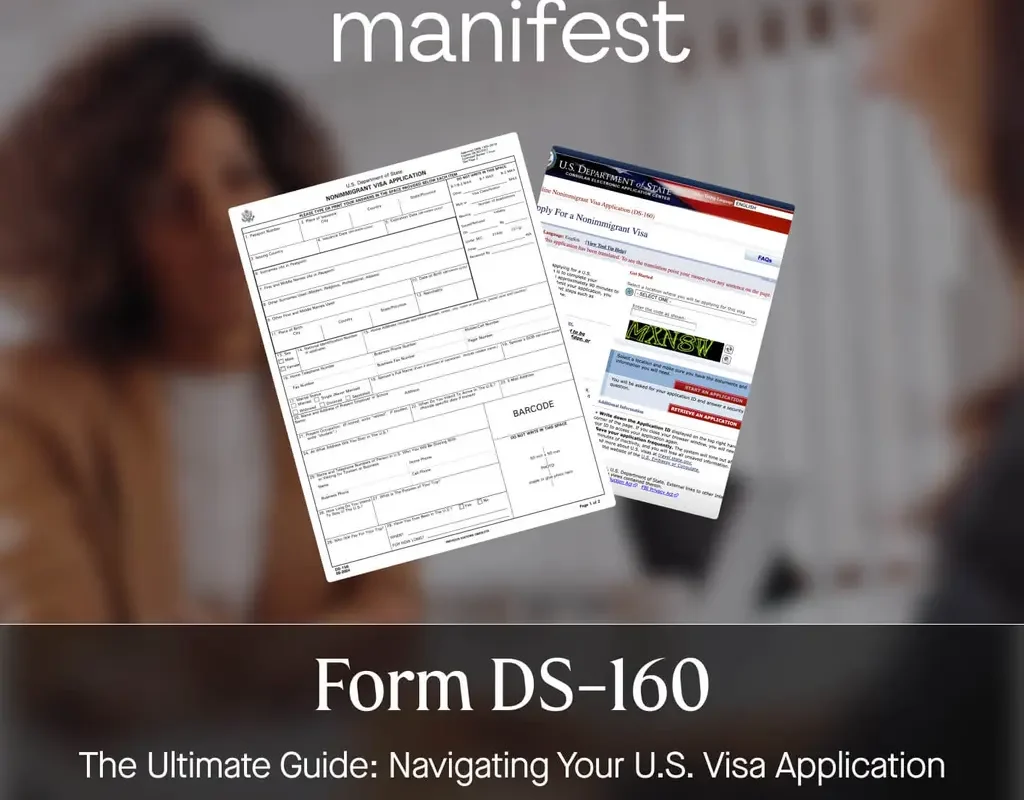
- Form DS-160 is required for most nonimmigrant visa applicants and is essential for the visa interview and stamping process.
- Gather key details—passport info, travel plans, and work/education history—before starting to complete the form accurately.
- Double-check for errors, save your progress, and submit within 30 days to avoid delays or losing your application.
- If you spot a mistake after submitting, you must complete a new DS-160 and bring the updated confirmation to your interview.
Making the decision to start a new career (and life!) in the U.S. is a major one. And one of the first and most important steps on that journey is applying for a visa. Form DS-160 plays a crucial role for many nonimmigrant visa applicants, including work, student, and tourist visas—and filling it out correctly and completely is a necessity for getting your visa approved.
While the form may seem complex, when you understand all the different sections and requirements, it’s much less overwhelming. Let’s take a deep dive into everything you need to know about Form DS-160, from its purpose and the role it plays in the visa process to the documents you’ll need to complete it (and just about everything in between):
| 🧑⚖️ Clear guidance, without the legal jargon. This article is informed and reviewed by Manifest Law’s experienced immigration attorneys—and written to make the law make sense. Because you deserve to understand the system, not fight it. Check out our editorial policy for more info. |
What is Form DS-160?
Form DS-160 is the online application form required for individuals seeking to apply for a nonimmigrant visa. The online nonimmigrant visa application, which is submitted electronically to the U.S. Department of State, it is an essential step for most applicants, particularly those who need to undergo a visa interview and visa stamping (for example, H1-B visa stamping or O-1 visa stamping).
Form DS-160, which requires applicants to provide personal, travel, and employment-related information, typically takes about 90 minutes to complete.
It’s important to note that this form is used for individuals applying for a visa from outside the U.S. who will need to go through the visa stamping process.
Those already in the U.S. applying for status adjustments/permanent residency via immigrant visas would not use DS-160—and instead, would submit other forms related to their specific situation (like Form I-485, the Application to Register Permanent Residence or Adjust Status).
Subscribe to our newsletter for immigration resources and news, without the legal jargon.
Where to Access Form DS-160
The DS-160 form is available online through the Consular Electronic Application Center (CEAC) website. You’ll need to create an account on the site to begin the application process.
Who Needs to Fill Out Form DS-160?
Anyone applying for a nonimmigrant visa to temporarily move to or visit the U.S. is required to complete Form DS-160. This includes applicants across various visa types, including:
- H-1B (Specialty workers)
- O-1 (Extraordinary ability)
- L-1 (Intra-company transferees)
- F-1 (Students)
- B-2 (Tourists and visitors)
- K-1 (Fiancé visa)
Again, applicants currently residing in the U.S. and seeking to adjust their status are not required to fill out Form DS-160.
Where Does Form DS-160 Fit in the Visa Process?
Form DS-160 does play a pivotal role in obtaining a nonimmigrant visa. Here’s how the form plays into the larger visa process for individuals looking to move to the U.S.:
| Step | What Happens | Who Handles It |
| Submit Form DS-160 | Complete online application for a U.S. visa | Applicant |
| Schedule a Visa Interview at a U.S. Embassy or Consular Office | Contact your desired U.S. Embassy or Consular Office to schedule a visa interview | Applicant |
| Attend Visa Interview | Attend the scheduled visa interview | Applicant and U.S. Embassy/Consular Officer |
| Get Visa Stamped | Once the visa is approved, a stamp is added to the passport to enter the U.S. | U.S. Embassy/Consulate |
| Enter the U.S. | Enter the U.S. with an approved visa and stamp | U.S. Customs and Border Protection |
Who Files Form DS-160?
Form DS-160 is filed directly by the individual applying for a nonimmigrant visa.
It’s important to note that applicants can have other people assist them with their application (for example, if the applicant has a language barrier or questions about the application), but the applicant must electronically sign and submit their own application. If the applicant doesn’t click the “Sign Application” button, the form may be rejected.
How Much Does It Cost to File Form DS-160?
Form DS-160 doesn’t have a separate filing fee, but there are fees for the visa application process which vary by visa (for example, non-petition-based nonimmigrant visas have a fee of $185 while petition-based nonimmigrant visas have a $205 fee). Make sure to confirm any fees associated with your specific visa.
What Do You Need to File Form DS-160? Documents Checklist
Before you begin filling out Form DS-160, make sure to have the following documents and information on hand:
- Passport details: Your passport must be valid for at least six months after your intended arrival date.
- Travel itinerary: Have your travel dates and destination ready, even if you haven’t booked your travel yet.
- Dates of your last five visits/trips to the United States: If you’ve previously traveled to the U.S., you may also be asked for your travel history for your past five trips, so have it handy.
- Work/education history: You should also be prepared to provide details about your work and education history. (If you have a resume or CV, that can be a great document to have on hand when filling out Form DS-160.)
- Travel companions: If anyone is traveling with you, you’ll also need to have their information available.
- Recent photograph: You’ll also need to submit a passport-style photo with Form DS-160. Make sure that your photo meets the U.S. State Department’s photo requirements.
Step-by-Step Guide to Filling Out Form DS-160
Filling out Form DS-160 accurately and completely is extremely important. Let’s break down each part of the process step-by-step:
1. Create an Account and Access the Form Online
Visit the CEAC website for Form DS-160. Under the “Get Started” section on the right-hand side of the application, select the location where you’re applying for the visa from the drop-down menu. Then, enter the CAPTCHA code as shown and click “Start Application.”
This will bring you to a page with the Computer Fraud and Abuse Act Notices Computer Fraud and Abuse Act Notices. Click “I agree” and scroll down to the page to access your Application ID. You’ll also be asked to choose a security question and input the answer.
| 💡 Make sure to write down your application ID, security question, and answer and store them in a safe place, as you’ll need them to access your application later. |
2. Fill Out Each Section of Form DS-160
Form DS-160 is broken down into multiple sections, each of which asks for specific information.
Let’s take a look at the different sections of Form DS-160 and the information you’ll need to include in each section. (Also, keep in mind that you don’t have to fill out the entire application in one sitting. You can save your progress and revisit your application for up to 30 days.)
| Section | What You’ll Be Asked To Share |
| Personal information | Personal details, including:Full name, date of birth, marital status, and nationalityPassport and/or national identification number(s)U.S. social security number and/or taxpayer ID (if applicable) |
| Travel information | Travel plans, including:Purpose for travelingTravel start and end dates*Address of your destination/U.S. accommodations*If you don’t have concrete travel dates, just add estimated dates. |
| Travel companions | Details for anyone traveling with you, including:NamesDates of birthRelationship to you |
| Previous U.S. travel | Details of past U.S. trips (up to five) |
| Contact information | Contact details, including:Home addressPhone numberEmail address |
| Passport information | Passport details, including:Passport numberIssue dateExpiration date |
| U.S. point of contact | Information on a U.S.-based point of contact, either individual or business**If you don’t know any person or business in the U.S. personally, just add a business or organization you plan to visit or engage with during your trip. |
| Family information | Details about family members, including:ParentsSpouse/partner (including former and/or deceased)Relatives currently living in the U.S. |
| Work, education, and training | Details of your employment history and educational background, including:Educational institutions you’ve attendedInformation on past and present employersRelevant training experiences |
| Security and background | Answers to security-related questions, including questions about health and criminal background |
| Additional information | Additional informational requirements vary by visa type |
| Photograph | Passport-style photo**The photo must meet the U.S. Department of State’s requirements |
3. Review Form DS-160 and Submit
Before you submit your form, take the time to go back through the application and review the information in each section to make sure it’s both complete and accurate before you submit.
Tips for Successfully Filling Out Form DS-160
Now that you understand the basics of filling out Form DS-160, here are a few tips for making the application and submission process as smooth and streamlined as possible:
- Save your work regularly. Make sure to regularly save your work as you’re filling out the application. The website times out often—and if you don’t save your work before that, you’ll lose any information you’ve added to the application and have to do it again.
| 💡 Pro tip: Make sure to use a privacy mode on your browser when filling out Form DS-160. Cookies from other sites seem to cause issues with the CEAC website—and accessing the form in privacy mode may help with site time out issues. |
- Download a copy. As mentioned, you have 30 days to submit your Form DS-160 before you have to start the process over. If you think you’ll need more time, download a copy to your computer; that way, you can just copy all the information you’ve already completed into a new application.
- Double-check for errors. We said it before, but it’s so important that we’ll say it again. Before you submit your application, make sure to review your application and double-check for any errors, inconsistencies, or missing information. Otherwise, you risk having to re-do and re-submit the entire application.
- Consider consulting an attorney. If you’re unsure about any aspect of the DS-160 or how to complete it, consider consulting with an immigration attorney. A lawyer can walk you through the process and ensure your application is correct and complete before you submit—which, in turn, can help you prevent delays on your visa journey.
What Happens After You Submit Form DS-160?
After you submit your DS-160, you’ll need to print the confirmation page with the barcode. This step is extremely important, as you’ll need this barcode for your visa interview. (You might consider printing a few copies and/or saving a copy on your computer in case one gets lost.)
You can track DS-160 application status directly on the CEAC website using your application ID.
Once your DS-160 is approved, you officially have the green light to schedule your visa interview. Make sure to bring the necessary documents to the interview, including your DS-160 confirmation page, passport, and any other documentation required by your visa type.
How long is the processing time for Form DS-160?
Form DS-160 doesn’t have its own specific processing time; instead, processing times will vary based on visa type, location, and U.S. Embassy or Consulate wait times. Check your local U.S. embassy or consulate’s website for more specific information.
What Happens If My Form DS-160 Is Denied?
There are a number of reasons your Form DS-160 could be denied, including:
- Incomplete or inaccurate information
- Missing documentation
- Failure to meet visa requirements
If your application is denied, there is no formal appeals process; instead, you’ll need to address the reason for denial and reapply. For example, if your application was missing information, you’ll need to go back, add in that information, and resubmit. If you failed to meet the visa requirements, you’ll need to wait until you meet those requirements and then resubmit.
If you’re unsure about how to navigate a DS-160 denial, consider consulting with an immigration attorney. They can offer insights into why your application was denied, as well as help you determine the best path forward.
Complete Form DS-160 and Move Forward On Your Immigration Journey
Form DS-160 is a critical step in your U.S. visa application process. Whether you’re applying for a work, student, or tourist visa, completing the form accurately and on time is key to moving forward with your journey.
At Manifest Law, we help professionals like you navigate the DS-160 process with clarity and confidence. From understanding visa requirements to ensuring your application is complete, we’re here to guide you every step of the way.
If you’re ready to start your visa journey or need assistance with your DS-160, request a consultation with our experienced immigration attorneys. We’re here to help make your immigration process as smooth and successful as possible.
Subscribe to our newsletter for immigration resources and news, without the legal jargon.
FAQs
Do I need to fill out a new DS-160 for every visa application?
Yes, you need to fill out a new DS-160 for each visa application. Each visa type and visa interview require a separate DS-160 form.
What should I do if I realize I made a mistake after I submitted my DS-160?
If you realize that you’ve made a mistake after submitting your DS-160, you’ll need to complete a new form. If you haven’t attended your visa appointment/interview, just submit the updated form, print the new confirmation page with the barcode, and bring that to your interview. If your interview is scheduled and you’ve already submitted the form, make sure to let the consular officer know during your interview.
Do my family members need to fill out separate DS-160 forms?
Yes, each individual applying for a U.S. visa—including children—needs to submit a separate DS-160 form.