Key Takeaways
- The B-1/B-2 visa allows foreign nationals to make short-term U.S. visits for tourism or certain business activities.
- Applicants must show nonimmigrant intent with supporting documents and during the interview.
- Processing times vary greatly, and fees are changing based on new legislation.
This article provides a clear overview of the B-1/B-2 visitor visa, including who qualifies, what each category allows, and how long travelers may stay in the United States. It explains key requirements—such as demonstrating nonimmigrant intent—and breaks down important 2025 updates like the new visa integrity fee.
What are the B-1 and B-2 visas?
The B-1 visa is a nonimmigrant visa that allows foreign nationals to enter the U.S. for business reasons. The purpose is for nationals to engage in limited business activities without being employed or earning income. Under B-1 status, nationals may:
- Meet with business associates;
- Attend conferences;
- Settle estates;
- Negotiate contracts.
The B-2 visa is a nonimmigrant visa dedicated to tourism and related activities. Under this status, individuals may enter the U.S. for:
- Vacation (holiday);
- Visiting with friends and relatives;
- Receiving medical treatment;
- Attending social events;
- Participating in non-paid musical, sports, or social events;
- Enrolling in a short non-credit recreational course of study.
B-1 and B-2 visa holders holders are not allowed to enter with the intent of:
- Engaging in birth tourism (travel with intention to give birth in the U.S.);
- Working for a U.S. employer or receive compensation from a U.S. source;
- Enrolling in academic studies;
- Completing paid tasks as a contractor;
- Working as a crew member;
- Applying for permanent residency.
Nationals often apply for a combination B-1/B-2 visa that allows for both business and tourism. This is the most common way to get a visitor visa for the U.S. It allows people to have both tourist and limited business abilities.
Who qualifies for the B-1/B-2 visa?
To qualify for a B-1/B-2 visa, a person must have a legitimate reason for their visit to the U.S., such as business, tourism, or medical treatment.
They must be able to afford the trip without financial hardship. They must also prove strong ties to their home country, demonstrating that they will return after their approved stay in the U.S.
What documents are required for the B-1/B-2 visa?
To apply for the B-1/B-2 visa, you’ll need several documents during the process. Some of these will prove your identity, while others may be required to determine your eligibility for the visa.
Required documents for a B-1/B-2 visa
- Passport
- Your passport must be valid for at least six months after your intended stay in the U.S.
- Nonimmigrant Visa Application, Form DS-160 confirmation page
- You must complete this application online and print the confirmation page.
- Application fee payment receipt
- Proof of payment for the visa application fee.
- Photo
- One digital photo will be uploaded to the Form DS-160 nonimmigrant visa application
Proof of purpose for travel
- For business (B-1)
- Invitation letter from a U.S. company;
- Conference registration;
- Meeting schedule.
- For tourism/family visit (B-2)
- Travel itinerary;
- Hotel bookings;
- Invitation letter from family or friends detailing the proposed length of stay, and address(es) where the applicant will stay.
- For medical treatment (B-2)
- Confirmations for any scheduled medical appointments or procedures set to take place during your stay.
- These documents should show the dates, locations, and details of the appointments to show that they will take place during the stay in the U.S.
- Signed letter from your doctor or hospital confirming the information in the appointment documents.
- Confirmations for any scheduled medical appointments or procedures set to take place during your stay.
Proof of financial stability
All financial documents should be as recent as possible.
- Bank statements;
- Income tax returns;
- Proof of investment or property ownership
Proof of ties to your home country
All documents must be submitted in English, or with a translation to English along with a translation certificate. You don’t need to have all of these documents, but what you’re asked to provide may depend on the officer handling your application.
- Employment
- A letter from your home employer stating your position, salary, and approved leave dates.
- Property ownership
- Documents showing you own a home, apartment, or business in your home country.
- Family
- Marriage certificate, birth certificates of children, or other evidence of familial commitments.
- Signed affidavit
- A signed letter from you, summarizing the dates of your trip, the reasons for your trip to the U.S., your financial ability to cover all expenses for the trip, and your intention to return once your trip is over.
How long does it take to get a B-1/B-2 visa?
The time to get a B-1/B-2 visa varies, ranging from a few weeks to over a year, depending on the embassy's wait times for an interview.
While the interview wait is the longest factor, the process after approval generally takes about three to five working days to process and five working days for delivery. You can check specific wait times on the U.S. Department of State's website using your location.
The wait time for scheduling an interview is the most unpredictable part of the process. Some locations have wait times of just a few months, while others can be a year or longer. The U.S. Department of State allows you to check the average wait time for specific consulates.
Do Canadian citizens need a B-1/B-2 visa?
Canadians generally do not need a B-1/B-2 visa for short-term visits to the U.S. for business or tourism. Canadian citizens are typically admitted in B-1/B-2 status by a CBP offer at the port of entry with a valid passport. While they are visa-exempt, they must carry a valid passport and other necessary documents depending on their travel.
Exceptions include:
- Longer stays - a visa is required for Canadian citizens who plan to stay longer than 180 days.
- Specific purposes - certain types of employment, studying for credit, or establishing permanent residence require visas or approved petitions before entry.
- Previous issues - if you have overstayed a previous visit, been refused entry, or have other legal issues, you may need a waiver or a visa to enter the U.S.
What are the fees for a B-1/B-2 visa?
The processing fee for the B-1/B-2 visa is currently $185 USD. It is nonrefundable, and paid before scheduling the interview. Once paid, it is valid for 365 days to book an appointment.
There is also the possibility of additional “visa issuance” or “reciprocity” fees after the visa is approved, based on how that country charges U.S. citizens for similar visas. The applicability and amounts depend entirely on the country of nationality and visa class.
Recent U.S. legislation created a new “visa integrity fee” of at least $250 USD for many temporary nonimmigrant visa applicants, including B-1/B-2, which is intended to be charged in addition to the $185 processing fee once it is implemented.
How do I apply for a B-1/B-2 visa?
First, check if you even need a B-1/B-2 visa. Citizens of many countries are part of the Visa Waiver Program (VWP) that allows them to travel to the U.S. as long as they have been approved through the Electronic System for Travel Authorization (ESTA).
If your country is not part of the VWP program, here are the steps to apply for the B-1/B-2 visa:
- Complete the DS-160.
- Go to the Consular Electronic Application Center website and complete the online non-immigrant visa application, which is called Form DS-160.
- Print the confirmation page.
- Pay the application fee.
- Pay the nonrefundable visa processing fee (also called the MRV fee), plus any other fees you’re required to pay.
- Print the receipt.
- Schedule an interview.
- Schedule your visa interview appointment through the U.S. embassy or consulate’s website for the country where you are applying.
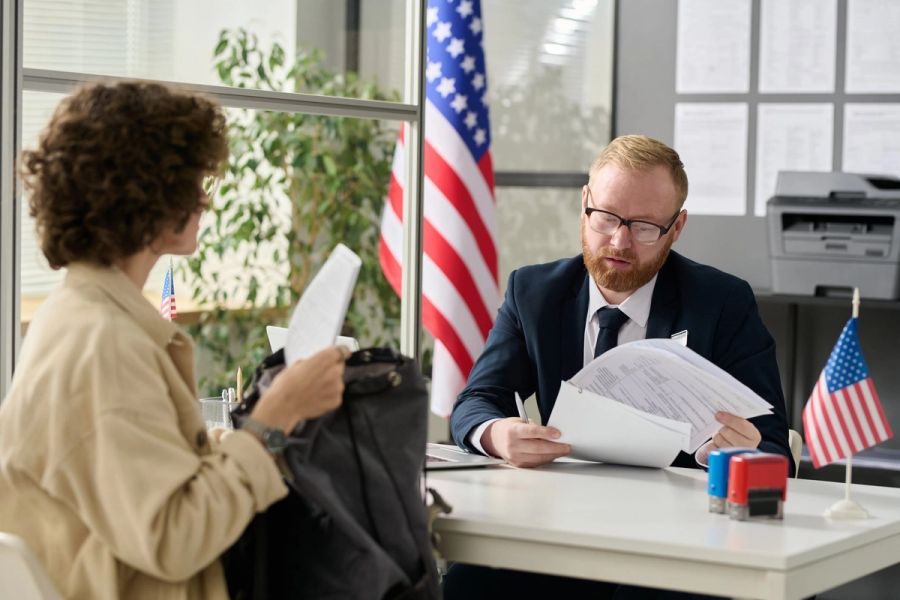
- Attend the interview at the scheduled time and location.
- Be on time.
- Bring the necessary documents, including your passport, DS-160 confirmation page, fee receipt, and other supporting documentation.
Changing status from a B-1/B-2 visa
To change status from a B-1/B-2 visa, a change of status petition must be filed before your current B-1/B-2 status expires. You must gather the required documents, pay the necessary fees, and submit the correct forms (typically Form I-539) before the period of authorized stay ends. It is important to maintain your current status while waiting for a decision.
For example, some H-1B visa holders may change status to the B-1/B-2 visa if their H-1B is about to expire and they need more time to wrap up their affairs.
B-1/B-2 visa FAQs
How long can I stay in the U.S. on a B-1/B-2 visa?
Generally you can stay in the U.S. for up to six months per visit on a B-1/B-2 visa. However, the duration of your trip is decided by the Customs and Border Protection (CBP) officer when you enter. You cannot overstay the date noted on your I-94 Exit / Entry record.
How do I extend my B-1/B-2 visa?
To extend your stay, you must file Form I-539 with the U.S. Citizenship and Immigration Services before your authorized stay is over. Ideally, you would submit this several months in advance, as the processing time for I-539 may exceed 3.5 months, as of November 2025. You will need to submit the form online or by mail, along with supporting documentation.
What is the visa waiver program for B-1/B-2 visa?
The Visa Waiver Program (VWP) allows citizens of certain countries to travel to the U.S. for tourism or business for up to 90 days without a B-1 or B-2 visa. Travelers must obtain authorization through the Electronic System for Travel Authorization (ESTA) before traveling. It is important to note that you are not eligible for an extension or change of status once in the U.S. on ESTA.
How many times can you visit the U.S. on a B-1/B-2 visa?
There is no limit to the number of times you can visit the U.S. on a valid B-1/B-2 visa that permits multiple entries. However, you must present the same documents to the immigration officer at each entry. Each time, you must show that you have ties to your home country and will not be overstaying your visa validity period.
Can I apply for a Green Card after entering on a B-1/B-2 visa?
Yes, you can technically apply for a Green Card after entering on a B-1/B-2 visa. You must have a family member or employer sponsor you, and you must file for adjustment of status while in the U.S. As the B-1/B-2 allows temporary stay, applying for permanent residence within your first 90 days could raise a red flag to the government. Their concern could be that you may have misrepresented your original intent when entering.
For this reason, it is important to consider strategy and discuss specifics with an attorney to better understand the risks and determine how best to pursue permanent residency. Request a consultation with Manifest.
Do children need their own B-1/B-2 visa?
Yes, all children (including babies) need their own visas to enter the U.S. Each traveler must apply separately. Children are often excused from the interview, though each consulate differs.
About the Author

Content Lead
Haley Davidson is Manifest Law's Content Lead, covering all topics related to U.S. visas and Green Cards. She's passionate about making complex topics easy to understand, like immigration law.
Read bioReviewed By

Senior Immigration Attorney at Manifest Law
Henry is an Estonian American attorney licensed in Arizona with broad experience in employment-based immigration. He handles EB-1A, EB-2 NIW, O-1, and E-2 cases for founders, professionals, and creatives across industries worldwide, and has helped hundreds of clients achieve successful outcomes.
Read bioShare this article: