


Understanding OPT vs. STEM OPT

- All F-1 students can qualify for OPT after getting a degree, but students in a STEM field get an additional STEM OPT extension.
- OPT generally lasts up to one year with no extension, but STEM OPT provides an additional 24 months of work authorization.
- OPT and STEM OPT are both common paths to an H-1B work visa.
Optional Practical Training (OPT) allows students on an F-1 visa to work in the U.S. while they gain experience in their field of study. All students are eligible for up to one year of OPT after completing their degree. Students with a degree in a STEM field may be eligible for a 24 month extension of work training, though there are stricter work and employer requirements. OPT is a common path for students to get an H-1B work visa after graduation.
| 🧑⚖️Clear guidance, without the legal jargon. This article is informed and reviewed by Manifest Law’s experienced immigration attorneys—and written to make the law make sense. Because you deserve to understand the system, not fight it. Check out our editorial policy for more info. |
How OPT works
Optional practical training is a chance for F-1 visa holders to work in their field of study. It gives them employment authorization for up to the equivalent of one year of full-time work. This applies to all F-1 students, regardless of their degree program.
- The training program can begin during or after completion of the student’s academic studies.
- During the academic year, the students can apply for pre-completion OPT.
- After graduation, the student can apply for post-completion OPT.
Pre- and post-completion OPT have slightly different eligibility rules, but time spent working in either counts towards the student’s maximum of one year of employment authorization. For example, working six months of pre-completion OPT would leave the student eligible for only six months of post-completion OPT.
All post-completion OPT must be completed within 14 months of your program end date (graduation).
Subscribe to our newsletter for immigration resources and news, without the legal jargon.
OPT vs. STEM OPT
After an international student completes their course of study and 12 months of OPT, their F-1 visa will generally end unless they qualify for a 24-month STEM OPT extension. STEM OPT is only available to students with a degree in a STEM field: science, technology, engineering, or mathematics.
STEM OPT works as an extension of standard post-completion OPT. Students must still work at least part-time (20 hours per week), but employers are only eligible if they enroll with U.S. Citizenship and Immigration Services (USCIS). Regular OPT students can work for any employer.
Which degrees qualify for STEM OPT
U.S. Immigration and Customs Enforcement (ICE) maintains a list of STEM designated degree programs to qualify for STEM OPT. In general, it includes agriculture, biological sciences, physical sciences, computer science, engineering, mathematics, and related fields that involve research, innovation, or development of new technologies.
All education levels, including bachelor’s, master’s, and doctoral degrees, are eligible.
| OPT | STEM OPT | |
| Who is eligible | Any F-1 student recommended by a DSO | F-1 students with a STEM degree |
| Initial length | 12 months | 24 months (after regular OPT) |
| Extension length | 12 months (only if the student gets a higher degree) | 24 months (only if the student gets a higher STEM degree) |
| Employer requirements | All employers eligible | Employer must enroll with USCIS through E-Verify |
| Work requirements | Relevant to field of study and at 20 hours per week | Relevant to field of study and at 20 hours per week |
How to apply for OPT and STEM OPT
The basic application process is the same no matter which type of OPT or extension you apply for, but the timing of when you should apply differs.
OPT application process
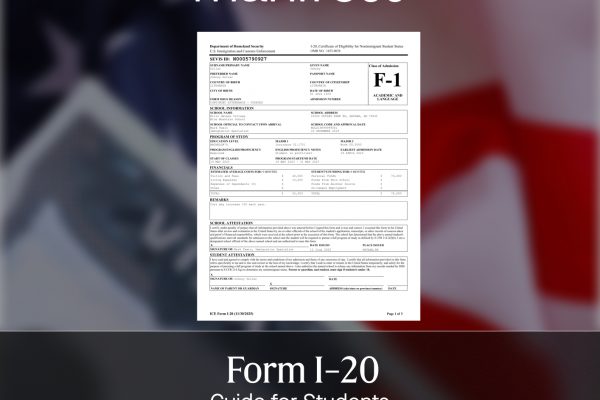
- Request OPT endorsement. A designated school official (DSO) needs to recommend you for OPT by endorsing your Form I‑20. They also need to mark you for OPT in the Student and Exchange Visitor Information System (SEVIS). This is required for pre-completion, post-completion, and STEM OPT employment.
- Apply with Form I-765. You must complete Form I-765 to request work authorization from USCIS. You can submit the form and the application fee through a USCIS online account.
- Get EAD after approval. After your application is approved, you will receive an Employment Authorization Document (EAD). Also referred to as your OPT Card, it gives you the legal right to work in the U.S.
- Keep your DSO updated. Your DSO is responsible for keeping your SEVIS record current. Even after you start working, report any changes to your address, name, or employment information to your DSO within 10 days.
STEM OPT application process
The STEM OPT process is the same, with one main exception: Before your DSO can recommend you for STEM OPT, you and your employer should complete Form I-983. This form lays out a training plan for you.
When to apply for OPT
| Post-completion OPT | STEM OPT | |
| Requirements before applying | DSO must add OPT recommendation to your SEVIS record | DSO must add STEM OPT recommendation to your SEVIS record |
| Earliest you can apply | Up to 90 days before completing your degree | Up to 90 days before your OPT end date |
| Latest you can apply | Within 60 days after completing your degree | Within 60 days after DSO enters STEM OPT recommendation in SEVIS portal |
Processing times for OPT and STEM OPT
As of Dec. 15, 2025, USCIS processes most OPT applications (Form I-765) within 4.5 months. Exact times vary by application, and any errors or missing information can slow the process.
You can also request premium processing, using Form I-907, for an additional fee. With premium processing, USCIS will take action on your application within 30 business days or refund you the fee.
Work requirements on OPT and STEM OPT
The basic requirements for OPT work are that it must be directly related to your degree program and you must work part-time or full-time, meaning at least 20 hours per week. Unpaid internships, volunteer work, and remote work can count for OPT and STEM OPT.
What is a directly related job?
This standard is subjective, but you generally need to show some link between your degree program or coursework and the duties of your OPT or STEM OPT employment.
When your DSO recommends you for OPT or STEM OPT, they must confirm that your OPT employment is related to your degree. You should give them a short, written description explaining how it’s related, and they will maintain that description in your record. If necessary, ICE—through its Student and Exchange Visitor Program (SEVP)—can contact your DSO and you to confirm the relatedness of your job.
Changing jobs on OPT
You can change jobs and employers on OPT and STEM OPT. Report all material changes to your DSO within 10 days. For STEM OPT, you and your new employer must also submit Form I-983 to your DSO.
Self-employment on OPT
F-1 students can be self-employed on post-completion OPT, but must start a legitimate business (e.g., an LLC) that is related to their degree. They must also meet the same reporting requirements as other OPT employers.
STEM OPT does not allow self-employment. You need a separate employer who will create and follow a training plan for you during your program.
Unemployment on OPT
You can only be unemployed for up to 90 days throughout your entire post-completion OPT. If you get approved for STEM OPT, you are eligible for an additional 60 days of unemployment, giving you 150 total days. Exceeding these times will mean termination of your employment authorization.
What to do when OPT expires
When your OPT or STEM OPT ends, there is a 60-day grace period before your F-1 visa status expires. You can remain in the U.S. during that time, but your visa will expire as soon as you leave the country or once 60 days pass.
If you want to remain in the country longer, you need to join a new academic program, get an OPT extension, or file a petition for another visa. One common path is to apply for an H-1B work visa (or H-1B alternatives).
H-1B visas and the cap-gap extension
When an F-1 student has an approved, cap-subject H-1B visa petition, they can retain their OPT or STEM OPT work authorization until their H-1B visa status begins on October 1. This is true even if their F-1 status is scheduled to expire before their H-1B visa would begin. The automatic extension between F-1 expiration and the beginning of H-1B status is called the cap-gap extension.
Simplify the OPT process
You’ve done the research. Now it’s time for real answers, not guesswork.
At Manifest, our attorneys work with extraordinary individuals like you to build strong, strategic immigration petitions—without hourly fees, confusion, or delay.
👉 Request a consultation with Manifest Law’s experienced immigration lawyers now.
OPT vs. STEM OPT FAQs
What’s the difference between STEM OPT and H-1B?
STEM OPT is an extension of an F-1 student visa, so it allows you to work but is tied to your status as an international student. An H-1B is a type of work visa that doesn’t require you to be a student or to be connected to any specific U.S. schools.
Can you be on OPT and H-1B at the same time?
No, since OPT and STEM OPT require you to have F-1 visa status, which you can’t have at the same time as an H-1B visa. However, you can move from OPT to an H-1B or from an H-1B to an F-1 student visa.
What if my employer refuses to sign Form I-983?
You cannot work for an employer under STEM OPT unless they sign a Form I-983. If they don’t wish to fill out the whole form themselves, you may be able to draft a training plan that they only need to sign off on. Talk to an immigration attorney to understand the best path forward.
How do you get a Green Card from OPT or STEM OPT?
You generally can’t go straight from an F-1 visa to a Green Card. There may be exceptions if you’re eligible to self-petition, like through an EB-1 visa. But most students should consider a work visa first, like an H-1B. Learn more about the types of visas.
Can I travel on OPT?
Yes, you can generally travel during active OPT with a designation on your I-20, though it’s risky in certain situations. Learn more about when F-1 visa holders can travel on OPT.