


F-1 Visa Grace Period: Rules & Options for the 60 Days

- The F-1 grace period is 60 days long. It starts the day after your academic program or optional practical training ends.
- You must use the 60 days to either leave the U.S., transfer schools, get work authorization, or change to another visa status.
- Failing to take action or violating status will end the grace period, forcing you to depart immediately.
The F-1 student visa grants a 60-day grace period after you complete your study program or optional practical training. During this time, you’re still considered to be in the U.S. legally. This allows an international student to plan the next move: continue academic study, pursue work authorization, or leave the U.S.
| 🧑⚖️Clear guidance, without the legal jargon. This article is informed and reviewed by Manifest Law’s experienced immigration attorneys—and written to make the law make sense. Because you deserve to understand the system, not fight it. Check out our editorial policy for more info. |
What is the F-1 visa grace period?
The F-1 visa grace period is a 60-day time frame given to international students who have completed their program of study or training program. It’s a window for you to sort out your affairs and prepare for what comes next, before your F-1 nonimmigrant status ends.
Subscribe to our newsletter for immigration resources and news, without the legal jargon.
When the 60 days will begin
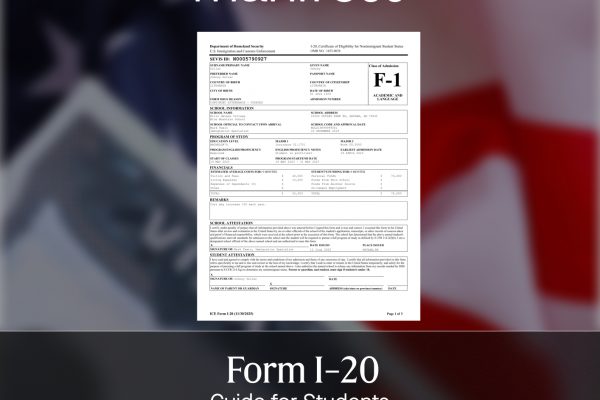
The grace period starts the day after your program of study officially ends, which is usually the program end date listed on your Form I-20. If you completed a period of work training, your 60-day period begins the day after your employment authorization document (EAD) card expires.
When the F-1 grace period applies
The 60-day grace period is a benefit granted if you end your F-1 status without breaking the rules, giving you time to prepare for your next step in the U.S. or your return home.
The 60-day grace period applies after:
- Completing your program of study: You finish all your classes and degree requirements, and your school marks your program as complete on your Form I-20.
- Finishing optional practical training (OPT): The grace period lasts 60 days beyond your EAD expiration date. This also applies to STEM OPT as well as post-completion OPT.
When the grace period does not apply
You lose the right to the 60-day grace period if you break the rules of your F-1 status. In these cases, you immediately fall out of status and must leave the U.S. right away.
This happens if:
- You violate your status by doing things like working without authorization, failing to maintain a full course load at school, or not following the reporting requirements during OPT or curricular program training.
- Your SEVIS record is terminated. Your school’s DSO ends your student and exchange visitor information system (SEVIS) record because you broke a rule. Possible reasons could include leaving the U.S. for five months or more, expulsion, or failing to report to school.
- You withdraw early. You stop attending school before completing your program and notify your DSO of your withdrawal. In this case, you’d get a 15-day grace period to leave the U.S.
In these situations, you wouldn’t get a 60-day grace period. You will likely be considered to be in the U.S. illegally starting the day after USCIS or a judge makes a final decision that a rule was broken. You may be able to file for reinstatement with USCIS, but this is a complex legal process. You should make arrangements to leave the U.S. or speak with an immigration attorney about your options.
What you can do during the 60-day grace period
The 60-day grace period is your chance to decide what to do after you complete your studies. During that time, you’re still considered to be in the U.S. legally, even though you’re no longer actively studying. You can use this time to get ready to leave the U.S. or take one of these steps to stay:
- Apply for post-completion OPT
- Start a new degree at the same school
- Transfer to a different school
- Apply for a change of visa status
- Prepare to depart the U.S.
1. Apply for post-completion OPT
You can apply to U.S. Citizenship and Immigration Services (USCIS) for optional practical training. If you’re approved, you can work legally for up to 12 months (or longer with the science, technology, engineering, and mathematics OPT extension) in a job directly related to your degree.
Note that the total amount of time you can work under the OPT extension will be reduced by the amount of time you worked under OPT while in school.
To determine your eligibility, you must have completed at least one full year of academic study. You can complete up to 12 months of practical training, including curricular practical training (CPT), per education level. For example, you can do up to 12 months for a bachelor’s degree and another 12 months for a master’s degree.
2. Start a new degree at the same school
You can choose to move to a higher degree level—for example, from a bachelor’s to a master’s program—at the same school. Your designated school official (DSO) must issue you a new Form I-20 for the new program before your grace period ends.
| 📘The designated school official (DSO) is the main contact at your school for student visa matters. |
3. Transfer to a different school
If you’re accepted at a different school certified by the Student and Exchange Visitor Program (SEVP), ask your current DSO to transfer your SEVIS record. They must do this before the end of your 60-day window, and you must begin your new program within five months, which typically covers the start of a new academic year.
4. Apply for a change of status
If you meet the eligibility requirements for a different type of nonimmigrant visa, such as an H-1B work visa or an O-1 extraordinary ability visa, you can file an application to change your status. USCIS must receive this application before your 60 days are up, and it’s a good idea to file well in advance of that.
5. Depart the United States
If you don’t take action to extend your status, you must depart by the end of the 60 days. Missing this deadline means you fall out of lawful status.
What you cannot do during the grace period
The 60-day grace period has strict rules about what you can’t do. Because you’re no longer in an active study or work program, your F-1 status is limited. If you break these rules, your status could be terminated, and the grace period would end.
Here’s what you’re not allowed to do during the 60 days:
- Start working without permission: An F-1 student can’t begin any work, whether paid or unpaid—including internships—unless it’s approved by your DSO and USCIS.
- Continue working after OPT: If your grace period comes after your OPT, you must stop working on the employment authorization document end date.
- Leave the U.S. and get back in: It’s risky to travel outside the U.S. during your grace period. If you do, your F-1 status is considered ended, and you generally can’t return unless you have another approved visa, extension, or work authorization.
- Fail to file your applications on time: Make sure any application for OPT or change of status is filed and received by USCIS before your grace period ends to avoid falling out of status.
- Study full-time: You can’t enroll in a new full-time academic program unless your SEVIS record has already been transferred to a new school or updated for a higher degree.
Understanding the F-1 grace period
The F-1 grace period gives you 60 days to choose your next step after finishing your studies or OPT. If you need help understanding your options, whether you’re applying for another visa, seeking work authorization, or transferring to a new degree, an immigration lawyer can answer all your questions.
👉 For personalized legal advice about your F-1 status, request a consultation with Manifest’s experienced immigration lawyers.
Frequently asked questions
How long is the F-1 grace period?
The F-1 grace period is 60 days long. It starts the day after you officially complete your studies or the day after your OPT or STEM OPT extension ends.
When does my F-1 program end?
Your 60-day grace period starts the day after your program end date, which is the official date listed on your current Form I-20 under “Program End Date.” It’s important to check that date carefully, because your grace period is calculated based on what’s written on the I-20, not your last day of classes or graduation ceremony.
Can I work during the F-1 grace period?
No, you generally can’t work during the 60-day grace period. Work is only allowed if you’ve been approved for OPT or if you start a new degree program and get new work authorization. Working without permission during the grace period will violate your status.
Can I travel during the F-1 grace period?
You can travel within the U.S., but if you leave the country, your F-1 status is considered ended. You can’t re-enter the U.S. to finish your grace period.
What if my I-20 end date changes?
Your school’s DSO is the only person who can change your Form I-20 program end date. If you complete your studies earlier or later than planned, the DSO will update the date. Your 60-day grace period will start after that official completion date.
What happens if I overstay the grace period?
If you don’t take action to change visas, transfer, or leave the U.S. by the 60th day, you fall out of status. This could lead to serious consequences, including being barred from re-entering the U.S. in the future. If you find yourself in this position, consider talking to an attorney about filing for reinstatement.
Do F-1 dependents get a grace period?
Yes. The spouse and minor children of F-1 students (known as F-2 dependents) get the same 60-day grace period as the main F-1 visa holder. If the F-1 student maintains legal status, their dependents do as well.