Key Takeaways
- The F-1 visa is the most common student visa for international students who want to study full-time in the United States.
- It’s designed for academic or language studies, not for long-term employment or permanent immigration.
- F-1 students may work on campus immediately, but most off-campus employment requires prior authorization.
- After completing your program, you have a 60-day grace period to prepare for work, transfer schools, change status, or depart the U.S.
If you’re planning to study in the United States, you’ll probably need an F-1 visa. This student visa lets you attend a U.S. college, university, high school, or language program full-time and experience life in the U.S. as an international student.
The process can feel a little overwhelming at first, but don’t worry—at Manifest, we can help you navigate the process from start to finish. In this guide, you’ll learn who’s eligible for an F-1 visa, how to apply, what documents to prepare, and what to expect at your interview and beyond.
What is an F-1 student visa?
The F-1 visa allows international students to study full-time at a U.S. school. This includes universities, colleges, high schools, seminaries, conservatories, and language training programs. It’s designed specifically for people whose main goal is education—not permanent residence or full-time work—so it’s classified as a nonimmigrant visa.
With the F-1 visa, you can stay in the U.S. for the entire length of your academic program, plus any approved breaks, as long as you maintain your student status. It also allows you to gain practical experience and training through on-campus jobs or internships, if you meet certain additional requirements.
What are the eligibility requirements for an F-1 student visa?
If you’ve been accepted to a full-time academic or language program at a U.S. school certified by the Student and Exchange Visitor Program (SEVP), you may be eligible to apply for an F-1 visa. The Department of Homeland Security officially approves these schools to enroll international students, and you can check if a school is certified on the DHS website.
To qualify for an F-1 visa, you must meet several key criteria:
- Acceptance at an SEVP-approved institution: This can be a college, university, or private or public K-12 school.
- Full-time enrollment: You must intend to pursue full-time study in a qualifying program. Note that there are different definitions of what qualifies as “full-time” depending on the type of school you’re planning to attend.
- English proficiency: Show that you can read, write, and speak English, usually through tests like TOEFL or IELTS, or enroll in courses that will help you achieve proficiency.
- Financial stability: You need adequate funds to cover tuition, fees, and living expenses for your entire study period.
- Ties to your home country: Since F-1 is a temporary visa, you’ll need to prove you’ll return after finishing your studies and maintain a permanent residence abroad.
- Academic or language focus: If your program is vocational or technical training, it requires an M-1 visa instead.
Subscribe to our newsletter.
*By clicking Submit and subscribing to our newsletter, you agree to the Manifest Terms and Privacy Policy.
What is the application process for an F-1 student visa?
Applying for an F-1 visa involves several steps. While the exact order may vary by U.S. embassy or consulate, this is a good roadmap to help you understand what to expect. Always check the U.S. Department of State website for the latest instructions.
Step 1: Apply and get accepted to an SEVP-approved school
Only schools approved by SEVP can issue Form I-20 (Certificate of Eligibility for Nonimmigrant Student Status), the official document you need to apply for your F-1 visa. Make sure you are accepted before moving forward with the visa process.
Step 2: Register with SEVIS and pay the I-901 fee
SEVIS stands for the Student and Exchange Visitor Information System, which is the U.S. government’s system for tracking international students.
Paying the I-901 SEVIS fee registers your information in their system and lets the government know you plan to study in the U.S.
Step 3: Receive Form I-20
After your school sends you Form I-20, you’ll pay the SEVIS fee. This form confirms your acceptance and provides details about your program, start and end dates, and financial information.
Double-check that all the information is correct, as you’ll need it for your visa interview and for entering the U.S.
Step 4: Complete Form DS-160
Form DS-160 is the online application form used by the U.S. Department of State for all nonimmigrant visas, including the F-1 student visa.
It’s specifically for people applying from outside the U.S. who will need to go through the visa stamping process in their home country.
Step 5: Schedule your interview and prepare your documents
Book your visa interview at the U.S. embassy or consulate in your home country.
Step 6: Attend your visa interview
The interview is usually brief, but it’s your chance to show that you’re a serious student. At your appointment, you’ll get fingerprinted and answer questions about your studies and future plans.
Step 7: Visa issuance
If your visa is approved, your passport will be returned with your F-1 visa stamp. Sometimes, additional administrative processing is needed, which can take extra time. Once you have your visa, you’re ready to travel to the United States and begin your studies.
Remember that for new students, you will not be allowed to enter the United States more than 30 days before your program start date.
F-1 student visa fees and costs
The F-1 student visa comes with a few different costs:
- SEVIS I-901 Fee: $350
- Visa application (MRV) fee: $185
- Visa issuance fee: Varies based on your home country
- Optional premium processing: Some schools or programs may charge extra fees
- Additional costs may include: Document translation, travel to consulate, courier services, medical exams, or vaccination requirements
Required documents for F-1 visa application
Applying for an F-1 visa involves more than submitting an online form—you’ll need to prove your academic intent, financial readiness, and ties to your home country.
Below are the specific types of documents that you’ll need to present at the time of application and interview. Note that requirements can vary slightly by the U.S. embassy or consulate, so double-check local instructions before your interview.
Core documents
- Valid passport
- Form DS-160 confirmation page
- Form I-20 (Certificate of Eligibility for Nonimmigrant Student Status)
- I-901 SEVIS fee receipt
- Visa application (MRV) fee receipt
- Recent passport-style photo
Proof of financial support
- Bank statements and loan approval letters
- Any scholarship or fellowship letters
- Form I-134 (Affidavit of Support) if someone else is funding your education
- Evidence of assets, property, or other financial resources
Academic documents
- Transcripts
- Diplomas or degrees
- Standardized test scores (IELTS, SAT, GRE, GMAT, etc.)
- Evidence of English proficiency, such as TOEFL or IELTS score reports
- An admission letter showing official acceptance from your U.S. institution
Evidence of ties to one’s home country
- Business ownership documents
- Property deeds or rental agreements
- Employment letters or job offers for after graduation
Can dependents join me on the F-1 visa?
Your spouse and unmarried children under 21 can join you in the U.S. on F-2 dependent visas. They can’t work while they’re in the United States, but they can take classes for fun. Kids can go to school full-time, and your spouse can take part-time or hobby courses. If they want to study full-time, they’ll need to switch to an F-1 visa.
Each dependent needs their own Form I-20 from your school, but they don’t have to pay the SEVIS fee. As long as you keep your F-1 status active, their stay in the U.S. remains valid as well.
Entering the United States with your F-1 visa: what to expect
You may enter the U.S. no earlier than 30 days prior to the start date indicated on your Form I-20 with your required documents. USCIS is very strict about this 30-day window.
Customs and Border Patrol
When you arrive at a U.S. port of entry (such as an airport), a CBP officer will review your documents, including your passport, F-1 visa, and Form I-20. You’ll also go through standard screening steps:
- Your fingerprints and photo will be taken.
- You may be asked a few questions about your school, program of study, and funding.
- Your luggage and electronic devices might be inspected.
If you’re sent to secondary inspection, don’t panic. It just means the officer needs more time to verify your information or check your SEVIS record. Many students go through this, and it’s a routine part of the process.
At the end, they’ll stamp on your passport with the date of admission, class of admission, and admitted-until date
Form I-94
When you’re admitted into the U.S., CBP creates a record of your entry called Form I-94 (Arrival/Departure Record).
If you enter by land, you’ll receive a paper version. If you arrive by air or sea, it’s created electronically. In that case, you can access your electronic I-94 at www.cbp.gov/I94.
What to do when you arrive at school
After you arrive, contact your Designated School Official (DSO) within 30 days of entering the U.S. (and before your program start date). Your DSO will confirm your arrival in SEVIS and help you get settled.
Designated School Officials are regularly-employed members of the school administration designated by the head of a Student and Exchange Visitor Program-certified school to provide recommendations to F and/or M students enrolled at the school regarding maintenance of nonimmigrant status, and to support timely and complete record keeping and reporting to the U.S. Department of Homeland Security.
What to expect at your F-1 visa interview and tips to prepare
The F-1 visa interview is brief, typically lasting a few minutes. Most decisions are made quickly based on this conversation and your supporting documents. When you attend your F-1 visa interview at a U.S. embassy or consulate, the officer’s goal is to confirm that you meet the requirements for studying in the U.S.
During the interview, you can expect questions about:
- Your chosen school and academic program
- Your study plans and career goals
- How you plan to pay for your education and living costs
- Your post-graduation plans
Tips to prepare
- Organize required documents, including your I-20, passport, DS-160 confirmation, financial documents, and admission letter.
- Practice answering questions honestly and confidently. Clear and concise responses go a long way.
- Dress professionally and arrive early to allow time for security and check-in.
- Avoid bringing unnecessary items or electronics. Some embassies have strict rules about what can be brought inside.
Travel, re-entry, and grace periods with an F-1 student visa
As an F-1 student, you’re allowed to travel outside the U.S. during school breaks or after completing your studies.
First, make sure your passport and F-1 visa will still be valid when you return. If either is close to expiring, renew it before you travel to avoid re-entry issues.
You’ll also need to confirm that your Form I-20 has been signed for travel within the past year (or within six months if you’re on OPT). If the signature has expired, contact your Designated School Official (DSO) to get an updated one before you leave.
You shouldn’t stay outside the U.S. for more than five consecutive months, as doing so could cause your F-1 status to lapse.
When returning, you’ll need to present:
- A valid passport (good for at least six months beyond your return date)
- Your F-1 visa
- Your signed Form I-20
- Proof of current enrollment or a recent transcript
Customs and Border Protection (CBP) officers will verify your status before admitting you back into the country.
Grace period
F-1 visa holders have 60 days after their program end date to leave the United States, known as the grace period. You can find your F-1 program end date on your Form I-20, specifically in the "Program End Date" field, which indicates the latest date you can complete your academic program.
Students who participate in optional practical training (OPT)—the program that allows F-1 students to work in their field of study—should note that any OPT time used before graduation (pre-completion OPT) is deducted from the total 12 months of OPT available.
This means that if you use part of your OPT while still enrolled in school, the remaining time after graduation (post-completion OPT) will be reduced accordingly. STEM degree holders may qualify for a 24-month extension, allowing up to 36 months total of OPT work authorization.
Can I extend my F-1 visa stay?
If you need more time to finish your studies, you may be able to extend your F-1 program for valid academic or medical reasons—like changing your major, facing unexpected research delays, or recovering from a documented illness.
To request an extension, contact your DSO as early as possible (ideally 1-2 months before your program end date). You’ll need to show that you’ve maintained your F-1 status, explain why you need the extension, and provide supporting documents such as your academic advisor’s recommendation and proof of sufficient funding.
How to renew your F-1 visa
The renewal process for an F-1 visa is the same as applying for a new visa:
- Complete a new DS-160 online visa application
- Pay the visa application fee
- Bring a Form I-20 issued by your SEVP-approved school to your interview.
In most cases, you do not need to pay the SEVIS I-901 fee again as long as your SEVIS record is still active.
How to keep your F-1 visa in good standing
To keep your F-1 status valid, you’ll need to stay enrolled full-time at your school and follow all the visa rules and regulations outlined by U.S. immigration authorities. It is important not to work or volunteer unless permitted by your OPT or employment authorization document.
Stay enrolled in school full-time
Full-time enrollment typically means 12 credit hours per semester for undergraduates and 9 credit hours for graduate students. You must maintain full-time enrollment during fall and spring semesters; summer is generally a vacation period unless it's your first or final semester. F-1 students can only count one online class (or 3 credits) per semester toward their full-time enrollment requirement.
Talk to your DSO before dropping classes
Suppose you’re struggling academically, dealing with health issues, or finishing your last semester. In that case, you might qualify for a reduced course load—but you must get permission from your DSO first. Dropping below full-time status without written approval could cause you to lose your F-1 status.
Work only when you’re allowed to
F-1 visa holders can work on campus from their first semester and, in some cases, gain practical training through CPT or OPT once they’ve met eligibility requirements. Always check with your DSO before accepting any job or internship, even if it seems informal or short-term.
Keep your records up to date
Make sure you:
- Keep your passport valid for at least 6 months into the future.
- Report any address changes to your school within 10 days.
- Confirm your Form I-20 reflects the correct program details and end date.
Can I work in the U.S. as an F-1 student?
F-1 students are allowed to work in certain situations, depending on how long you’ve been enrolled and whether the job relates to your field of study. All types of work will require approval or recommendation from your DSO.
On-campus work
You can work on campus starting in your first semester, up to 20 hours per week during classes and full-time during school breaks. Positions are typically within your university. For example, in a library, student center, or research department.
If you’re approved, note that you’ll need to apply for a Social Security Number.
Curricular Practical Training (CPT)
CPT lets you gain hands-on experience that’s an essential part of your academic program, like through an internship connected to your coursework. You must have completed one academic year (unless your graduate program specifically allows or requires immediate participation).
CPT can be part-time during the semester or full-time during breaks. Your DSO authorizes CPT on your Form I-20. You don’t need separate approval from USCIS.
Note: Time spent in full-time Curricular Practical Training (CPT) during your studies counts toward your total practical training allowance. If you complete 12 months or more of full-time CPT, you won’t have OPT time remaining after graduation.
Optional Practical Training (OPT)
OPT allows you to gain work experience directly related to your major, either while studying or after you graduate. There are two types of OPT:
- Pre-completion OPT: You can work up to 20 hours per week while classes are in session and full-time during breaks.
- Post-completion OPT: You can work full-time for up to 12 months after graduation.
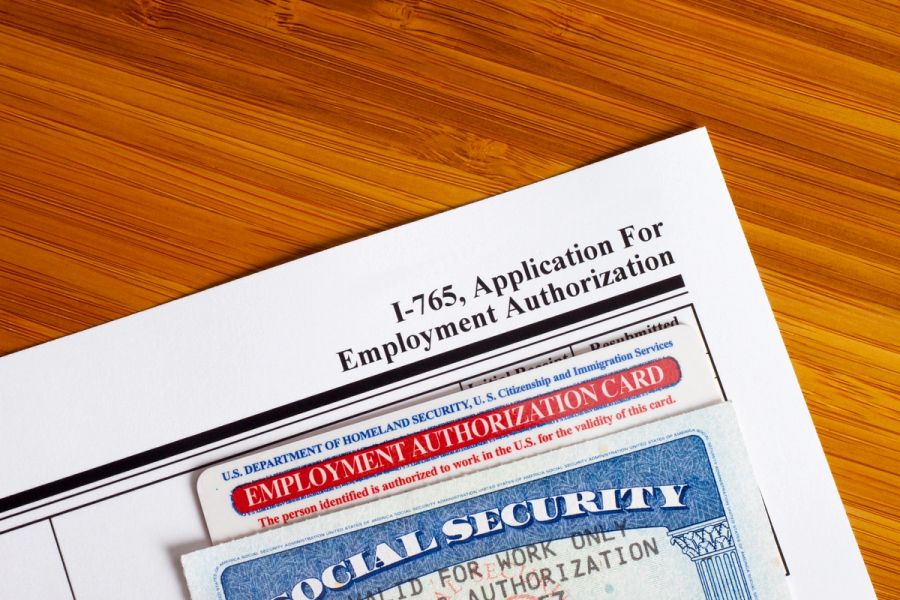
This type of work requires approval from USCIS. You must apply for an Employment Authorization Document (EAD) before you begin working.
STEM OPT Extension
F-1 students with degrees in science, technology, engineering, or math (STEM) can apply for a 24-month extension of post-completion OPT (for a total of 36 months).
Your employer must be E-Verify registered, and you’ll need to submit a Form I-983 training plan to your DSO and receive USCIS approval.
Special circumstances
The government also allows F-1 visa holders to work in certain special circumstances:
- Severe economic hardship employment: If you experience unexpected financial difficulties after your first year, you may be able to work off-campus in your field (up to 20 hours/week during classes, full-time during breaks).
- International organization employment: You can apply to work for recognized international bodies (like the UN or World Bank) after your first year.
Both options require DSO recommendation, filing Form I-765 (Application for Employment Authorization), USCIS approval, and an EAD card before you start working.
What are my options when my F-1 program finishes?
After completing your program, you have a 60-day grace period to prepare for departure from the United States or transition to another status. During this time, you can:
- Travel within the U.S.
- Prepare to leave the country
- Apply for OPT if you haven't already
- Transfer to another school and renew your F-1 student visa
- Change to another visa status
For long-term employment, you might explore work visas like the H-1B, which typically lasts three years and can be extended to 6 years. An H-1B requires a specialty occupation, a bachelor’s degree or its equivalent, and selection in the H-1B lottery. Students with exceptional ability in their field might qualify for an O-1 visa.
Moving forward with the F-1 visa
The F-1 visa opens the door for international students to pursue world-class education and valuable work experience in the United States. Staying informed about your status and work authorization options is essential to make the most of your time as an international student and maintain lawful presence.
Ready to get your F-1 visa or apply for a work visa or Green Card in the United States? Request a consultation with Manifest Law and get the clarity you need to move forward.
Subscribe to our newsletter.
*By clicking Submit and subscribing to our newsletter, you agree to the Manifest Terms and Privacy Policy.
Frequently asked questions
What happens if my F-1 visa is denied?
If your F-1 visa is denied, there’s no formal appeal process. You would just reapply for the F-1 with stronger evidence or supporting documents that show your circumstances have changed since your previous application.
Can I attend vocational school with an F-1 visa?
No. If you’re planning to attend vocational school, you must typically apply for an M-1 visa, which is designed specifically for non-academic programs. The application process, however, is nearly the same.
How long does the F-1 visa process take?
F-1 visa processing usually takes a few days to a few weeks after your interview, with passports typically returned within 5-10 business days. If your case is selected for administrative processing, it may take one to six weeks (sometimes longer). Interview appointment wait times vary widely by embassy and season, so it’s best to check the U.S. State Department website for current estimates.
Can I apply for a visa outside my home country?
As of September 6, 2025, F-1 visa applicants must apply in their home country or country of residence. There are some exceptions, like embassy closures in your home country. Whenever possible, apply in your home country to avoid delays or complications.
How do I file for an extension?
To extend your F-1 status, contact your DSO before your program end date. Your DSO can extend your program for up to one year for academic or medical reasons without needing USCIS approval. If your program has already ended, you can either file Form I-539 with USCIS to reinstate your status or leave the U.S. and reapply for a new F-1 visa abroad, which is usually faster but requires paying the SEVIS fee again.
International students are generally ineligible for federal aid like FAFSA, though some schools offer their own funding — our FAFSA guide for international students explains the options.
About the Author
Contributing Writer
Carolyn Yang is an urban planner, storyteller, and cultivator of unlikely partnerships. She enjoys translating dense policy language into digestible, actionable information for those seeking to navigate the immigration system.
Read bioReviewed By

Senior Immigration Attorney at Manifest Law
Henry is an Estonian American attorney licensed in Arizona with broad experience in employment-based immigration. He handles EB-1A, EB-2 NIW, O-1, and E-2 cases for founders, professionals, and creatives across industries worldwide, and has helped hundreds of clients achieve successful outcomes.
Read bioShare this article: