



Naturalized vs. Derived Citizenship Explained

- Naturalization is the process for Green Card holders to become citizens, requiring residence, English and civics tests, an interview, and the Oath of Allegiance.
- Derived citizenship is automatic for some children when specific legal requirements are met.
- Once obtained, citizenship rights are the same; the main differences are how citizenship is acquired and how it’s documented.
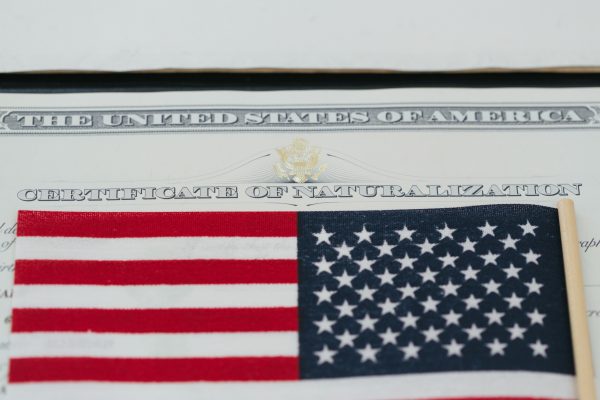
- Proof matters: Naturalized citizens use a Certificate of Naturalization, while derived citizens often rely on a U.S. passport and sometimes a Certificate of Citizenship.
Naturalized and derived citizens both hold the same rights and responsibilities, but they work in different ways and have different eligibility requirements.
Naturalization is an application-based process for lawful permanent residents who meet residency and testing requirements. Derived citizenship, by contrast, happens automatically under the law when a child gains citizenship through a parent, as long as specific conditions are met.
What is naturalized citizenship?
Naturalized citizenship is obtained when a lawful permanent resident, also known as a Green Card holder, completes the legal process to become a U.S. citizen.
Permanent residents who’ve held Green Cards for five years or longer might be eligible to go through naturalization. Lawful permanent residents married to a U.S. citizen can pursue naturalization after three years of holding a Green Card.
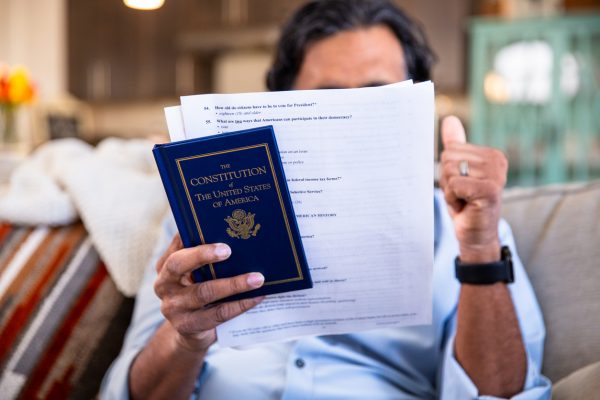
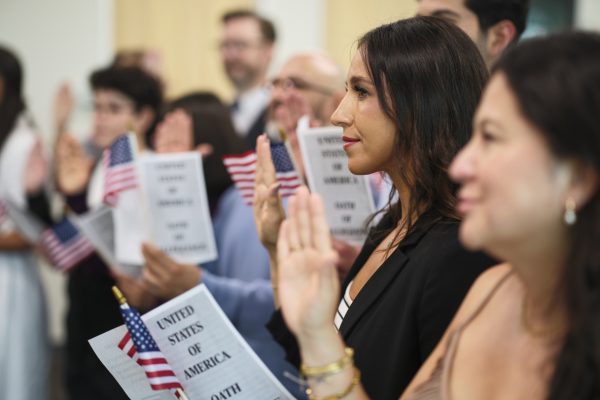
Once someone is eligible, they can apply for naturalization by applying to the U.S. Citizenship and Immigration Services (USCIS). The process involves an interview, a civics exam, and an English exam. After taking the Oath of Allegiance at a naturalization ceremony, an approved applicant becomes a U.S. citizen.
What does it mean to be a derived U.S. citizen?
Derived citizenship means someone became a U.S. citizen after they were born, through their parents. The term usually refers to children born outside the U.S. who become citizens automatically after birth when the legal requirements are met.
To be considered a derived citizen, an individual must be unmarried, under 18 years of age, and legally admitted to the United States as a lawful permanent resident. At least one parent is either a U.S. citizen by birth or became a U.S. citizen through naturalization.
The law automatically grants citizenship to certain minors through derivation, ensuring that children share the same legal nationality as their parents. The legal status of a minor typically depends on the status of the parent because minors can’t independently apply for citizenship.
Naturalized vs. derived citizen: Key differences
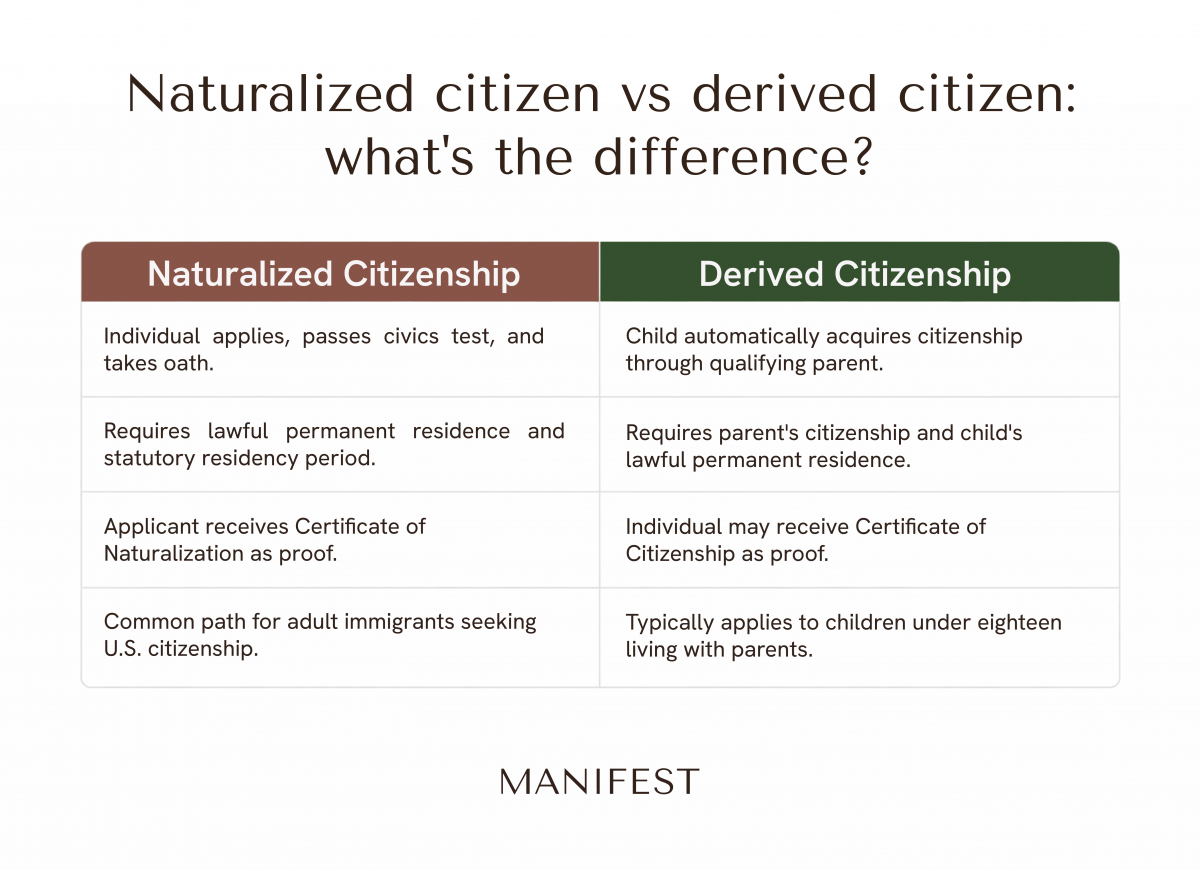
| Feature | Naturalization | Derived Citizenship |
| How it is obtained | Through a voluntary legal process where a foreign national fulfills requirements (residency, character, etc.) to become a citizen | Automatically granted by law when a child’s parent or parents become U.S. citizens, or when a child is adopted by U.S. citizens and other requirements are met |
| Age requirements | Must be at least 18 years old to apply | Must be under 18 years old at the time the qualifying event, such as a parent’s naturalization, occurs |
| Application vs. Automatic | An application is required. You must file Form N-400, attend an interview, take civics and English tests, and take the Oath of Allegiance | Citizenship is automatic. The status changes the moment the legal criteria are met. No application is required to become a citizen. You just need to submit a form if you would like an official document of status. |
| Common documents used as proof | Certificate of Naturalization | Certificate of Citizenship, through Form N-600, or a U.S. Passport. |
How do you become a naturalized citizen?
Lawful permanent residents can apply for naturalization to become a U.S. citizen after meeting eligibility requirements. These include residency requirements, like living in the country for a qualifying period of time, demonstrating good moral character, and basic knowledge of English, U.S. history, and government.
Most people can apply after holding a Green Card for five years, though spouses of U.S. citizens may be eligible sooner. As part of the process, applicants submit Form N-400, attend a biometrics appointment and interview, complete an English and civics exam, and—if approved—take the oath of allegiance.
Because the naturalization process involves multiple steps and legal requirements, it’s important to understand how timing, travel, and past immigration history can affect your case. For a step-by-step breakdown of becoming a citizen and common pitfalls to avoid, see our full guide to the naturalization process—or speak with an experienced immigration attorney about your specific situation.
| 🗓️ USCIS allows you to file for naturalization up to 90 days before meeting the full amount of time required as a lawful permanent resident. |
How do you qualify for derived citizenship?
Derived citizenship is automatic, but it only happens if certain legal requirements are met. These include:
- Having at least one U.S. citizen parent.
- The child is under 18 years old
- The child is a lawful permanent resident
- The child is living in the U.S. and in the legal and physical custody of a U.S. citizen parent
| 💡 If you turned 18 before February 27, 2001, different rules may apply for derived citizenship. |
Common situations when you gain derived citizenship
- A parent naturalizes: A child is a Green Card holder and lives in the U.S. with a parent who becomes a U.S. citizen through naturalization before the child turns 18 years old.
- One parent is already a U.S. citizen: The child enters the U.S. as a lawful permanent resident and resides in the U.S. in that parent’s legal and physical custody before turning 18.
- Adoption by a U.S. Citizen: A child is adopted by a U.S. citizen parent and enters the U.S. through an adoption-based process. In some cases, USCIS issues a Certificate of Citizenship automatically, while in others additional steps may be required before citizenship is recognized.
- Children of U.S. citizens stationed abroad: In limited circumstances, children of U.S. citizen parents who work or are stationed abroad may still meet the requirements for derived citizenship, so long as the child is lawfully admitted for permanent residence and other conditions apply.
How to prove U.S. citizenship
Even when citizenship is automatic, like with derived citizenship, people often still need documentation to prove it for work authorization, passports, Social Security records, financial aid processes, and other life events.
You can prove citizenship with the following documents:
- Certificate of Naturalization: This is issued to someone who becomes a citizen through the naturalization process. It’s a foundational proof document and is commonly used to apply for a U.S. passport or replace records.
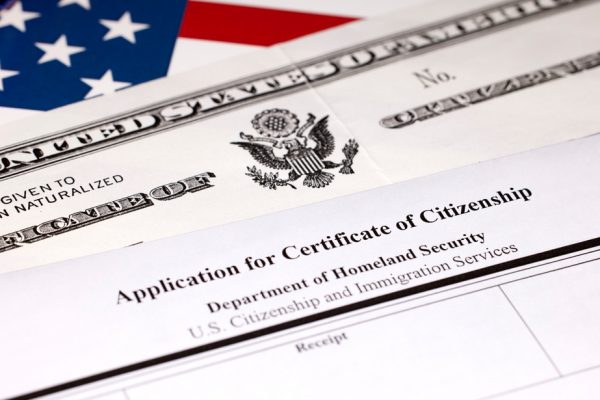
- Certificate of Citizenship: This is commonly used by people who became citizens automatically, such as in derived citizenship cases. Someone might also request it to create a clear, permanent record of proof of citizenship, especially if they anticipate future documentation needs. You can file Form N-600 to get a Certificate of Citizenship.
- U.S. Passport: A passport is accepted as proof of U.S. citizenship for many purposes. When applying, you typically submit citizenship evidence such as a Certificate of Naturalization or Certificate of Citizenship, depending on your situation.
Understanding your eligibility for citizenship
Whether you’re pursuing naturalization or trying to confirm derived citizenship, small details can make a big difference in how smoothly your case goes. You’ll want to note dates, have custody documents, and proof of permanent resident status. Our immigration attorneys at Manifest Law can help you evaluate your pathway, identify the evidence you’ll need, and avoid delays. Request a consultation to learn more about how an attorney can help with the application process for either naturalization or proof of derived citizenship.
Naturalized vs. derived citizen FAQs
What is the difference between a citizen and a naturalized citizen?
A citizen is anyone who has U.S. citizenship. A naturalized citizen is a citizen who obtained citizenship by applying with USCIS after meeting eligibility requirements, rather than becoming a citizen automatically through a parent.
Who qualifies for derivative citizenship?
In general terms, a person may qualify for derived citizenship if they become a citizen automatically after birth through a parent and meet the legal requirements. It’s often tied to the child being under 18, having lawful permanent resident status, and residing in the U.S. in the legal and physical custody of a U.S. citizen parent.
Is derived citizenship automatic?
Yes, derived citizenship is automatic under the law when the requirements are met. However, people often still need to apply for documentation, such as a U.S. passport and sometimes a Certificate of Citizenship, to prove it.
Do naturalized and derived citizens have the same rights?
Generally, yes. Once a person is a U.S. citizen, they have the same core rights and responsibilities of citizenship. This is true whether they became a citizen through naturalization or derivation. The main differences are how citizenship is obtained and which documents are used to prove it.
Can a derived citizen apply for naturalization?
Usually, no. They’re already a U.S. citizen. If a person thinks they qualify for derived citizenship but isn’t sure the legal requirements were met, it’s worth confirming before filing anything. An immigration attorney can help clarify whether you meet eligibility requirements, even when the details of your personal and family history are complex.
What if my parents naturalized after I turned 18?
In most cases, you can’t derive citizenship through a parent’s naturalization after you turn 18. You might have other options. Depending on your status, you may still be able to obtain a Green Card and later apply for naturalization through a different pathway.