



What Is the K-2 Visa?

- The K-2 visa allows unmarried children under 21 to enter the U.S. with their K-1 visa parent.
- K-2 status is tied to the K-1 parent and requires the U.S. citizen to list the child on Form I-129F.
- Eligible K-2 holders can apply for a Green Card after the K-1 holder’s marriage.
- Timing is critical, as children who turn 21 before entry or adjustment of status may lose Green Card eligibility.
The K-2 visa allows the children of foreign fiancé(e)s to accompany them to the U.S. For families navigating the fiancé(e) visa process, understanding its nuances can be useful when making timely decisions around filing.
What is the K-2 visa?
The K-2 is a nonimmigrant visa that allows the unmarried children of a K-1 fiancé(e) visa applicant to enter the United States as a derivative beneficiary. Because K-2 status is tied to the K-1 parent’s case, a child can’t apply for or maintain K-2 status independently.
After arriving in the U.S., K-2 children may apply for a Green Card through adjustment of status, but they must wait until their K-1 parent marries the U.S. citizen petitioner. This marriage must also take place within 90 days of the K-1 parent’s entry in the U.S.
Who the K-2 visa is for
Not all the children of K-1 visa holders can fall under the K-2 category. By the time they enter the U.S., they must be:
- Unmarried
- Under 21 years old
- Listed on their parents’ Form I-129F filing
Stepchildren of K-1 visa holders may qualify for K-2 status, according to the Immigration and Nationality Act, if they can prove that their step-relationship existed before the child turned 18.
Adopted children are eligible as well, provided the adoption occurred before age 16 and the parents meet a two-year legal custody and residence requirement.
Benefits of the K-2 visa
Manifest immigration attorney Ana Gabriela Urizar says the K-2 visa can be extremely useful for parents who wish to bring their children to the U.S. “Once they’re in the country under K status, children can apply for an adjustment of status—which takes out the need to wait abroad for a Green Card,” she says. “That can be a huge unlock for families, because it helps keep parents and children together as they wait to become permanent residents.”
In addition, K-2 visa holders can:
- Study in the U.S.
- Apply for a work permit
- Request advance parole after filing for adjustment of status
| 💡 Curious to see how long a K-1 petition takes? Check out our guide to K-1 processing times, which includes detailed information on the application process. |
Documents required for a K-2 visa application
USCIS does not provide a list of specific documents needed to prove a parent-child relationship for K-2 holders. However, these items may be useful as evidence for your initial Form I-129F filing:
- The K-2 beneficiary’s birth certificate
- A marriage certificate between the immigrant parent and the petitioning stepparent, if the child qualifies as a stepchild
- An adoption decree, if the child qualifies as an adopted child
- Evidence of legal custody and joint residence, where required to establish an adoptive relationship
- Additional proof that the child is unmarried and under 21, such as tax returns or school records
- School records to show the child resides with the petitioner
After USCIS approves the I-129F petition, each K-2 applicant must attend a visa interview at their respective consular office. By the time they attend their appointment, they must have obtained:
- A completed Form DS-160, with a confirmation page
- A valid passport
- A passport-style photograph
- An original birth certificate
- Proof of the qualifying parent-child relationship, as applicable
- Medical examination results from an authorized panel physician
- A copy of the approved Form I-129F
The K-2 visa holder must carry a valid passport with a K-2 visa stamp to enter the U.S. Also consider carrying copies of your approved petitions, since Customs and Border Protection (CBP) officers have the liberty to ask for additional evidence.
How to apply for a K-2 visa
If you’re applying for a K-1 fiancé(e) visa and want your child to enter the U.S. with you, below are the steps you’ll take to obtain a K-2 visa for them.
Gather evidence of qualifying parent-child relationship
Before your U.S. citizen spouse can file Form I-129F, you’ll need to gather evidence that your child qualifies for the K-2 visa. Talk to an immigration attorney about what kinds of evidence will work best for your specific case. Those who are step-children or adopted are often required to show additional proof of familial relationship, such as adoption decrees and school records.
File Form I-129F
Only U.S. citizens are allowed to fill out an I-129F petition. Since neither you nor your child is allowed to self-petition, coordinate with those in charge of sending the application to USCIS. Make sure they receive all the necessary evidence for your case, and confirm your child is listed properly in the I-129F filing.
Receive a decision notice from USCIS
After processing, which can take months, USCIS will notify you of the status of your I-129F petition. If you get a favorable decision, you’ll receive a Form I-797 approval notice and can move forward with consular processing.
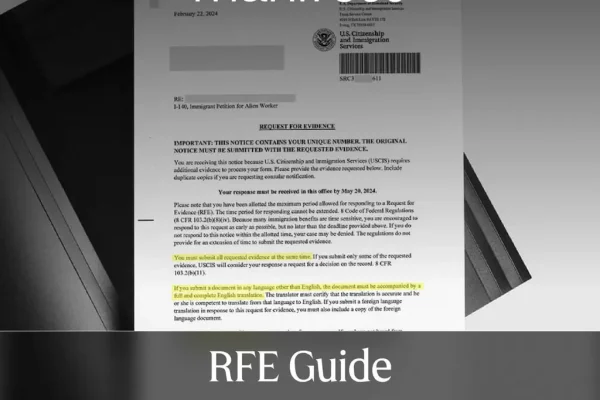
In some cases, an immigration officer may send you a request for evidence (RFE). These are understandably nerve-racking, but the most important thing to remember is that RFEs do not mean you will be denied. Rather, they are an opportunity to further strengthen your case and set the record straight with USCIS that you and your child qualify for a K category visa.
Complete Form DS-160
Once USCIS approves your I-129F petition, you can now complete Form DS-160. This petition allows you to submit personal information to the State Department. Since each visa applicant must complete their own DS-160 application, you’ll need to file for yourself and your child separately.
After completing Form DS-160, you should receive a confirmation page that has your application ID number and a barcode. Save this document. You and your child will need it to book a visa interview and for your actual consular appointment.
Prepare and attend your visa interview
Once you and your child have scheduled visa interviews, you’ll need to gather additional documents. For most K category applicants, this includes obtaining valid 2×2 photographs, obtaining medical exam results, and police certificates. These often take separate appointments, so don’t leave these to the last minute.
During the actual interview, a consular officer will inspect your documents to verify the identity and eligibility of you and your child. Remember to provide honest, detailed answers, and bring all necessary documents.
Go through CBP inspection during entry
Before you can finally enter the U.S. under K-2 status, you’ll need to pass through U.S. Customs and Border Protection. In most cases, a CBP officer will simply ask for your passport and verify that you have a valid visa stamp. They may ask questions about your stay or request additional documents, so prepare to have files on hand.
How long does a K-2 visa take?
K-2 visas require people to act fast, especially for families with kids approaching the visa’s age limit. Because this status does not cover children after they turn 21, planning ahead can help families stay eligible at every stage of the application process.
Before entering the U.S.
USCIS processing times and consular scheduling often take several months. Factor these time constraints into your filing strategy. Families with older children should prepare documents as soon as possible, and consult with an immigration attorney on how to best present evidence to both USCIS and their respective consular offices.
After entering the U.S.
K-2 visa holders cannot file for an adjustment of status until their K-1 parent marries their U.S. citizen sponsor. Timing matters here because aging out can make you ineligible to file for an adjustment of status under your parents.
Before you decide to apply for a K-2 visa, consult with an immigration attorney. They can give you clear guidance around what timelines to realistically expect, and whether you should consider alternative family-based immigration pathways if you’re at risk of aging out of K-2 status before you can file Form I-485.
Cost of a K-2 visa
Below is an itemized breakdown of all the fees required to obtain a K-2 visa.
| Expense | Who pays | Cost |
| Form I-129F filing fee | U.S. petitioner | $675 (paid once by U.S. citizen petitioner) |
| Form DS-160 visa service fee | Each applicant | $265 (paid per applicant) |
| Medical examination fee | Each applicant | Varies by country |
| Passport issuance/renewal fee | Each applicant | Varies by country |
Combined with additional documents and travel costs, filing for a K-2 visa can be a high expense. Plan for each expense before filing to avoid any surprises during the process.
Learn more about all K-1 visa fees.
What K-2 visa holders can do after entering the U.S.
Once in the U.S., K-2 visa holders can attend school and travel across the U.S. To obtain work authorization or lift international travel restrictions, they would need to apply for a work permit or advance parole, respectively.
What happens to the K-2 visa after marriage?
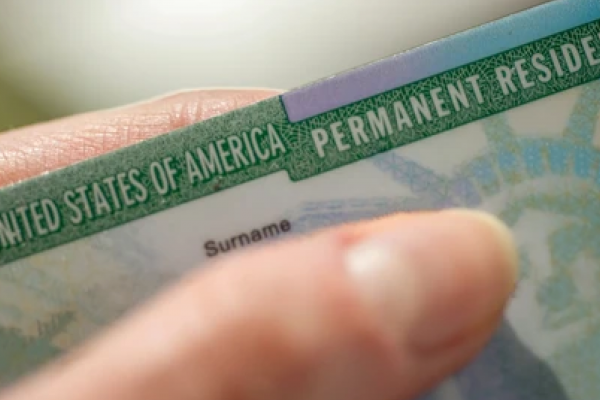
Once a K-1 visa holder marries their U.S. citizen partner, both they and their K-2 dependents can become permanent residents by applying for adjustment of status.
This process typically involves:
- Filing Form I-485
- Attending a biometrics appointment
- Passing the Green Card interview
- Receiving approval and a permanent residence card in the mail
Obtaining a Green Card typically takes months, as well as careful planning. Read our adjustment of status guide for a detailed timeline of each step.
Apply for a K-2 visa with confidence. Manifest’s immigration attorneys can guide you through the application process and offer tailored advice for your case. Request a consultation to learn more.
K-2 visa FAQs
Are adopted children eligible for K-2 visas?
It depends. To qualify for a K-2 visa, an adopted child must have entered the familial relationship before turning 16 and meet the two-year legal custody and residence requirements.
Can I get a K-2 visa with incomplete vaccination records?
Yes, but it’s riskier. While K visas don’t have vaccine requirements, adjustment of status does. Consider meeting your K-2 child’s vaccination criteria prior to their Green Card medical exam.
What happens when a K-2 visa holder gets married?
Once a child marries, they lose their K-2 status. USCIS explicitly states that children can only hold a K-2 visa if they are unmarried and under age 21.
Can K-2 visa holders work and go to school?
Yes. K-2 visa holders can go to school in the U.S., and they can work if they receive a work permit.
What happens if the K-1 marriage does not occur?
Should the K-1 marriage not occur, both the K-1 and all dependent K-2 children may be ineligible to file for adjustment of status. If you’re in this situation, consult with an immigration attorney right away to discuss the next steps.