


Form I‑797 Types: What They Mean and What to Do Next
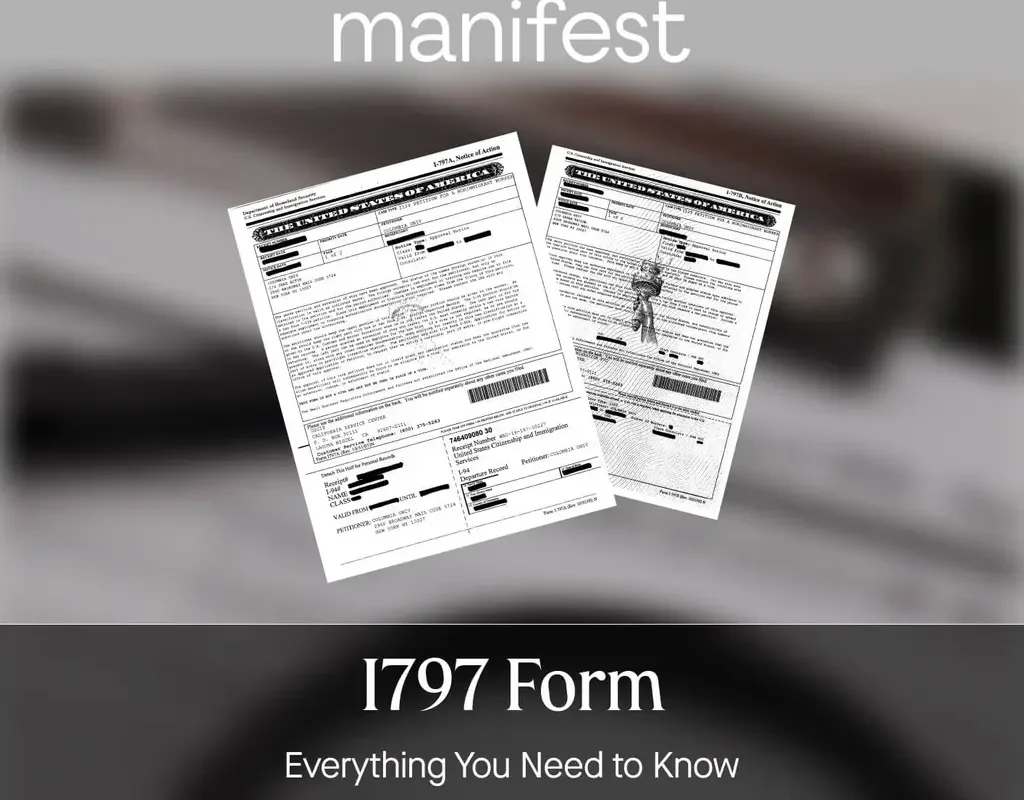
- Form I-797 is a Notice of Action from USCIS used to communicate receipts, approvals, or requests for evidence for immigration petitions.
- There are seven different types of Form I-797, each serving a distinct purpose, ranging from confirmation notices to urgent action requests.
- Your Form I-797 may include an I-94, which determines how long you are legally authorized to stay in the United States.
- Always review the expiration date on your Form I-797 and plan renewals or status changes early to avoid gaps in lawful status.
Form I‑797 is an official Notice of Action sent by the U.S. Citizenship and Immigration Services. If you recently got an I-797 letter from USCIS, you’re probably wondering what it means and what you’re supposed to do next. Maybe it showed up unexpectedly, or it’s full of barcodes and unfamiliar terms.
Either way, you’re not alone. These government notices confuse thousands of people every day, and this guide is here to help you make some sense of it all.
The good news? Not every I‑797 means something bad—or even something urgent.
But knowing which version of the I-797 you received matters. Some are simple receipt notices. Others could mean your petition was approved, your application needs more evidence, or you’re being called in for an interview.
Below, we’ll walk you through all seven types of Form I‑797—what they mean, why you might receive one, and what to do next—so you can move forward with clarity and confidence.
| 🧑⚖️Clear guidance, without the legal jargon. This article is informed and reviewed by Manifest Law’s experienced immigration attorneys—and written to make the law make sense. Because you deserve to understand the system, not fight it. Check out our editorial policy for more info. |
What is Form I‑797?
Form I‑797 is an official Notice of Action sent by the U.S. Citizenship and Immigration Services (USCIS). USCIS simply has an official form number for every type of notice, letter, or document that they send. The Form I‑797, as the name Notice of Action suggests, is a notice to inform you of some kind of action that USCIS has taken in your case. It is how USCIS communicates updates about your immigration case, and there are a few different types.
Think of Form I‑797 as your USCIS paper trail.
It helps you track what’s happening behind the scenes—when your case was received, where it’s being processed, whether you’re scheduled for an appointment, or if action is required to keep your case moving forward.
Here’s what it’s not:
- It’s not a work visa.
- It’s not a green card.
- And it’s not a form you fill out.
Whether you’re applying for a work visa, a green card, or another benefit, this form is how the government lets you know they’ve received your application, approved your petition, or need something more from you.
Each type of I‑797 signals a different stage in the process. That’s why it’s critical to read it carefully to know what comes next.
Immigration lawyer explains Form I-797
In this video, Manifest Law’s experienced immigration attorney explains Form I-797:
Why would you receive a Form I‑797?
USCIS doesn’t email or text you when something major happens in your immigration case. They send a Form I‑797 instead.
It’s their official way of confirming that your application is in motion—or that they need something from you.
Here are the most common reasons you might receive a Form I‑797:
| Reason | What It Means |
| USCIS received your application | You’ve officially entered the system. This is usually a receipt notice (Form I‑797C) confirming they got your petition and filing fee. |
| USCIS approved your petition | You’ve cleared a major milestone—your application or petition has been approved (usually Form I‑797A or I‑797B). |
| You’re scheduled for biometrics or interview | USCIS wants to collect your fingerprints or meet in person. This will be included in Form I‑797C with a date, time, and location. |
| You’re eligible for a work permit or green card | Some Form I‑797s confirm that your Employment Authorization Document (EAD or work permit) or green card is on the way. This is typically Form I‑797D. |
| Your case was transferred or reopened | Your file was moved to a new service center or reopened for further review. You’ll see this in a Form I‑797C. |
| USCIS needs more evidence (RFE) | USCIS needs more evidence (RFE)Something is missing from your application. A Form I‑797E outlines what |
Where does Form I‑797 fit in your immigration process?
Remember, Form I‑797 isn’t something you file—it’s something USCIS sends you at key points in your immigration journey.
Think of it as the government’s way of tapping you on the shoulder to say: “We got it,” “You’re approved,” or “We need more from you.”.
Let’s take a look at how Form I‑797 fits into the broader employment-based green card process:
| When | Form I‑797 Version | What It Means |
| After you apply | Form I‑797C (Receipt Notice) | USCIS confirms your application has been received and is in the system. This notice includes your receipt number so you can track your case online. |
| After a decision is made | Form I‑797A or I‑797B (Approval Notice) | Your petition has been approved. |
| During the process | Form I‑797E or I‑797C (RFE or Appointment Notice) | USCIS needs more evidence or wants to schedule you for biometrics or an interview. These notices include strict deadlines. Don’t ignore them. |
| After your green card or work permit is approved | Form I‑797D | This notice accompanies your physical green card or EAD (Employment Authorization Document) in the mail. No action is needed—it’s just confirmation that your benefit is enclosed. |
Subscribe to our newsletter for immigration resources and news, without the legal jargon.
Types of Form I‑797: What Each One Means
There are seven different versions of Form I‑797, and each one means something different.
Some are simple updates on your pending case. Others require immediate action. Taking the wrong step (or no step at all) can delay your case or cost you approval.
| 🧑💼 Manifest Tip: When you get a Form I-797C in the mail, make sure to read it carefully. Missing any required actions could cause delays in your case! What is Form I-797? Form I-797 is sent to US visa applicants to inform them that their application was received or approved. Sometimes i797 form is called a “receipt notice” or “approval notice.” |
Form I-797: Notice of Action
This is the core version of the form. It’s used to communicate they’ve received your paperwork or an approval of an application or petition.
Below, we’ll dig into more specific versions of the form that have specific uses.
Form I‑797A: Approval with I‑94
This version of the I-797 is sent when USCIS approves a change of status or an extension while you’re already in the U.S. For example, this could be a B-2, H‑1B or L‑1 extension.
When you receive this form, it includes a Form I‑94 record, which is your proof of lawful stay in the U.S. If it is for an employment category like H-1B or L-1, then attached I-94 is also evidence of your authorization to work in the United States.
What happens after receiving Form I‑797A?
This typically confirms your stay was extended or status changed. If you’re switching jobs or renewing your visa, this is the one your employer may ask for.
Review the I‑94 portion of the response carefully because the I-94 expiration date tells you how long you are allowed to stay in the country. You should not stay beyond that date, unless you apply for another extension or change of status before then. And contact an immigration attorney if you have questions.
Is I‑797 the same as H‑1B?
No. I‑797 is the approval notice you receive for H‑1B. If it has an I-94 attached, it means you have been granted H-1B status or extension, but if it doesn’t, then you need to re-enter with a visa to “activate” your H-1B status.
How soon will I receive my green card after the approval notice?
If you received an I-797 for your I-485, stating that the application has been approved, then that usually means the green card is being printed and will arrive in the mail within 1-2 weeks.
Form I‑797B: Petition Approval without I‑94
This is typically sent when USCIS approves a petition for someone outside the U.S. or is not eligible for a change of status.
The I-797B is common with Form I‑140 approvals tied to consular processing abroad.
If it does not include an I‑94, you’ll need to leave the U.S. (if you’re in it) and get a visa stamped before returning.
Receiving the I-797B means you’re approved, but your physical entry still depends on consular visa processing.
Form I‑797C: Receipt, Rejection, or Appointment Notice
The I-797C, Notice of Action, is the most common version of the 797 form. But it’s also the easiest to misinterpret.
USCIS uses the I‑797C to communicate a variety of actions, so it can get a little confusing.
This version of the form can be used to indicate:
- A Receipt Notice that shows USCIS received your application and payment
- A Rejection Notice that tells you something was wrong with your paperwork (wrong form version, incorrect fee, missing signature, etc.)
- A Transfer Notice, where your case has been moved to another service center
- An Appointment Notice that confirms your biometric services or interview appointment
Can you travel with Form I‑797C?
Usually not. It’s a receipt or appointment notice, not a travel authorization.
Form I‑797D: Sent with Your Green Card or EAD
If you’ve been approved for a green card or an Employment Authorization Document (EAD), congratulations!
The Form I-797D is the notice that arrives with your physical card.
Think of this form like a packing slip. It’s not the green card itself; instead, it’s just a cover letter confirming what’s inside the envelope.
You don’t need to take an action if you receive this version of the I-797. Simply file it with your immigration records.
Form I‑797E: Request for Evidence (RFE)
An RFE is how USCIS tells you that they need more information before they can decide your case.
Responding incorrectly (or not at all) can lead to a denial of your application or petition.
So make sure to consult with an immigration attorney so you can move forward confidently and in a timely manner.
When you receive a Form I-797E, or a request for evidence:
- It usually includes a list of documents or evidence you must submit
- It has a strict reply deadline—typically 87 days
- It requires a strategic, well-documented response (or responses)
What happens after the I‑797E is approved?
If you respond correctly and before the deadline to the 797E, your case usually continues on to the next stage (e.g., visa stamping, I‑485, consular processing).
Form I‑797F: Transportation Letter
Form I‑797F is issued to lawful permanent residents who are outside the U.S. without their green card—often due to loss, theft, or expiration.
This is an important document—one you want to keep on hand. You will need the original to travel.
Why? Because it acts as a transportation letter so you can board a flight and reenter the U.S.
To get the Form I-797F, you’ll need to first file Form I‑131A with a U.S. embassy or consulate
An important note here: This notice does not guarantee reentry. U.S. Customs and Border Protection (CBP) still makes the final decision at the border.
How to Check the Status of Your Form I‑797
Here’s one of the most functional ways to use your Form I-797. If you received a Form I‑797C receipt notice, you can use it to check the real-time status of your immigration case.
Here’s exactly how to do it:
- Find your 13-digit receipt number. This number is printed near the top of your I‑797C notice and usually starts with three letters (like LIN, WAC, EAC, or SRC), followed by 10 numbers.
- Go to the USCIS Case Status Tracker. You’ll head over to the USCIS status tool to enter your information.
- Enter your receipt number. Don’t include any dashes or spaces.
- Click “Check Status.” You’ll see the most recent update from USCIS on your case. This could say “Case Received,” “Request for Evidence Sent,” “Approved,” or something else.
- Save your results. Take a screenshot or write down the update. USCIS doesn’t always notify you when something changes, so it’s smart to check your case regularly.
| 💡 Manifest Tip: You can also create a free USCIS online account to receive case alerts, upload documents, and track updates in one place. |
What does the expiration date on Form I‑797 mean?
The expiration date listed on your Form I‑797—especially on a Form I‑797A—isn’t just paperwork.
This is the official end date of the immigration benefits granted to you, like your lawful stay in the U.S. or your ability to work.
So the issue date to your expiration date are considered your “validity dates” for whatever benefit you were granted.
| 📘The visa stamp in your passport and the I‑94 validity date are not the same. USCIS cares about your I‑94—even more than your visa—for lawful presence tracking. |
If your I‑797 includes an I‑94, that expiration date also reflects how long you’re allowed to remain in the country legally.
Once that date passes, your status may be at risk—even if your visa stamp is still valid.
That’s why it’s essential to:
- Track your expiration date closely
- Begin planning for renewals, extensions, or changes of status well in advance
- Consult with an immigration attorney before your window to act gets too short
If you have concerns about how to prepare for your expiration date, including keeping any processing times in mind for new paperwork, make sure to consult with an immigration law firm or attorney to get legal advice on your next steps.
| 💡Manifest Tip: Set calendar reminders 6 months before your granted immigration benefit expires. This gives you time to prepare, gather documents, and file on time—without rushing or risking a gap in status. Explore our visa approval notices and success stories to learn how we helped founders, researchers, and artists like you turn their stories into winning petitions. |
What if I lost my Form I‑797?
Losing your Form I‑797, especially an I-797 A, B, or F, can feel stressful—but it’s not the end of the world.
USCIS doesn’t make it easy to replace documents, but you can request a duplicate if needed.
Here’s what you can do.
Step 1: Request a replacement from USCIS.
You have two options:
- Call USCIS at 1‑800‑375‑5283 to see if a duplicate can be mailed to you (sometimes possible for recent notices).
- File Form I‑824, an Application for Action on an Approved Application or Petition, to formally request a copy of your Form I‑797. This is the most reliable path—especially for I‑797A or I‑797B.
Step 2: Keep digital and paper copies of all future USCIS correspondence.
Scan everything as soon as it arrives, and make sure to store backups in a secure cloud folder or with your attorney.
That way, if something gets lost in the mail or misplaced at home, you’re covered.
| 📘Lost I‑797s can delay green card applications, job verification, visa interviews, or travel plans—so having a copy is crucial if you ever need to prove your immigration status or refile later. |
Start your immigration process with confidence
The U.S. immigration system wasn’t designed to be easy—but we believe it should be understandable.
Manifest Law’s immigration lawyers can help interpret your I‑797 and guide your next move. Our attorneys can help you chart the smartest path forward, based on your goals and timeline.
👉Request a consultation with Manifest Law’s experienced immigration lawyers and get the clarity you need to move forward.
Subscribe to our newsletter for immigration resources and news, without the legal jargon.
Frequently Asked Questions about the Form I‑797 and subsequent versions
Here are a few common questions our team gets about the Form I-797.
If you don’t see your question answered here, request a consultation with Manifest Law so you can get clarity on your entire visa application or green card process.
Can I travel with Form I‑797?
The short answer? It depends on which version you received.
Some types of Form I‑797 can support international travel, while others are completely invalid for reentry.
- Here’s when a I-797 could allow travel: Form I‑797A may serve as temporary proof of status, especially if it includes an attached I‑94 record. In some cases, it can help you reenter the U.S. without needing a new visa stamp, but only if you meet certain conditions (like traveling to Canada or Mexico for under 30 days under automatic revalidation). Also, Canadian citizens are visa exempt and can use certain I-797 approval notices to enter the United States without a visa stamp.
- Here’s when a I-797 receipt doesn’t support travel: Form I‑797C, I‑797D, I‑797E, and I‑797F are not valid for travel. They are informational or action notices, not evidence of lawful status.
Ultimately, you should always double-check before leaving the U.S.
International travel with the wrong documents can jeopardize your immigration case or leave you stranded abroad.
If you need to travel, consult with an immigration attorney to confirm whether your I‑797 is travel-eligible based on your specific situation
What happens after receiving Form I‑797A, B, or C?
Each version of Form I‑797 triggers a different next step.
Here’s what to do depending on the type you received:
- Form I‑797A: Check your I‑94 and save a copy. This notice usually confirms that your status has been extended or changed while you’re in the U.S. Look at the bottom section for your new I‑94; this shows how long you’re authorized to stay. Save both physical and digital copies for your records and share with your employer if requested.
- Form I‑797B: Plan for visa stamping. This means your petition has been approved, but it does not include an I‑94. If you’re abroad, use this notice to schedule a visa stamping appointment at a U.S. consulate. If you’re in the U.S., you’ll likely need to depart the country, get your visa stamped, and reenter to activate your new status.
- Form I‑797C: Read it carefully. This version is used for multiple reasons, including receipt notices, biometrics appointment, case transfers, rejection notices.
Your next step here depends on what action your notice requires. If it’s an appointment notice or an RFE (ie, a request for additional information), mark the date and deadline immediately and speak to an attorney if you have questions.
Is Form I‑797 a visa?
No—it’s a notice from USCIS, not a visa or green card. But certain types (like I‑797A) confirm eligibility for visa issuance or status in the U.S.
Is I‑797 the same as a green card?
No—it’s a notice from USCIS, not a visa or green card.
But certain types (like I‑797A) confirm eligibility for visa issuance or status in the U.S.