


Can Green Card Holders Vote in U.S. Elections?
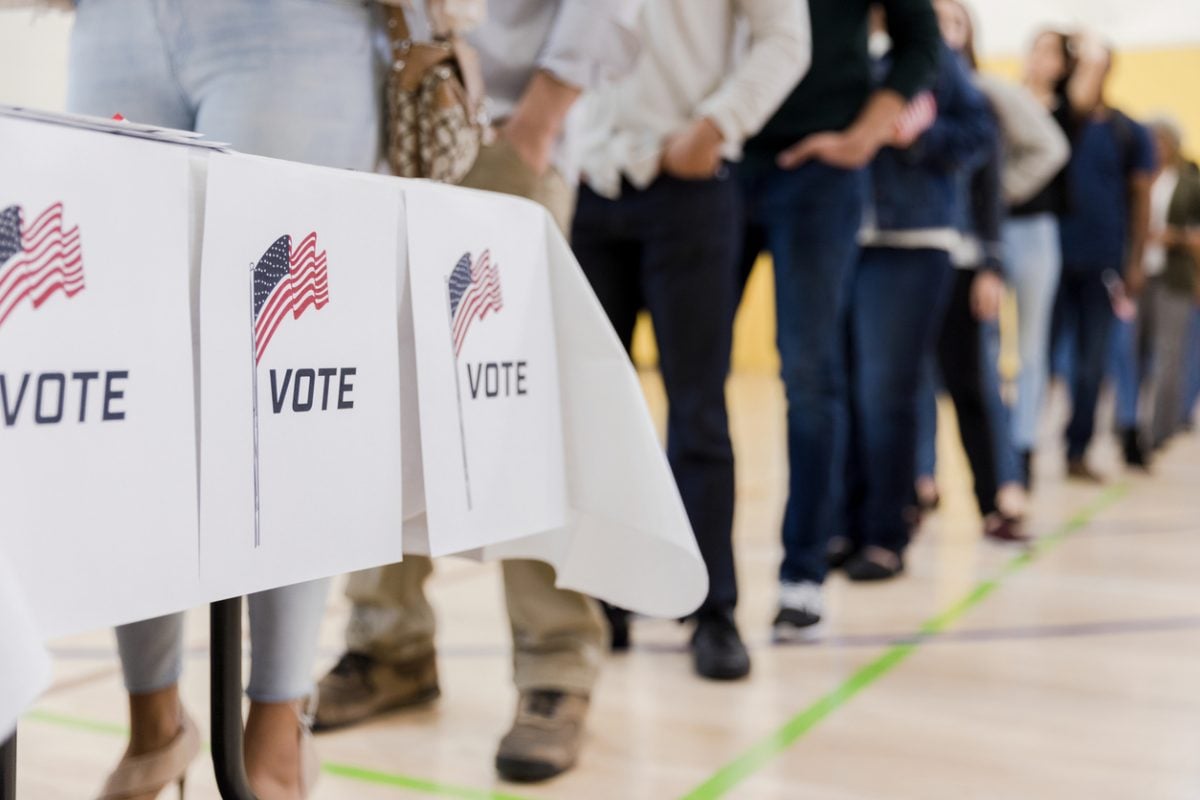
Green Card holders cannot vote in U.S. federal, state, or most local elections. This applies to both 10-year and conditional 2-year Green Cards.
As of January 2025, an estimated 13 million lawful permanent residents (LPRs) were living in the United States, according to the Department of Homeland Security’s Office of Homeland Security Statistics. Despite having many of the same rights as U.S. citizens, voting in most elections is not one of them.
With the 2026 U.S. midterm elections approaching, many permanent residents want to understand exactly where the line is — and what the consequences are for crossing it.
- Green Card holders cannot vote in federal, state, or most local elections until they become U.S. citizens.
- Only U.S. citizens have full political rights, including voting and running for public office.
- Some local jurisdictions, like Washington, D.C. and parts of California, allow limited noncitizen voting in local elections.
- Permanent residents still have important rights, including the ability to live, work, and travel freely in the U.S.
Can Green Card holders vote in U.S. elections?
No. Green Card holders (also called lawful permanent residents) cannot vote in U.S. elections. That applies to presidential elections, congressional elections, state elections, and most local elections.
To vote in any U.S. election, you must be:
- A U.S. citizen or dual citizen (living in the country or abroad)
- At least 18 years old
- Registered to vote before your state’s deadline
- A resident of the jurisdiction where you are voting
Green Card status, whether a 10-year card or a conditional 2-year card, does not meet the citizenship requirement.
Who cannot vote in the U.S.?
The following groups generally cannot vote in U.S. elections:
- All non-citizens, including lawful permanent residents (Green Card holders)
- People with certain felony convictions, depending on their state
- Some individuals with disabilities, if a court has ruled they are unable to understand the voting process
Additionally, U.S. citizens living in territories such as Puerto Rico, Guam, or the U.S. Virgin Islands cannot vote in presidential elections, though they can vote in presidential primaries.
| Important: For Green Card holders and visa holders, there can be serious immigration consequences if you vote in an election you were not permitted to participate in, even if you believed you were eligible. See the consequences section below. |
Why can’t Green Card holders vote in U.S. elections?
Green Card holders cannot vote because federal law explicitly prohibits non-citizens from voting in federal elections, and no state has allowed non-citizen voting in state elections since 1926.
The legal framework is built on three pillars:
- 18 U.S.C. § 611 — Federal law makes it unlawful for any non-citizen to vote in any election held for the purpose of electing a federal candidate, including President, Vice President, U.S. Senators, and Members of the House of Representatives.
- The Voting Rights Act of 1965 — While this landmark law expanded and protected voting rights, it codified the right to vote for U.S. citizens. It did not extend voting rights to non-citizens.
- The National Voter Registration Act of 1993 (NVRA) — The NVRA authorizes states to use citizenship as a voter eligibility requirement, cementing citizenship as a baseline standard for voter registration nationwide.
Before the 20th century, many states allowed non-citizen voting at the state or local level. Between 1776 and 1926, 40 states and federal territories permitted non-citizens to vote in local, state, and even federal elections. No state has restored non-citizen voting rights at the state level since 1926.
The distinction also comes down to what citizenship means legally. U.S. citizens, whether by birth or through naturalization, owe permanent allegiance to the United States. Green Card holders are permanent residents, not citizens, and do not yet carry that formal political allegiance.
Can Green Card holders vote in local elections?
A small number of U.S. cities allow Green Card holders and other non-citizens to vote in local elections only. As of June 2026, approximately 19 localities across the country have enacted non-citizen local voting — but this does not extend to any state or federal election.
The table below lists all known jurisdictions where non-citizen voting is permitted as of June 2026:
| State | City / Jurisdiction | What Non-Citizens Can Vote On |
|---|---|---|
| Vermont | Burlington | Municipal and school board elections, Town Meeting Day |
| Vermont | Montpelier | City officials and city budget issues |
| Vermont | Winooski | City, school, and district candidates, budgets, and ballot issues |
| Maryland | Takoma Park | Local elections |
| Maryland | Hyattsville | Local elections |
| Maryland | Mount Rainier | Local elections |
| Maryland | Riverdale Park | Local elections |
| Maryland | Barnesville | Local elections |
| Maryland | Cheverly | Local elections |
| Maryland | Chevy Chase Section 3 | Local elections |
| Maryland | Garrett Park | Local elections |
| Maryland | Glen Echo | Local elections |
| Maryland | Martin’s Addition | Local elections |
| Maryland | Somerset | Local elections |
| California | San Francisco | School board elections |
| California | Oakland | Local elections |
| Washington, D.C. | District-wide | All local D.C. elections, including mayoral race |
Since these rules are subject to change, verify your local election laws directly with your city clerk before heading to the polls. Local voting rights do not grant any right to vote in state or federal elections.
| 🗳️ Find your local election office: The U.S. government’s election office locator can help you identify who to contact in your jurisdiction. |
How does the government verify voting eligibility?
States use a combination of ID checks, database cross-referencing, and sworn attestation to verify voter eligibility. The federal government also has tools specifically designed to identify non-citizens who attempt to register.
Verification methods vary by state but can include:
- Driver’s licenses, U.S. passports, or other government-issued photo ID
- Cross-referencing voter registration data with other government databases
- The Systematic Alien Verification for Entitlements (SAVE) program, administered by USCIS, which allows government agencies to check a person’s immigration status
| Important: The SAVE system verifies citizenship using Social Security records. If you recently naturalized, update your citizenship status with the Social Security Administration to ensure your voter records are accurate and you are not incorrectly flagged. |
What happens if a Green Card holder votes illegally?
Voting illegally as a Green Card holder is a federal offense, regardless of whether it was intentional or not. The consequences can permanently affect your immigration status and your path to citizenship.
Under the Illegal Immigration Reform and Immigrant Responsibility Act of 1996 (IIRIRA), unlawful voting by a non-citizen can result in:
- Removal (deportation) from the United States
- Permanent bar from re-entry or admission to the U.S.
- Fines and imprisonment of up to one year under 18 U.S.C. § 611
- A bar to good moral character (GMC), which can permanently disqualify you from naturalization and U.S. citizenship
- Disqualification from future visas or immigration benefits
Even registering to vote without actually casting a ballot can trigger these consequences, especially if you made any false claim about your citizenship status during registration.
USCIS takes illegal voting seriously. It can be treated as both a federal crime and a ground for removal, and it will appear in your immigration record.
| What if I accidentally voted? USCIS considers accidental voting a federal offense just as it does intentional voting. If you believe you may have voted in an election you were not eligible for, consult an immigration attorney immediately. |
Recent legislative developments (2025–2026)
Two major developments in 2025 and 2026 have tightened voting eligibility rules and reinforced the ban on non-citizen voting.
The SAVE Act (2025)
The Safeguard American Voter Eligibility (SAVE) Act was introduced in April 2025. If it goes into effect, it would require all voters to provide documentary proof of U.S. citizenship, such as a U.S. passport or birth certificate, when registering to participate in federal elections.
This is a stricter standard than prior law, which allowed voters to attest to citizenship under penalty of perjury without providing documentation. For Green Card holders, this makes accidental voter registration less likely, but also means that any attempt to register could be more easily flagged and investigated.
New York City non-citizen voting law
New York City passed a non-citizen voting ordinance (Local Law 11) in December 2021, but it was immediately challenged and struck down by a Staten Island lower court in June the following year. The state’s Appellate Division, Second Department affirmed the ruling in February 2024.
The City Council then appealed to the New York Court of Appeals, which issued a final ruling in March 2025 striking down the law as a violation of the state constitution. As of June 2026, no further appeal is possible, and non-citizens cannot vote in New York City elections.
State-Level Bans
Seven states have explicitly banned non-citizen voting in their state constitutions: Alabama, Arizona, Colorado, Florida, Louisiana, North Dakota, and Ohio. Additional states are currently considering similar bans.
How can Green Card holders participate legally in civic life?
Green Card holders cannot vote in most U.S. elections, but there are legal ways to engage in civic life and have a voice in the political process.
Legal options for civic participation include:
- Joining local community boards, advisory councils, or neighborhood planning committees
- Volunteering with voter registration or civic engagement organizations
- Attending town halls and public hearings — you can speak, even if you cannot vote
- Starting community initiatives or local advocacy groups
Note on political donations: Green Card holders cannot donate to federal, state, or local political campaigns or party committees. This is a separate restriction from voting and carries its own penalties.
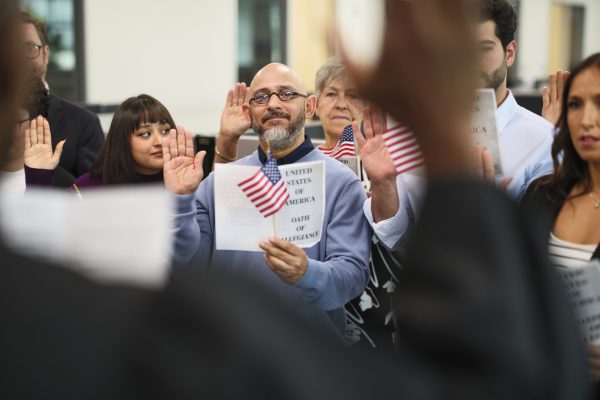
The most direct path to full political rights, including voting, is naturalization. Once naturalized, you can vote in all elections, including presidential ones.
What other rights do Green Card holders have?
Green Card holders do not have the right to vote in most elections, but they do enjoy most of the same rights and legal protections as U.S. citizens.
These include:
- Living and working permanently in the United States
- Owning property
- Legal protection under all U.S. federal, state, and local laws
- Requesting certain federal or state benefits, such as SNAP
- Traveling in and out of the U.S. (generally without restrictions, for trips under six months)
- Applying for a driver’s license or Social Security card
- Paying in-state tuition at some colleges and universities
- Serving in most branches of the U.S. military
- Petitioning for select family members (spouse, minor children, unmarried adult children) to immigrate
Green Card holders cannot:
- Vote in federal or state elections
- Run for public office at the federal, state, or local level
- Obtain a U.S. passport
- Stay outside the U.S. for more than six months in a year without risking abandonment of their status
- Make contributions to federal, state, or local political campaigns
Green Card voting rights FAQs
Can you vote with a Green Card in federal elections?
No. Green Card holders cannot vote in the United States. Only U.S. citizens — including dual citizens and naturalized citizens — can vote in federal and state elections. A small number of cities allow non-citizens to vote in local elections only.
Can Green Card holders vote in local elections?
In most cities, no. However, approximately 19 jurisdictions across Vermont, Maryland, California, and Washington D.C. allow Green Card holders and other non-citizens to vote in local elections. Check the jurisdiction table above and verify with your local city clerk.
Can Green Card holders vote in Florida?
No. Green Card holders cannot vote in Florida at any level — federal, state, or local. Florida’s state constitution explicitly bans non-citizen voting.
As a permanent resident, can I vote?
No. Permanent residents (Green Card holders) cannot vote in U.S. elections. To gain the right to vote, you must become a U.S. citizen through the naturalization process.
What if I accidentally vote as a Green Card holder?
Accidentally voting as a Green Card holder is still a federal offense. USCIS does not distinguish between intentional and accidental illegal voting. Consequences can include deportation and a permanent bar from naturalization. Consult an immigration attorney immediately if this has happened.
Can Green Card holders donate to political campaigns?
No. Non-citizens, including Green Card holders, are prohibited from making any contributions or expenditures to federal, state, or local political campaigns under 52 U.S.C. § 30121.
Can Green Card holders run for public office?
Generally, no. Green Card holders cannot run for public office at the federal, state, or local level. However, in cities that allow non-citizen voting — such as Burlington, VT and Winooski, VT — registered non-citizen voters may also be eligible to run for certain municipal offices.
How can Green Card holders become eligible to vote?
Green Card holders become eligible to vote only after completing naturalization and being sworn in as U.S. citizens. This process typically takes nine months or longer.
Can naturalized U.S. citizens vote?
Yes. Naturalized citizens are eligible to vote in all elections — including presidential elections — after their swearing-in ceremony.
What does “supporting the democratic form of government” mean for naturalization?
“Supporting the democratic form of government” is a key requirement in the naturalization process. It means embracing the principles of the U.S. Constitution, obeying the law, and respecting the electoral process — even while you are not yet eligible to vote in it.