


U.S. Visa Number: Where to Find It & What It Is
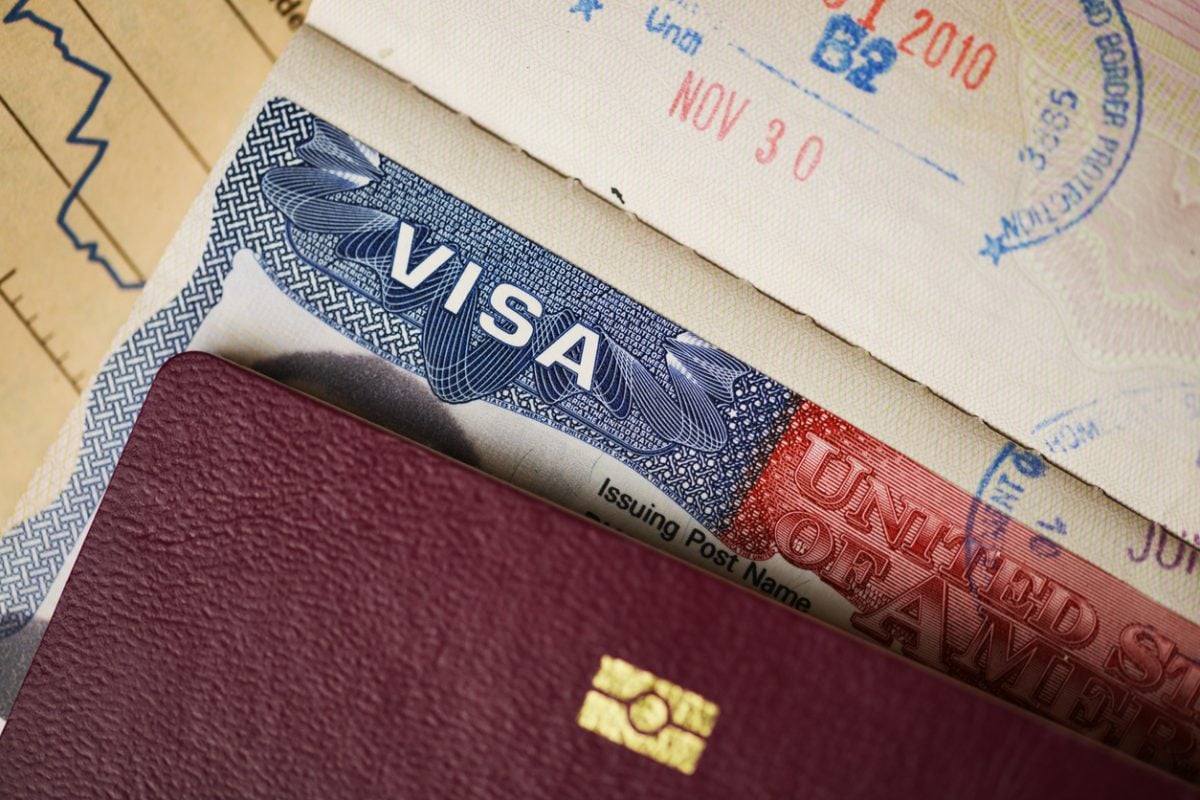
- A U.S. visa number appears in red on the lower right side of your visa stamp.
- The visa number is typically eight characters long and is usually all numbers, though it may include a letter.
- Your visa number is different from your passport number and your alien registration number.
- You may need your visa number when completing travel or immigration forms.
Your U.S. visa number is a number printed in red on the bottom right of your visa stamp. It’s a unique visa identifier used by U.S. Citizenship and Immigration Services (USCIS), and it’s different from your passport or alien registration numbers. It typically consists of eight characters, sometimes beginning with a letter, followed by seven digits.
What is a U.S. visa number?
A U.S. visa number, also called a visa foil number, is an identification number assigned to the visa foil (visa sticker or visa stamp) in your passport. Think of it as a tracking number for that specific visa stamp and not an ID number for you personally.
A visa number is different from other information printed on your visa, such as the visa class or category (like B-1/B-2, F-1, H-1B), the issue date, and the expiration date.
Subscribe to our newsletter for immigration resources and news, without the legal jargon.
Where is the visa number on a U.S. visa?
The visa number is printed in red and is located in the bottom right corner of the visa. It’s 8 characters and is typically all numbers but is sometimes one letter followed by numbers.
Here’s how to quickly find your U.S. visa number:
- It’s printed in red.
- It’s in the lower-right area of the visa sticker.
- It’s not your Visa Class (such as F-1, H-1B, or O-1) and it’s not your passport number.
- It’s typically eight digits, but sometimes it includes a letter. Examples: 12345678 or A1234567
- It’s a unique identifier for that specific visa foil, not a general identifier for you as an individual.
| 💡 Visa number vs. alien registration number. While a visa number is used to identify the visa itself, an alien registration number is used to identify the individual to whom a visa is issued. |
What is your visa number used for?
A visa number is used as a reference to identify your visa on certain forms. It helps USCIS, the State Department, and other agencies match your application or record to the specific visa that was issued.
Situations where you need your U.S. visa number
You may be asked for your visa number when you’re dealing with immigration or travel paperwork because forms often collect details about the visa stamp itself.
Common examples include:
- Visa-related forms that request details from your passport and visa, like a Form I-485 request to adjust status
- Travel or re-entry documents that ask for visa details
- Replacement or reporting steps if your passport is lost or stolen
- Administrative or case follow-ups where a government agency, school, or employer asks you to confirm the visa tied to your passport
| ⚠️ What to do if you lose your possport or visa foil: Report it right away to your local embassy. If you have any copies of your visa page—ideally with the stamp number and the passport number the visa was issued in— keep those in a secure place. You can get a replacement if you don’t know the visa number, but having a saved copy of your visa page can make the replacement process much easier. |
How to read your U.S. visa stamp
A U.S. visa foil contains several numbers and codes. Here are simple ways to identify each item on your visa stamp.
- Visa class (such as B1/B2, F-1, H-1B, O-1) is located on the right side of the visa, under a heading of “Visa Type/Class.”
- Passport number is the number assigned to your passport booklet, which is issued by your country of nationality. It’s located on the left side of the visa foil and is labeled “passport number.”
- Issue date is when the visa was issued, and it’s located near the middle of the visa stamp, labeled “Issue Date.” Example: 09APR2023
- Expiration date is the last date the visa can be used to seek entry to the U.S. It’s also located near the middle of the visa stamp, to the right of the issue date, and is labeled “Expiration Date.” Example: 09APR2024
- Entries is a section that notes how many times the visa may be used to seek entry to the U.S. before it expires. It is located on the left side of the visa, under the passport number and is labeled “Entries.” This may be listed as a number, such as 1 or 2, or it may be an M, meaning the visa may be used for multiple entries to the U.S.
A visa might also contain annotations. These are listed toward the bottom middle of the visa. Annotations show additional details about your visa. If you have a student visa, for example, your SEVIS number and the name of your school may show in the annotations field.
Understanding your visa doesn’t have to be complicated
Visa documents include a lot of codes, dates, and numbers. It’s important to double-check what a form is actually asking for. If you’d like support interpreting your documents, planning your next immigration step, or avoiding timing mistakes, Manifest Law can help complete and file your immigration paperwork.
Request a consultation to explore your options and get tailored guidance through Manifest’s services.
U.S. visa number FAQs
How do I know if my U.S. visa number is valid?
A visa number is valid as long as the visa stamp itself is valid. If a form rejects the number, double-check that you entered the red visa number (not your passport number or visa type), and remove any spaces or extra characters. Some forms may be asking for a different identifier.
When do I receive a U.S. visa number?
You get a visa number only after a visa is issued and placed in your passport (the visa stamp/foil). If your visa hasn’t been approved and printed, you won’t have a visa number yet.
Do immigrant and non-immigrant visa numbers look the same?
They are similar in appearance. Most are an 8-digit red number, though formats can vary slightly depending on when and where the visa was issued.
Will my visa number change if I renew my passport?
No. Your visa number stays the same for that visa stamp. However, if you receive a new visa, it will have a new visa number.