


Premium Processing 2026 Guide: Fees and Forms

- Premium processing is a request for expedited USCIS form review in exchange for an additional government filing fee.
- In most cases, premium processing shortens USCIS processing times to 15 business days.
- Premium processing is available for many common visa petitions, including Forms I-140 and I-129.
- Using premium processing does not guarantee approval of your petition—it only speeds up the review timeline.
What Is premium processing?
Premium processing is an optional USCIS service that allows certain immigration petitions to be reviewed significantly faster for a fee. Depending on the form type, with premium processing, you can receive an adjudication (decision) within 15, 30, or 45 business days, rather than several months or years. Many petitioners opt for premium processing because learning the decision sooner is worth the additional cost.
How does premium processing work?
Premium processing is a paid, expedited service offered by U.S. Citizenship and Immigration Services (USCIS). When you submit a premium processing request, USCIS guarantees faster processing times, which vary depending on the form:
- 15 business days for most classifications, including I-129 forms for temporary workers, as well as Green Card petitions, such as Form I-140
- 30 business days for Form I-765 for employment authorization (EAD)
- 30 business days for Form I-539 applicants requesting a change of status to F-1, F-2, M-1, M-2, J-1 or J-2 nonimmigrant status, once all prerequisites have been met
- 45 business days for Form I-140 for EB-1C multinational executives and managers, and Form I-140 EB-2 NIW petitions
USCIS will refund the premium processing fee if it fails to provide adjudication within these windows.
| USCIS Form | Premium processing period |
| Most forms (including most I-129 and I-140 petitions) | 15 business days |
| Form I-765 | 30 business days |
| Form I-539 to request change of status to F-1, F-2, M-1, M-2, J-1 or J-2 nonimmigrant status | 30 business days (once all prerequisites have been met) |
| Form I-140 EB-1C multinational executive and manager | 45 business days |
| Form I-140 EB-2 NIW classifications | 45 business days |
Benefits of premium processing
For many petitioners, faster visa processing offers clear benefits:
- Avoid long USCIS processing times (many months to years) that can delay work start dates or travel plans.
- Helpful when employment, immigration status, or family needs depend on predictable timeframes.
- If USCIS issues a Request for Evidence (RFE) or Notice of Intent to Deny (NOID), you’ll receive it sooner and can act more quickly.
When premium processing may not be necessary
There are other times when the additional fee for premium processing may not be worth it:
- Your case type already has a fast USCIS processing time at your service center, such as a strong EB-1A petition, depending on your home country.
- You are filing well in advance of your intended start date or your planned arrival in the U.S.
- Your attorney or employer offers other guidance based on USCIS decision trends, which is the case if you’re filing certain cap-exempt petitions.
When do you request premium processing?
You typically request premium processing when you file your forms, but you can request it at any stage of the application process. You can request premium processing:
- At the time of filing (most common)
- After filing, by submitting Form I-907 separately (the expedited processing time starts from the USCIS-confirmed receipt date for your I-907)
- If USCIS requests additional evidence, and you want your case to move quickly once it’s submitted
| 🧑💼 Curious how others in your field made it work?Manifest Law’s experienced attorneys have helped thousands of immigrants secure their future in the U.S. Explore our visa approval notices and success stories to learn how we helped founders, researchers, and artists like you turn their stories into winning petitions. |
Who is eligible for premium processing?
Only certain USCIS forms and immigration categories qualify for premium processing (granted, most petitioners are usually filing at least one of these forms):
- Form I-129, Petition for a Nonimmigrant Worker
- Form I-140, Immigrant Petition for Alien Worker
- Form I-539, Application to Extend/Change Nonimmigrant Status
- Select categories, including F-1 students seeking a change of status
- Form I-765, Application for Employment Authorization
- Select categories, including international students, OPT applications, and STEM OPT extensions
With any of these categories, experienced legal assistance can streamline your process and help you determine whether premium processing is right for you. Contact one of Manifest’s experienced immigration attorneys today for a consultation!
Forms and documents required for premium processing
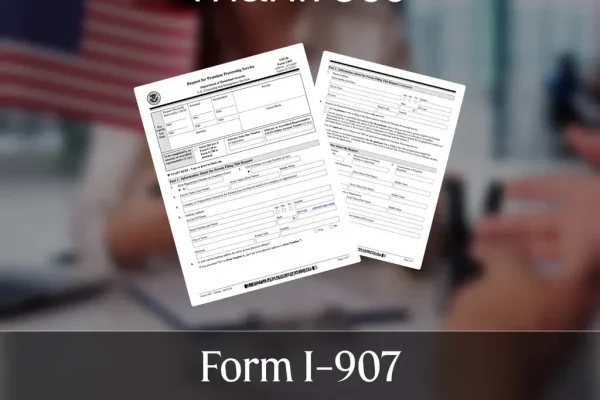
You can get premium processing with Form I-907, Request for Premium Processing Service. You can submit I-907:
- With your initial petition
- Separately after filing
Many applicants file Form I-907 after experiencing lengthy delays in standard processing.
USCIS accepts credit cards, ACH debit, or online payments for the associated filing fees.
Supporting documents needed for premium processing
- Completed Form I-907
- Copy of the underlying petition (if filing together)
- Receipt notice (if submitting I-907 separately at a later time)
- Proof of petitioning employer’s ability to pay for applicable I-140 categories (like tax returns or financial statements)
Forms not eligible for premium processing
Some immigration petitions cannot be expedited using this service, including:
- Family-based immigrant petitions (I-130)
- Humanitarian applications (asylum, VAWA, refugee petitions)
- Naturalization applications (N-400)
- DACA applications and renewals
Steps to request premium processing
- Confirm eligibility for your form type using the USCIS website.
- Complete Form I-907, making sure all petitioner or beneficiary information matches the underlying petition (including alien registration number, name, what form you’re requesting premium processing for)
- Attach the correct premium processing fee or submit online, based on USCIS’s published fee schedule.
- If filing separately, include a copy of the underlying receipt notice (usually Form I-797C).
- USCIS will send an online account update or a paper approval notice, an RFE, or an NOID within the premium processing timeframe.
| 🧑⚖️Clear guidance, without the legal jargon. This article is informed and reviewed by Manifest Law’s experienced immigration attorneys—and written to make the law make sense. Because you deserve to understand the system, not fight it. Check out our editorial policy for more info. |
Fees and timelines for premium processing
The fee USCIS will charge for premium processing depends on your application, as does the processing timeline.
| USCIS Form | Premium processing period | Filing fee |
| Most forms (including most I-129 and I-140 petitions) | 15 business days | $2,965 |
| Form I-129 for H-2B or R nonimmigrant classification | 15 business days | $1,780 |
| Form I-765 | 30 business days | $1,780 |
| Form I-539 to request change of status to F-1, F-2, M-1, M-2, J-1 or J-2 nonimmigrant status | 30 business days (once all prerequisites have been met) | $1,965 |
| Form I-140 E13 multinational executive and manager or E21 national interest waiver classifications | 45 business days | $2,965 |
File for premium processing with ease
Understanding premium processing can help you avoid unnecessary delays, protect your status, and ensure your employment or travel plans stay on track. If you want professional guidance on whether premium processing is the right strategic choice for your application, Manifest’s expert team can help you prepare and submit your request accurately and efficiently. Request a consultation today.
Premium processing FAQs
How long does USCIS premium processing take?
Premium processing guarantees either 15, 30, or 45 business days, depending on the form type. In most cases, premium processing takes 15 business days.
Is premium processing worth it?
Paying for premium processing can be worth it if you have urgent start dates or travel plans.
Can premium processing be added after filing?
Yes. You can file I-907 at any time after submitting the underlying petition, as long as your visa classification is eligible.