


Form I-751 Guide: Remove Your Green Card Conditions

- If you got your Green Card through marriage and were married less than two years at the time, you must file Form I-751 before your card expires to keep your permanent resident status.
- Joint filers must submit Form I-751 during the 90-day window before their conditional Green Card expires.
- Your receipt notice automatically extends your conditional resident status for 48 months while USCIS reviews your petition, so you can keep living and working in the United States.
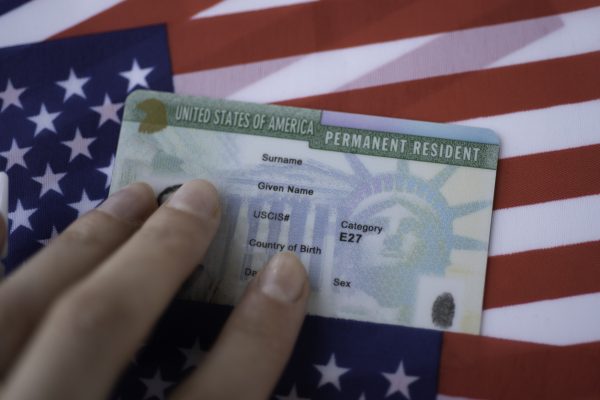
If you got your Green Card through marriage and you had been married for less than two years at the time, you received a conditional Green Card that expires in two years.
To keep your permanent resident status, you must file Form I-751 to remove conditions before that date passes. If you miss the deadline to file an I-751, you could lose your resident status and U.S. Citizenship and Immigration Services (USCIS) could move to remove you from the country.
| 🧑⚖️ Clear guidance, without the legal jargon. This article is informed and reviewed by Manifest Law’s experienced immigration attorneys—and written to make the law make sense. Because you deserve to understand the system, not fight it. Check out our editorial policy for more info. |
What is Form I-751?
Form I-751, Petition to Remove Conditions on Residence, is the form conditional Green Card holders use to upgrade a two-year card to a permanent 10-year card.
USCIS issues conditional Green Cards to people who were married for less than two years when they became a lawful permanent resident. Rather than granting full permanent resident status immediately, USCIS attaches a condition: a two-year period during which the agency can verify the marriage was genuine and not entered into solely to obtain immigration benefits.
Filing Form I-751 removes those conditions. Once approved, you receive a standard 10-year Green Card.
If your children received conditional resident status on the same day as you, or within 90 days after, you can include them on your petition. Children who received conditional status outside that window must file their own Form I-751.
Subscribe to our newsletter for immigration resources and news, without the legal jargon.
When to file Form I-751
Joint filers must submit Form I-751 during the 90-day window before their conditional Green Card expires. That’s the earliest date you can file. USCIS will reject petitions submitted before that window opens.
To find your filing window, look at the “Card Expires” date on the front of your card and count back 90 days (you can also use the USCIS filing date calculator). For example, if your card expires on Dec. 31, 2027, you can file as early as Oct. 2, 2027.
If you miss the deadline and your card expires, you can still file late, but you must include a written explanation showing the delay was due to extraordinary circumstances beyond your control.
Filing without your spouse
If you’re requesting a waiver of the joint filing requirement due to divorce, the death of your spouse, abuse, or extreme hardship, the 90-day window doesn’t apply. You may file at any time after receiving conditional resident status, as long as you haven’t been removed from the United States.
How to fill out Form I-751
You can file Form I-751 online through your myUSCIS account or by printing out the form and mailing it to USCIS. If you fill out a paper form, make sure to use the current edition of Form I-751 and to type or print in black ink.
Here’s what each part of your I-751 form requires.
Part 1: Information about you
You’ll need to provide your full name, date of birth, country of birth, Social Security Number (SSN), Alien Registration Number (A-number), marital status, your conditional Green Card expiration date, and your address.
Part 2: Biographic information
This part asks for your ethnicity, race, height, weight, eye color, and hair color.
Part 3: Basis for petition
Indicate whether you’re filing jointly with your spouse or requesting a waiver of the joint filing requirement. Select only one box for joint filing. If requesting a waiver, select all boxes that apply to your situation.
Part 4: Information about your spouse
Give your spouse’s full name, date of birth, A-number, Social Security Number, and address.
If you’re filing as a child separately from a parent, provide information about the stepparent through whom you gained conditional residence.
Part 5: Information about your children
List any children you’re including in your petition. Provide each child’s full name, date of birth, A-number, and address.
Part 6: Accommodations
Indicate if you, your spouse, or your children require disability accommodations for any USCIS appointments.
Parts 7 and 8: Signatures
Both you and your spouse must sign the petition by hand if filing jointly. Your signature is required in Part 7. Your spouse’s signature is required in Part 8.
| 🧑💼 Curious about the Green Card process for families? Manifest Law’s experienced attorneys have helped thousands of immigrants and their families secure their future in the U.S. Learn more about family Green Card lawyer options. |
Form I-751 documents checklist
Every Form I-751 petition must include copies of the front and back of your conditional Green Card, as well as those of any children included in your petition. There are also a number of other documents you should include, with the exact ones depending on your situation.
Evidence of a bona fide marriage
Submit as many of the following as possible:
- Joint bank account statements or other financial records
- Federal and state tax returns filed jointly
- Lease or mortgage agreements showing joint occupancy
- Utility bills or insurance policies listing both spouses
- Birth certificates of children born during the marriage
- Photos of you and your spouse together
- Affidavits from at least two people with personal knowledge of your relationship
If filing without your spouse
- Death certificate (if your spouse has died)
- Final divorce decree or annulment documents (if the marriage was terminated)
- Police reports, court records, medical records, or other official documentation (if filing due to abuse or extreme cruelty)
If filing from overseas on military or government orders
- Two passport-style photos for each petitioner and dependent
- Two completed fingerprint cards (Form FD-258) for each petitioner and dependent aged 14 to 79
- A copy of your current military or government orders
- Write “ACTIVE MILITARY” or “GOVERNMENT ORDERS” at the top of your Form I-751
Criminal history
If you’ve ever been arrested, charged, or convicted of any crime, include the relevant court orders or official disposition documents.
Form I-751 filing fees
The filing fee for Form I-751 is $750 if you file a paper form by mail or $700 if you file online.
When filing by mail, you have two main ways to pay:
- Use a credit, debit, or prepaid card by completing Form G-1450.
- Pay directly from a U.S. bank account by completing Form G-1650 for ACH transactions.
USCIS does not accept personal checks, business checks, money orders, or cashier’s checks for paper filings unless you qualify for an exemption.
Fees can change. Always verify the current amount with the USCIS fee schedule before submitting your petition.
Form I-751 filing address
Where you mail Form I-751 depends on where you live and whether you’re using the U.S. Postal Service (USPS) or another mailing service. Use the table below as a guide, but always confirm the current USCIS filing address for I-751 before submitting. If you’re filing online, no mailing address is needed.
| State Where You Live | Where to File Form I-751 |
| Connecticut Florida Georgia Guam Illinois Indiana Maine Maryland Massachusetts Michigan New Hampshire New Jersey New York Ohio Pennsylvania Rhode Island South Carolina Vermont Wisconsin | USCIS Elgin LockboxIf using USPS:USCIS Attn: I-751 P.O. Box 4072 Carol Stream, IL 60197-4072If using FedEx, UPS, or DHL:USCIS Attn: I-751 (Box 4072) 2500 Westfield Drive Elgin, IL 60124-7836 |
| Alabama Alaska American Samoa Arizona Arkansas Armed Forces Europe Armed Forces Pacific Armed Forces Americas California Colorado Commonwealth of the Northern Mariana Islands Delaware District of Columbia Hawaii Idaho Iowa Kansas Kentucky Louisiana Marshall Islands Micronesia Minnesota Mississippi Missouri Montana Nebraska Nevada New Mexico North Carolina North Dakota Oklahoma Oregon Palau Puerto Rico South Dakota Tennessee Texas U.S. Virgin Islands Utah Virginia Washington West Virginia Wyoming | USCIS Phoenix LockboxIf using USPS: USCIS Attn: I-751 P.O. Box 21200 Phoenix, AZ 85036-1200If using FedEx, UPS, or DHL:USCIS Attn: I-751 (Box 21200) 2108 E. Elliot Rd. Tempe, AZ 85284-1806 |
Form I-751 processing times
Form I-751 processing times vary by USCIS service center and case types. Most petitions take 31 to 38.5 months to be decided.
When USCIS accepts your petition, you’ll receive a receipt notice. That notice automatically extends your conditional resident status for 48 months beyond your Green Card’s expiration date.
During that time, you can continue to live and work in the United States. Your expired Green Card and receipt notice serve as proof of your lawful status.
For the latest processing times, visit the USCIS Case Processing Times website.
Next steps for filing Form I-751
Filing Form I-751 on time is one of the most important steps in your path to permanent residence. Miss the deadline, and your status is at risk. File with strong evidence, and you protect your right to live and work in the United States.
Every situation is different. If your marriage has ended, you were abused, or you have questions about what evidence to include, an immigration attorney can help you understand your options and prepare your petition.
👉 Schedule a consultation with Manifest Law today.
FAQs about Form I-751
Can Form I-751 be filed online?
Yes, you can file Form I-751 online through your USCIS account.
Can I file Form I-751 outside the U.S.?
You can file Form I-751 while outside the United States, but you must still meet the same deadlines and mail your petition to the correct USCIS lockbox address.
Can you travel while Form I-751 is pending?
Yes. Your expired conditional Green Card and your receipt notice serve as proof of your lawful status while traveling. However, try to avoid trips outside the United States longer than six months, as extended absences may raise questions about your intent to maintain permanent residence.
What happens after Form I-751 is approved?
After I-751 approval, USCIS will mail you a standard 10-year Green Card, removing the conditions on your residence. Then you’ll be a permanent resident without conditions, and may be eligible to apply for U.S. citizenship in the future.
Who is the petitioner in Form I-751?
The person who received the conditional Green Card through marriage is the petitioner for I-751. The spouse also signs if filing jointly, but isn’t the petitioner.