


Form N-400: A Guide to Naturalization in 2026

- Form N-400 is the application Green Card holders file to apply for naturalization and become U.S. citizens.
- Most applicants can file after five years as a permanent resident, or after three years if they obtained a marriage-based Green Card.
- The process includes an in-person interview with English language and U.S. civics tests.
- After approval, applicants must attend a naturalization ceremony and take the Oath of Allegiance to officially become citizens.
USCIS Form N-400 is the official application that a permanent resident must submit for naturalization—the process to become a U.S. citizen. The form requires you to gather and submit significant documentation. Even after filing your forms, you need to attend at least one in-person interview, which includes an English-language test and a test on U.S. history and government. While the process is doable on your own, having an experienced lawyer to help you gather documents and navigate the process can save you a lot of time and stress.
What is Form N-400?
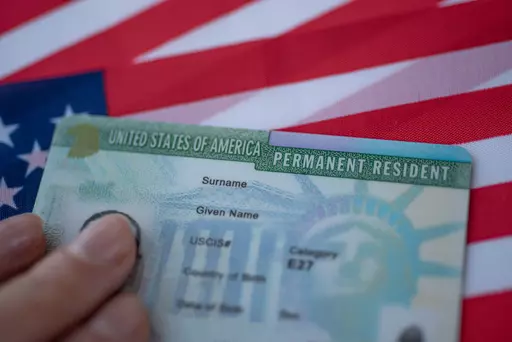
Form N-400, Application for Naturalization, allows a lawful permanent resident (Green Card holder) to begin the process of becoming a U.S. citizen. This process is known as naturalization.
All N-400 forms are filed through U.S. Citizenship and Immigration Services (USCIS), which will review your application, handle your in-person interview, and conduct your official naturalization ceremony.
| 🔍 2025 updates to the naturalization processIn August 2025, USCIS made a few changes to how it scrutinizes applications. In particular, the agency said it would resume “neighborhood checks”—asking for testimonials from people who know the applicant—and that it would place more emphasis on positive behavior and contributions to determine if an applicant had good moral character. |
Who is eligible for naturalization through Form N-400?
Naturalization is generally an option if you have a Green Card and have lived in the United States for at least five years (or three years if you received your Green Card through marriage).
Below is a more complete list of eligibility requirements for naturalization:
- You are at least 18 years old when you file Form N-400.
- You are a lawful permanent resident (Green Card holder).
- You have lived in the U.S. for at least five years (three years if you got your Green Card through marriage).
- You have physically been in the U.S. for at least 30 months after getting your Green Card (18 months if your Green Card was through marriage).
- You have lived for at least the past three months in the State or U.S. territory where you’re applying.
- You speak, read, and write English well enough to pass a language test and a civics test (the basics of U.S. government and history), unless an exception applies.
- You are willing to swear your allegiance to the United States.
- If you’re a man who lived in the U.S. any time between the ages of 18 and 25, you must prove that you registered with the Selective Service, or had a valid reason not to register.
- You can prove that you have “good moral character,” which generally means you’ve always paid your taxes and haven’t been convicted of any significant crimes, such as murder or immigration fraud.
Naturalization eligibility based on immigration status
| Status | Minimum time living in U.S. | Earliest you can file N-400 |
| Green Card holder | 30 months (2.5 years) | 5 years |
| Green Card holder, married to U.S. citizen | 18 months (1.5 years) | 3 years |
| Green Card holder with at least 1 year of military service | No minimum | During active duty or within 6 months of discharge |
| Member of the U.S. military during a period of conflict | No minimum | No minimum |
How long does it take to process Form N-400?
USCIS processes most N-400 forms within about eight to 10 months, as of January 2026. However, average wait times vary significantly based on the office that handles your application—from 5.5 months in some areas to 13 months in others. The details of your case will also impact your wait time. Any complications or mistakes could add months to your timeline.
Luckily, USCIS allows you to get a head start on your application by filing up to 90 days before completing your three or five years of living in the U.S.
Early filing rule for N-400 forms
USCIS allows you to file Form N-400 up to 90 calendar days before you reach the required wait of three years (for marriage Green Cards) or five years (for all other Green Cards).
You still can’t become a citizen until the three-year or five-year period is complete, but filing early can give a few months’ head start on the process.
| How to determine N-400 filing date: Let’s say you worked in the U.S. for years on an O-1 visa and eventually got a Green Card with an issue date of September 1, 2025. You’re eligible to apply for naturalization starting on September 1, 2030—five years after the date your Green Card was issued, as long as you’ve met the other requirements. But you can submit your Form N-400 up to 90 days early, meaning the first day you can file is June 3, 2030 (September 1 minus 90 days). |
What are the steps in the naturalization process?
1. Gather necessary documentation.
You need to submit a lot of documentation with your application, so it’s best to understand exactly what you need and start gathering it as soon as possible. Some documents will add their own processes or wait times. For example, getting copies of birth certificates, marriage certificates, or IRS tax returns can take months. Other materials, like testimonials from friends and family, also add a level of planning and coordination.
If you’re unsure which documents you need or how to get them, an experienced immigration attorney can help you complete this step.
2. Submit Form N-400.
It’s important to fill out Form N-400 as completely and accurately as possible. Check all information and make sure you properly sign the form. Whether you file online or by mail, you should include all your supporting documents. Mistakes, inconsistencies, missing documents, or unnecessary documents will increase USCIS processing time.
If you’re filing by mail, double-check that you used the most recent version of Form N-400. Also make sure that you’re mailing it to the correct address. It’s safest to use a mailing service that offers tracking and a confirmation receipt.
Even after submitting, keep a copy of your application for your interview later in the process.
3. Get a biometrics appointment.
After USCIS receives your application, it will likely schedule you for a biometric services appointment. If you already provided fingerprints for another visa, you may not need to do so again. If you haven’t, you will receive the date, time, and address for an application support center (ASC).
Make sure to bring a copy of the front and back of your Green Card, your appointment notice, and a second form of identification with your photograph, like a driver’s license, passport, or state identification card.
At the biometrics appointment, USCIS will take your fingerprints so it can run mandatory background and security checks. It may also take a photo. This could end up being your Green Card photo. Dress however you would like to appear in your official Green Card picture.
4. Respond to any requests for more information.
If USCIS needs additional information or documents to process your application, it will send you a request for evidence (RFE). The request will include the information you need to share and how long you have to send it (often 60 days).
Getting an RFE does not mean your application will get denied, but it is important to respond quickly and accurately. We recommend talking to a lawyer with experience responding to RFEs.
5. Schedule an in-person interview.
After biometrics, you will also receive an appointment for an in-person interview with a USCIS officer. During this interview, the office will confirm the information in your application and administer two tests.
The first is an English language test. You will need to speak with the officer, read a sentence out loud, and write a sentence correctly.
The second test, also called the civics test, checks your knowledge of American history and the U.S government. This is an oral test (speaking). You will get 20 questions and you need to answer at least 12 correctly.
Failing to properly answer questions in English is a common reason for getting denied, so it’s important to study and practice for the citizenship test questions and answers.
6. Wait for USCIS approval.
USCIS has 120 days after your interview to issue a decision on your application.
In many cases, if you pass your tests during the interview, you will be approved on the same day. You may also be able to attend a naturalization ceremony on the same day. In other cases, USCIS will still need to finish processing your application and will send your approval letter in the mail.
7. Attend your naturalization ceremony.
After approval, USCIS will mail you Form N-445, Notice of Naturalization Oath Ceremony. It has the date, time, and location of your naturalization ceremony. If you cannot attend at that time, you can request a new ceremony date.
After you arrive at the ceremony, you will need to watch a few videos extolling the greatness of the United States, return your permanent resident card, and take the Oath of Allegiance. Then you will receive your Certificate of Naturalization, and you can exit the building as a U.S. citizen.
Where to send Form N-400
You can submit Form N-400 to USCIS either online or through the mail. To file online, which is slightly cheaper, sign up or log in to your USCIS online account. Your account allows you to fill out the form, upload documents and evidence, pay your filing fee, check the status of your case, get notifications about your application, and update your address.
If you submit a paper form, use USCIS’s Form N-400 mailing address guide to ensure you’re sending your form to the correct office. Sending your application to the wrong address could lead to delays.
Note that if you request a reduced filing fee or a fee waiver, you cannot file online; you must file by mail.
If you want to track your Form N-400
After receiving your N-400, USCIS will mail you a confirmation as well as any future notifications on your case. You also have the option to create an online account if you want additional case tracking or faster notifications.
Form N-400 filing fees
| Filing method | Filing fee (as of January 2026) |
| Online | $710 |
| $760 |
The cost to file can change over time, so use the USCIS Filing Fees tool for the latest rates. These numbers also don’t reflect the whole naturalization process. For more comprehensive numbers, check out our guide to the cost of citizenship.
Documents required for submitting Form N-400
There are many documents you will need to submit with your completed Form N-400. The following list is not exhaustive, but is a good starting place. In most cases, you can submit copies to USCIS unless they request an original.
- A photocopy of both sides of your Green Card (if your card is lost and you’ve requested a replacement, submit a copy of your Form I-90)
- Payment for the application fee if you haven’t already paid it: a check or money order with your A-number on the back, or Form G-1450 for credit card payments
- Name change documents, if applicable
- Evidence of your continuous residence in the U.S., such as rent or mortgage statements, pay stubs, proof of car registration, or your passport with entry and exit stamps
- Proof of Selective Service registration if you’re a man who lived in the U.S. anytime between the ages of 18 and 25
- If you live outside the U.S., two identical color photographs that meet the Form N-400 instructions
- If you’re requesting a disability exception, Form N-648
- Certified translations for all non-English documents
Evidence of good moral character
- Proof of child support payments, like canceled checks, money order receipts, or evidence of wage garnishments
- If you owe any taxes, a signed agreement from the IRS, state, or local tax office showing you have arranged to pay the taxes you owe
- If you were ever arrested with no charges filed: an official statement by the arresting agency or a court confirming that no charges were filed
- If you were ever arrested with charges filed: your arrest record and disposition for each incident—dismissal orders, conviction records, acquittal orders
- Evidence of community involvement, like letters from friends, neighbors, religious leaders, or nonprofits where you participate
- Evidence of membership or donations to civic groups, religious organizations, or nonprofits
If you have an attorney or representative
- A completed and original Form G-28
If you’re applying through marriage to a citizen
- Evidence that your spouse was a U.S. citizen for the last three years, such as a birth certificate, Certificate of Citizenship, or Form FS-240
- Your current marriage certificate
- Proof that any past marriages were terminated, like divorce decrees, annulment decrees, or death certificates
- Evidence of a bona fide relationship with your spouse, such as shared tax returns, bank statements, leases, mortgages, or birth certificates for children
If you’re applying through military service
- For current military members: a completed and original Form N-426
- For former military members: DD Form 214, NGB Form 22, or discharge orders
Tips for filling out Form N-400
While most of these tips apply to people filing a physical Form N-400, they are useful reminders for everyone:
- Make sure you signed the form.
- Pay the exact filing fee.
- Submit copies unless USCIS asks for originals (you may not get these forms back).
- Double-check you have the latest version of Form N-400.
- Use the correct mailing address based on your home address.
- Use only black ink.
- Don’t use any highlighters or correction tape.
- Don’t use heavy-duty staples.
- Don’t file online if you need a fee waiver or a reduced fee.
Streamline your Form N-400 filing process for naturalization
The naturalization process can be long and stressful. You can avoid delays and frustration by submitting a complete and accurate N-400 from the very beginning. At Manifest, our attorneys have years of experience helping Green Card holders to gain citizenship. Get the help you need today—without hourly fees, confusion, or delay.
👉 Request a consultation with Manifest Law’s experienced immigration lawyers.
Form N-400 FAQs
How long does it take to get citizenship after filing N-400?
The USCIS processing times for Form N-400 can range anywhere from six months to over a year. You will also need to schedule a biometrics appointment and an interview in person.
What is the 3-month rule for Form N-400?
You’re only eligible for naturalization if you‘ve lived for at least the past three months in the state or territory where you list your address on Form N-400.
How much notice does USCIS give for an N-400 interview?
There is no guarantee about how much notice you will get before your interview. You could get anywhere from two weeks (or less) to more than a month of notice.
What is the USCIS 90-day rule?
USCIS allows eligible individuals to submit Form N-400 up to 90 days before they are actually eligible to become citizens. This 90-day rule allows applicants to get a head start on the process.
Can I travel while my N-400 is pending?
Yes. As long as you continue living in the U.S. and meet the residency requirements, you can travel outside of the country after submitting Form N-400. However, you need to be in the country to complete biometrics and to do the interview. You should also keep track of all travel since a USCIS office may ask you about it.