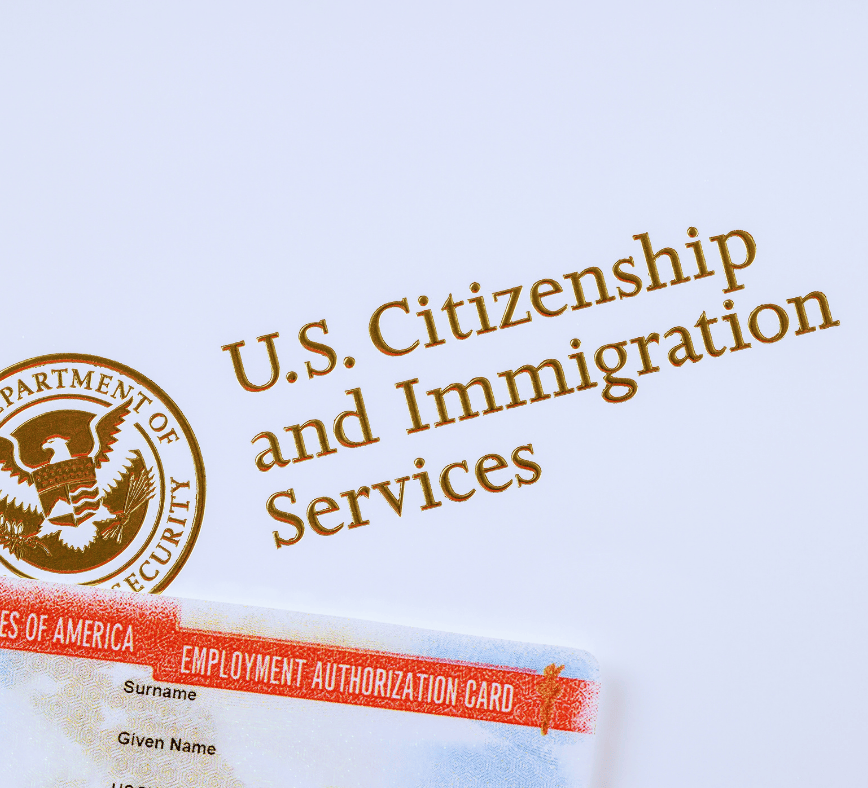
On August 19, 2025, U.S. Citizenship and Immigration Services (USCIS) issued new policy guidance making clear that applicants’ online activity and potential “anti-American” views will now factor into a wide range of immigration benefit decisions.
Under the new framework, past posts, affiliations, or expressions deemed supportive of anti-American ideologies or terrorist groups may weigh heavily against immigrants seeking benefits such as Green Cards, work permits, or changes of status.
Nicole Gunara, Principal Immigration Attorney at Manifest, says:
“Discretion has always been part of immigration adjudications. What’s new here is the explicit reference to digital presence and ideology as factors that can weigh heavily in that process. Applicants should approach their cases with an awareness that their online footprint is now squarely in scope.”
What Changed
The new policy—outlined in Policy Alert PA-2025-16—instructs officers to assign “overwhelmingly negative discretionary weight” to evidence that an applicant has endorsed or promoted anti-American or terrorist ideologies.
Discretionary review has always been part of certain applications, but this update extends its scope across:
- Adjustment of status (Green Card) cases
- Employment authorization requests under certain categories
- Extensions of stay and changes of nonimmigrant status (including F and M students)
- Employment-based petitions involving national interest waivers (EB-2 NIW) and EB-5 investor applications
The guidance is effective immediately and applies to both pending and newly filed cases.
A Shift Toward Systemwide Digital Vetting
This expansion builds on a broader trend. Earlier in 2025, USCIS clarified that requests for student visa reinstatements and status changes already involved discretionary review—making space for officers to weigh applicants’ online activity in F and M visa cases.
With the August policy alert, USCIS has now moved from a student visa-specific policy toward a systemwide posture: digital presence and ideological alignment are formally recognized as factors in discretionary analysis across nearly every major immigration benefit category.
The reference to “anti-Americanism” draws from provisions in the Immigration and Nationality Act, but remains legally ambiguous.
What This Means For You
Discretionary review has always been part of the U.S. immigration system. Family-based Green Card cases involve “good moral character” assessments, while employment-based categories like EB-1A include a final merits determination even after eligibility criteria are met.
The difference now is that USCIS has clarified that digital presence and ideological alignment may be formally considered in that discretionary analysis across a much wider set of benefits.
Manifest Law’s immigration attorneys advise applicants to:
- Be mindful of your digital presence: Assume that USCIS may review social media activity and online affiliations as part of its evaluation.
- Understand the scope of the policy update: The update reaches beyond student visas to cover Green Cards, work permits, status changes, and employment-based petitions such as EB-2 NIW and EB-5.
- Seek legal guidance: Because the term “anti-Americanism” is not clearly defined by USCIS, an attorney can be a trusted partner in identifying potential concerns with your online presence and address them proactively.
Bottom Line
USCIS’s latest policy alert signals a clear shift: digital presence and ideological associations are now explicitly part of discretionary review across nearly all immigration benefits. While discretion has always been a feature of the system, this update makes social media activity and perceptions of “anti-Americanism” a more visible factor in decision-making.
For immigrants and applicants, the practical takeaway is simple—eligibility alone is not enough. Officers will weigh the totality of circumstances, and online activity is now firmly within that scope.
About the Author

Content Lead
Haley Davidson is Manifest Law's Content Lead, covering all topics related to U.S. visas and Green Cards. She's passionate about making complex topics easy to understand, like immigration law.
Read bioReviewed By

Senior Immigration Attorney at Manifest Law
Henry is an Estonian American attorney licensed in Arizona with broad experience in employment-based immigration. He handles EB-1A, EB-2 NIW, O-1, and E-2 cases for founders, professionals, and creatives across industries worldwide, and has helped hundreds of clients achieve successful outcomes.
Read bioShare this article: