

B-1/B-2 Visa Interview Questions: Complete Guide
- Consular officers focus on whether your story is credible and your intent matches B-1/B-2 rules.
- Interview waivers for tourist visas are now extremely limited and mostly apply only to recent B-1/B-2 renewals that meet strict criteria.
- World Cup 2026 travelers may qualify for priority interview scheduling through the new FIFA PASS system.
With the holiday season and the 2026 World Cup on the horizon, the U.S. remains one of the world’s top tourist destinations. But before you can begin your trip, you’ll need to ace an interview with a consular officer in order to obtain a B category visa.
What to expect in the B-1/B-2 visa interview process
After you file Form DS-160, you’ll need to request an interview with your respective U.S. embassy or consular office. You can also make an appointment outside of your home country, but the U.S. State Department warns that doing so may make it harder to show you qualify for a B-1/B-2 visa.
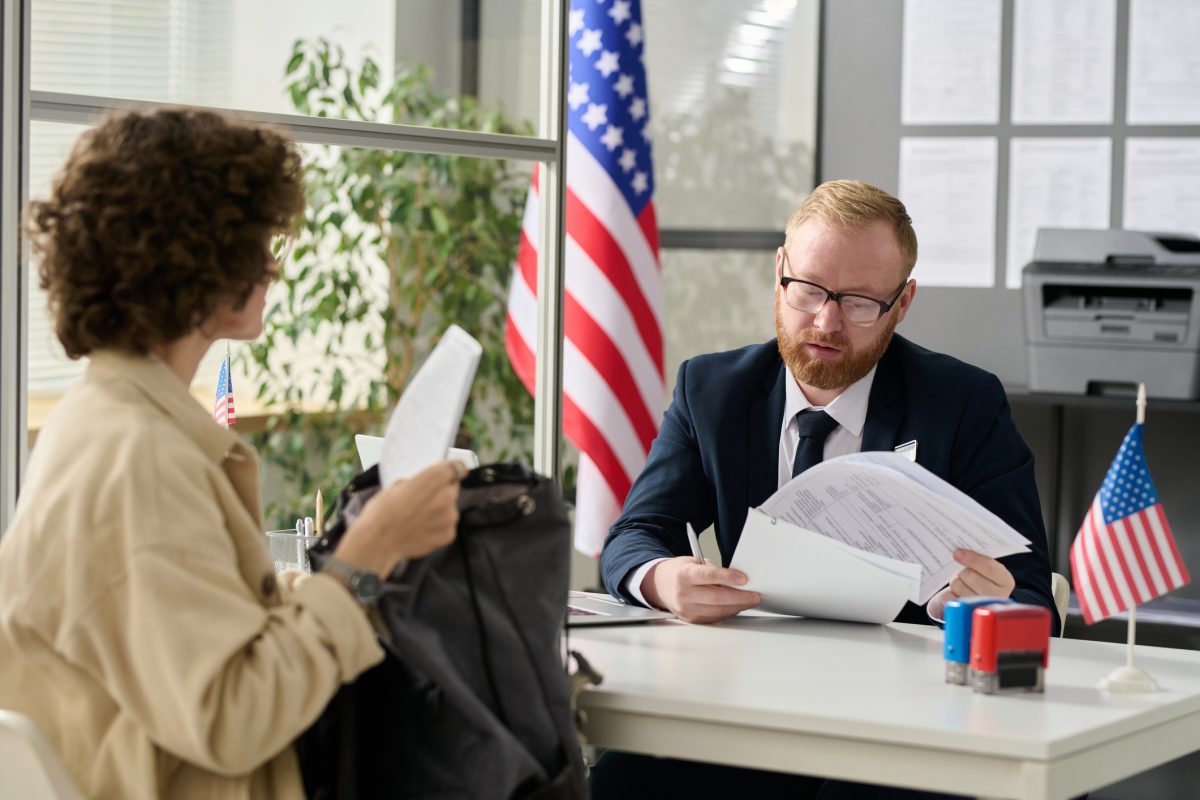
During the interview, an immigration officer will look at your travel documents (like your passport) and ask you questions about your trip. This is to ensure your intent to travel to the U.S. matches the purpose and guidelines of the B-1 or B-2 visa.
| ✈️ Wondering which B category visa best suits your travel needs? Check out our B-1 vs B-2 guide that explains each one in detail. |
How can I qualify for a visa interview waiver?
Most consular offices do not grant interview waivers for tourist visa applications. As of September 2, the only tourist visa applicants who can bypass the interview requirement are:
- Those renewing a full validity B-1, B-2, or B-1/B-2 visa within 12 months of its expiration date, and
- Were at least 18 years old when they received their previous tourist visa
Even if you qualify for a waiver, consular officers can still request to interview you for any reason.
Subscribe to our newsletter for immigration resources and news, without the legal jargon.
Potential interview questions for B-1/B-2 tourist visas
Consular officers do not follow any predetermined scripts or questionnaires during visa interviews. Still, it can be useful to know what to expect during your appointment. Below are some questions an official may ask you during your interview:
Purpose of trip
- Why are you visiting the United States?
- How long do you plan to visit for?
- What are you going to do once you enter the U.S.?
Ties to home country
- Who’s paying for your trip?
- Do you have any family or friends already in the U.S.?
Immigration history
- Have you ever had a denied visa or any other immigration difficulties before?
- When was the last time you traveled outside of your country?
| 💡 Curious to see how interview questions vary across all visa categories? Check out our interview guides for K-1 marriage visas and Green Cards to see the differences. |
What consular officers look for in an B-1/B-2 visa interview
Manifest Law immigration attorney Ana Gabriela Urizar says the biggest thing consular officers look for is authenticity. “Essentially, are you the person filing for the B-1 or B-2 visa, and are actually coming to the U.S. as a tourist?” Urizar says.
If your answers are inconsistent with your tourist application, a consular officer is more likely to deny your tourist case. And that could be devastating for timely travel plans like holiday vacations.
How do I book a visa interview appointment?
Booking a visa interview can actually be more complicated than it seems. For starters, you’ll need to:
1. Determine your eligibility for a B category visa
Before you file Form DS-160, you’ll need to figure out which B visa category best suits your travel needs. Your options are:
- B-1: For short business-related trips
- B-2: For tourism and short personal travel
- Combined B-1/B-2: Allows travelers to participate in both business and tourism
It’s important to remember that while the B- category visa allows you to participate in business-related events, it does not allow you to work. If you plan to seek employment in the U.S., you’ll need to find a work visa that best suits your industry and planned length of stay.
2. Complete Form DS-160
In order to apply for a B-1 and/or B-2 visa, you’ll need to fill out Form DS-160 online first. With this petition, a person can apply to several nonimmigrant categories, including F-1 students and H-1B workers.
To avoid any delays or unfavorable decisions, Urizar says that “establishing your intent clearly should be your top priority.” If you’re not clearly explaining in your DS-160 application that you’re entering the U.S. as a tourist, “a consular officer is more likely to deny your application.”
In addition, you’ll need to submit several documents to complete your DS-160 application. These can include your:
- Passport
- Trip itinerary
- Travel history, particularly for trips to the U.S.
- Digital photograph to submit
After you submit Form DS-160, you’ll receive a confirmation page with your application number. You must save this information in order to request a visa interview. If you lost your confirmation page but still have your application number, you can use the online filing system to retrieve your confirmation.
3. Pay the filing fee
Before you attend your appointment, you’ll need to pay a filing fee of $185 USD. To find specific information on how to submit payments, you can look for your specific consular office through the State Department’s consular directory.
4. Schedule your interview appointment
To schedule your interview appointment, you’ll need to find your respective consular office website. From there, most U.S. consulate sites have a nonimmigrant visa page where you can find more information on how to request an appointment.
Regardless of where you’re interviewing, you’ll need to do your own research on how to book an appointment. Each U.S. embassy or consular office uses different systems to book appointments. If you need help navigating a website, you can contact your respective consulate office by phone or email to ask for help.
| ⚽ Note to World Cup ticket holders: The U.S. State Department is currently working on implementing a “FIFA Pass” that allows people to book an expedited interview appointment for their tourist visa. Contact your local consular officer to learn more. |
5. Gather supporting documents
After you schedule your visa interview, you’ll need to collect any documents needed for your appointment. Urizar recommends doing this ahead of time instead of last time, so that you’re not missing any important items when a consular officer requests it.
For a B category visa, the required documents are:
- A valid foreign passport
- A DS-160 confirmation page
- Fee payment receipts
- Valid photo, if you could not upload it online
Some consular officers may request additional information, like your trip’s purpose and proof that you’ll return to your home country. Even if they’re not required, having copies of bank statements, employment letters, and travel itineraries can help you prove ties to your home country.
6. Attend the B-1/B-2 visa interview
For the actual interview, Urizar recommends arriving early at your appointment. If you’re not careful, any traffic or other travel delays could make you miss your appointment. Before leaving your residence, make sure to bring all your required documents.
Once you’re at the U.S. embassy or consular office, breathe. Being interviewed by a consular officer can be nerve-wracking — especially if it’s your first time traveling to the U.S. Remember to answer truthfully and confidently.
7. Wait for your visa
After your interview appointment, a consular officer will let you know if your case got approved, denied, or needs additional processing. If your request for a U.S. tourist visa is accepted, you’ll receive information on when to pick up your visa from the location you interviewed at.
If you’re a World Cup ticket holder or are coming into the U.S. temporarily for an emergency, you may qualify for an expedited visa interview appointment. To learn more information on how to request this, you’ll need to navigate to your respective consular office website and request it.
Regardless of where you’re filing from or if you qualify for an expedited appointment, Urizar recommends filing early. “Even if the U.S. has deployed 400 additional consular officers to process expedited travel visas, you should be careful and file as early as possible,” she says. “Even if you have a quick interview appointment, you may need to wait weeks before receiving the actual visa.”
Preparing for your B-1/B-2 interview? Our attorneys can prepare you for any question an immigration officer might ask about your trip to the U.S. Request a consultation today to begin.