


How Immigration Knows If You Overstay A Visa

- DHS and CBP track visa overstays using entry and exit records, biometrics, and multiple government databases.
- Your I-94 “Admit Until” date controls your lawful stay; once it passes, you may be out of status and accruing unlawful presence.
- Departing after unlawful presence can trigger three-year or 10-year re-entry bars depending on the length of the overstay.
- A visa overstay can negatively affect future visa applications and lead to greater scrutiny by consular officers.
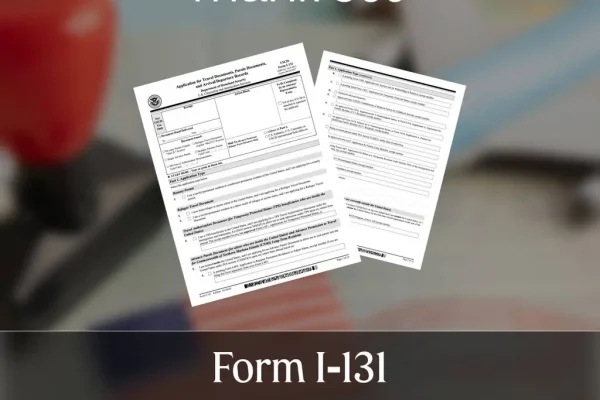
Immigration officials can identify visa overstays using data from multiple systems, and an overstay may show up quickly in government records. It can also show up if you later apply for another visa, an immigration benefit, or admission at the border. To avoid an overstay, it’s important to understand the dates on your Form I-94, and to start the process of extending, renewing, or changing your status well before your current status expires.
How does immigration know if you overstay your visa?
Visa overstays are usually identified through a combination of entry and exit records (primarily your latest Form I-94), biometrics, and government databases.
U.S. Customs and Border Protection (CBP) and the Department of Homeland Security (DHS) use a system called ADIS, Arrival and Departure Information System, to consolidate data from a variety of sources.
Subscribe to our newsletter for immigration resources and news, without the legal jargon.
Entry and exit records
When a noncitizen enters the U.S., their arrival and departure record is updated, typically on a digital Form I-94. The government can then track when they enter the country, how long they’re allowed to stay, and when they exit the country. Airlines and cruise lines also provide passenger logs to the government through the Advance Passenger Information System (APIS).
Filing a new petition with USCIS
If you’ve overstayed your visa, filing a new petition can put a spotlight on you, since it indicates to USCIS that you’re still in the country. For this reason, it’s important to talk to an attorney prior to filing.
Biometric data
Fingerprints and photos are collected as part of the visa process. Since photos and facial recognition are collected at ports of entry, CBP can use the Traveler Verification Service (TVS) to match people with their passport photos and immigration records.
Government databases
Immigration officers use various law enforcement and administrative records, as well as large DHS systems that store and share inspection and enforcement-related records. The TECS System: Primary and Secondary Processing (formerly the Treasury Enforcement Communications System) is one of CBP’s primary platforms for screening and admissibility determinations.
Encounters with ICE
Some people learn about an overstay through encounters with immigration officers, for example, if Immigration and Customs Enforcement (ICE) agents approach someone in public and question them.
What counts as overstaying a visa in the U.S.?
A person overstays a visa when they remain in the U.S. past the expiration date on their I-94, as indicated by the “Admit Until” date. Prior to the expiration of your I-94, if you’ve timely filed for an extension, USCIS will issue an approval notice with a new I-94 attached. The most recent I-94 prevails over older ones and controls whether you’ve overstayed your visa or not.
The difference between a visa overstay and unlawful presence
A visa overstay and unlawful presence are related, but they are not always the same thing. In many cases, if you stay past the date on your I-94, you may become out of status and may begin accruing unlawful presence.
| 💲 Visa bond program pilot for B visas: The U.S. is running a pilot visa bond program aimed at curbing potential visa overstays. Visitors on B1 or B2 visas—those traveling for tourism or short-term business—from select countries are required to post a refundable bond of $5,000, $10,000, or $15,000. The program runs through Aug. 5, 2026. |
The difference between visa expiration and I-94 expiration
The expiration date on your I-94 is the last day you can legally stay in the U.S. Your I-94 is the key to knowing how long you’re authorized to stay in the U.S. Your visa expiration date is the last day you can enter the U.S. with that specific visa or stamp.
If your passport is due to expire, CBP will set your period of stay in the U.S. to end before your passport expires, and your I-94 will reflect it. Your visa could be valid for longer than your I-94, or your visa may expire well before the “admit until” date on your I-94 record.
| Document | What It Represents | What the Expiration Date Means | Action Required if Expired |
| I-94 | Your permission to remain in the U.S. | The last day you are allowed to stay in the U.S. | You must depart the U.S. or have a pending extension or change of status application. |
| Passport | Your identity and citizenship | How long your travel document is valid | You must renew it at your home country’s embassy or consulate. |
| Visa (or Visa Stamp) | Your permission to request entry into the country | The last day you can use this specific stamp to request entry into the U.S. | You must apply for a new visa at a U.S. consulate abroad before your next trip. |
What happens if you overstay your visa?
You could face anything from a harder time getting a new visa to deportation, depending on how long you overstay and the amount of unlawful presence accrued.
- Your visa will be voided. In many cases, staying beyond the period of authorized stay voids your nonimmigrant visa under Section 222(g) of the Immigration and Nationality Act (INA). You’ll need to reapply for a new visa in your home country.
- You’ll be ineligible for a change of status. In most cases, you cannot extend your visa or change to a different visa if you are already out of status.
- You may have trouble obtaining a new visa. Immigration officers consider visa overstays when reviewing any future visa applications. You will need to prove you don’t intend to overstay another visa. Even if you obtain a new visa, you’ll also need to prove to CBP officers at a port of entry that you will adhere to the departure date on your I-94.
- You might encounter difficulties becoming a permanent resident. For many, an overstay makes it impossible to adjust status to a Green Card from within the U.S. Most other applicants will be required to leave the country to finish their application.
- You may face deportation. If you overstay a visa or are out of lawful status, you may become subject to removal proceedings. An encounter with immigration officials could lead to deportation.
| ⚠️ Your I-94 is key to avoiding overstays. Remember that your I-94 is the key to knowing how long you’re authorized to stay in the U.S. You can check your I-94 online to confirm your admit until date, or your duration of stay (D/S). |
What are unlawful presence bars?
There are strict penalties for anyone who accrues a large amount of unlawful presence. These bars are generally triggered when you depart the U.S. after accruing enough unlawful presence.
- The 3-year bar: If you accrue more than 180 days but less than one year of unlawful presence and then depart the U.S., you are barred from re-entering for three years.
- The 10-year bar: If you accrue one year or more of unlawful presence and then depart, you are barred from re-entering for 10 years.
Can you return to the U.S. if you overstayed your visa?
Your ability to return depends on how long you overstayed a visa and whether you already triggered an unlawful presence bar. Your departure from the U.S. is often what triggers a bar, so when you leave can be a turning point any time you accrue unlawful presence.
- If you overstayed less than 180 days: If you accrued less than 180 days of unlawful presence, you generally don’t face a three-year or 10-year bar on reentry, but it can still lead to increased scrutiny in future visa applications and at the border.
- If you overstayed more than 180 days: You will likely be barred for three or 10 years the moment you exit. Returning before that time is up usually requires a Waiver of Inadmissibility.
Is there a way to fix an overstayed visa?
There’s no single fix for overstaying a visa, but there are common ways to address it. Each comes with eligibility rules and risks. Here are some considerations to make after an overstay.
1. Speak with an immigration attorney before you travel or file anything
This is the most important action item because an immigration lawyer can help you better assess your options and any potential risks ahead. Overstay scenarios hinge on multiple details, such as your I-94 record, status category, prior filings, age, or prior departures. Remember that leaving the U.S. is usually what triggers a bar if you have accrued unlawful presence.
2. Was your overstay due to extraordinary circumstances?
If you missed your I-94 expiration date due to something entirely out of your control, such as a sudden hospitalization or a natural disaster, USCIS has the discretion to grant a backdated extension. This requires significant documentation and legal proof of the extraordinary circumstance.
3. Explore whether you can extend or change status
Some people may be eligible to request an extension or change of status by filing a Form I-539, but overstays can affect eligibility and timelines. USCIS guidance on unlawful presence and status can help frame the issue, but your specific strategy should come from legal counsel.
4. Consider a family-based immigration pathway
Some applicants may have a path to a Green Card, but whether an overstay is forgiven depends on the category and the facts. If you are the spouse of a U.S. citizen and you entered the country legally, even if you later overstayed, you may still be eligible to apply for a Green Card from within the U.S. without leaving.
5. Waivers in certain situations
You may qualify for a waiver for unlawful presence bars if you can prove that your absence would cause extreme hardship to a U.S. citizen spouse or parent. Waivers are only available in limited circumstances, so it’s important to get legal advice before pursuing a waiver.
If you’re still in the U.S., you might file Form I-601A to apply for a provisional waiver of inadmissibility before leaving the country. If you’re outside the U.S., you’d file Form I-601 for a waiver.
Seek legal advice if you overstay your visa
The consequences of overstaying a visa can be serious, even when it’s accidental. If you overstayed your visa or you’re close to your I-94 expiration date but can’t leave the country, speak with an immigration attorney to learn about your options. The team at Manifest Law can help you build a plan based on your immigration goals and specific circumstances. Request a consultation with one of our immigration attorneys to learn more.
FAQs about overstaying your visa
How do you know if you overstay your visa?
In most cases, you know you have overstayed your visa if you remain in the United States past the date on your Form I-94. Review your most recent I-94 to confirm if you were admitted until a specific date or for the duration of your visa status (D/S).
What are valid reasons for overstaying?
There is no list of automatically excused overstays. Even a family emergency, illness, or genuine confusion about dates can have immigration consequences. Immigration law does recognize some limited exceptions, but it’s important to act before your authorized stay expires, whenever possible.
Does USCIS automatically know when I leave?
USCIS often knows when you leave the country because departures are captured through government entry and exit processes. At the same time, records are not always perfect. You should keep your own proof of departure, such as boarding passes, travel itineraries, or entry stamps from another country, in case questions come up later.
Can I get deported for a short overstay?
Yes, even a short overstay can lead to deportation. How quickly an overstay becomes a serious issue depends on the facts of your case. Even if you don’t get deported, you may not be able to return to the U.S. for up to 10 years.
Does marriage forgive an overstay?
Marriage does not automatically forgive an overstay, but certain immediate relatives of a U.S. citizen are eligible for a Green Card even after an overstay.