



How Avalon Paul Rescues the Toughest Visa Cases

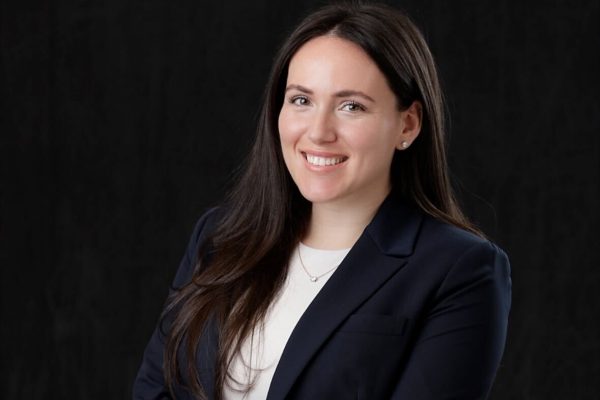
Avalon Paul will tell you: Attorneys are not miracle workers. But she is not afraid of long odds.
Paul, an immigration attorney for Manifest Law, was once helping a company in Texas secure an L-1B visa for one of its employees. By the time she started work on the case, the client had already received a request for evidence.
“Even the client said, ‘Oh I’m going to get denied.’ Don’t worry about it, don’t spend too much time on it,” Paul said. “And I said no.”
Paul rewrote the petition from scratch.
“I got to work early, stayed after work late, just to make sure that I took the extra time and gave my client a fighting chance.”
The client received an approval the following week.
An immigrant’s path to immigration law
Paul is an immigrant. She came to the U.S. from Trinidad when she was 5 years old. Despite that, she hadn’t given much thought to immigration until 2015, when she filled in for an attorney on maternity leave at a law firm in White Plains, New York.
“The more I started to do it, the more I fell in love with it,” she said.
Her first interest was trust and estates, or contract law. But, Paul noted, those laws haven’t changed for hundreds of years. Immigration law changes constantly.
“And what I realized is that I enjoy that challenge,” Paul said. “I enjoy getting approvals from cases that no one ever thinks are going to be approved.”
Immigration law gives her a chance to help people achieve their dreams. She works often with people who have been in the U.S. for years, who have made a home here with families, and want to ensure their ability to stay.
“You realize the weight and magnitude of what you’re doing on a day to day basis as an immigration attorney,” Paul said. “And I wholeheartedly love that.”
The art of proving extraordinary ability
Over the past 10 years, Paul has accumulated experience in all areas of immigration law, including employment-based visas like the H-1B, and extraordinary ability visas like EB-1A and O-1. She’s also worked on humanitarian and marriage-based cases and spent an “intense three years” working on removal defense.
Paul is a former dancer, so she especially enjoys working on O-1B visas for artists. But all extraordinary ability visas require an artist’s creativity, she said.
“Everyone has the same set of laws and the same set of facts,” Paul said. “But it’s in how you present that information. To craft a compelling storyline.”
It’s important to have evidence: patents, publications, press coverage. But part of the attorney’s job is to tell the story of how the client started out in their home country and how they can bring their skills to the U.S.
“As an attorney, you don’t want to just say ‘OK, here’s a thousand-page petition, give me an approval,” Paul said. “You have to prove why this person is established, why this person is deserving.”
Another role for an immigration attorney is providing tough love. Paul recently had a client from the tech industry applying for an O-1A visa. He thought his case was perfect. Paul thought he needed more evidence, which he did not want to provide.
“So I had to take a very firm stance,” Paul said. “I said, ‘Listen. You’re going to get a request for evidence, which will lead to a denial.’”
After “much consternation,” Paul said, he agreed, and soon enough, the visa was approved.
“We walk this fine line between being supportive and encouraging to our clients, but also have this responsibility of telling the truth and being honest when it comes to their petition,” Paul said.
When something is lacking, the attorney’s job is to say so.
The value of an attorney
Given the time, cost, and risk of the immigration landscape in the U.S, Paul said it’s not the time to “DIY” an application. Even basic immigration forms present a risk—the slightest mistake can lead to delay or rejection.
“You need someone that can provide a high level of oversight and insight and even after the petition is filed, provide guidance as to what to expect,” Paul said. “Because it is a nerve-wracking process.”
For some clients, that’s especially true. When a Canadian client faced an unexpected denial at the border, she called Paul. She was “literally having a panic attack,” Paul said.
Paul talked her through it, instructing her to go home and try again the next day with a new filing strategy, which worked.
“That’s my ultimate goal,” Paul said. “To make sure my clients are protected.”