


Less Is More: How Jurgen Negron Curates Evidence for Immigration Petitions
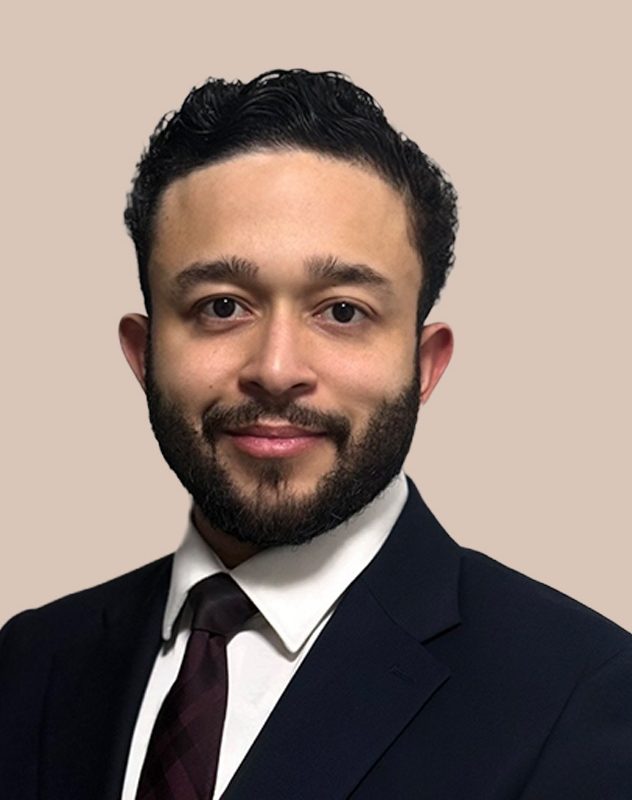
Jurgen Negron saved a case in 12 pages.
His client was a research and development tax specialist from Nigeria whose petition had drawn a Request for Evidence (RFE). To Negron, the questions in the RFE made it clear: the U.S. Citizenship and Immigration Services (USCIS) Officer didn’t grasp what his client actually did.
But that wasn’t necessarily a surprise. It’s a narrow field, IRS codes are dense, and the original petition brief was long. So, Negron stripped it down, rewrote his client’s story in plain language, and added a targeted expert letter. Shortly after, the client was approved under premium processing.
Under this administration, Negron says, sometimes less is more.
Why are strong cases drawing more scrutiny?
This case wasn’t a fluke. Negron and many other attorneys have observed a shift in the frequency and nature of RFEs, particularly for EB-1A and EB-2 NIW filings.
In his own caseload, Negron noticed the questions weren’t challenging the strength of the evidence – but rather, they were asking what the evidence meant.
“It became clear they were just not understanding this person’s actual work,” he said.
In the past, Negron filed petitions that ran thousands of pages and received approvals. But now, under the new administration, similar approaches have been leading to RFEs. Some RFEs arrived without even a specific request for additional evidence – suggesting officers were struggling to evaluate the petitions.
Negron’s response was to change how he built a case: a strategy of less volume, more precision. The goal was to curate a case with the strongest evidence, lead with it, and make the officer’s job as easy as possible. The Nigeria case approval served as a proof of concept.
What makes a petition more than a list of credentials?
Before Negron writes a petition, he builds the proposed endeavor, a single sentence – like an elevator pitch – that captures what a client does and why it matters.
The structure follows an arc: occupation, the tools and methods the client uses, then the national impact of that work.
“The entire case surrounds that proposed endeavor,” Negron said.
Negron gave the example of a petroleum engineer who studied both mechanical and petroleum engineering and works for a major energy company. A credential-first approach lists the degree, the employer, and the job title.
Negron would instead name the engineering disciplines, identify the specific technologies the client uses, and what the work advances. In this case, that meant public safety, infrastructure, and national energy supply.
A proposed endeavor, built correctly, answers the officer’s central questions immediately. For EB-1A petitions, it explains why the client has extraordinary ability. For EB-2 NIW, it explains how the work serves the national interest. And everything else in the petition reinforces it.
That clarity is important, because the two visas are not interchangeable. Clients sometimes assume qualifying for one means qualifying for the other.
Each visa carries its own requirements and its own evidentiary standard. The EB-1A has historically been the harder of the two to obtain.
But that gap may be narrowing. Negron says NIW petitions appear to be facing scrutiny equal to, and in some cases exceeding, that of EB-1A filings.
Part of Negron’s job is steering clients toward the path where their evidence is the strongest.
How does an attorney master a field he didn’t study?
Negron’s clients work in fields he didn’t study, like petroleum engineering, tax law, research and development, or machine learning. Before he builds a case, he needs to understand what they do and what makes them exceptional at it.
His starting point is a set of questions he asks at the beginning of every engagement:
- What are your strengths?
- What makes you different from your peers?
- Which projects have you worked on that have had the most impact?
The answers shape his understanding of the field and where the client stands within it.
“At the end of the day, they’re experts in their own field,” Negron said.
This is how Negron works. He encourages communication from his clients. The more invested they are in the process, he said, the stronger the case.
When is the right time to file?
Negron’s broader philosophy comes down to preparation. He studies previous RFEs, tracks patterns across cases, and stays active in the American Immigration Lawyers Association (AILA) to learn what other attorneys are seeing. The goal is to anticipate what an officer might question and address it before it becomes an RFE.
That approach extends to timing. Clients who arrive with years left on a valid visa sometimes want to rush, when that’s not always the best approach.
“If that means waiting a few months until you have a certain piece of evidence that I know will make a case stronger, so be it,” Negron said.
Negron grew up in Miami, with a Puerto Rican father and an Honduran mother. The clients he works with, he says, are trying to do what his family did, bringing their skills to the United States to build something here. He’s spent nearly a decade making sure they get the chance.