


The Legal Brief: How Do Consular Closures Affect Immigrants Worldwide?
Today’s brief is brought to you by Nicole Gunara, Manifest’s principal immigration attorney with more than seven years of experience and over 1,700 cases filed.
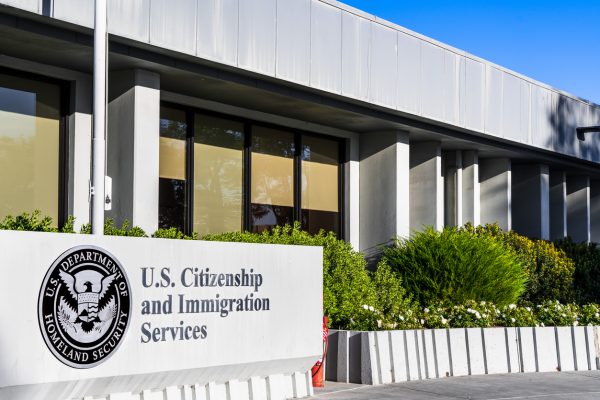
As tensions flared across the Middle East this week, 20 U.S. embassies and consular offices have closed throughout the region. The move follows escalating conflict with Iran after a joint U.S.-Israel raid on February 28, 2026, and has left thousands of visa applicants wondering what happens next.
Having been in this field, I’ve seen firsthand what happens when consular operations grind to a halt. In my career thus far, I’ve helped hundreds of immigrants navigate the visa stamping process, sometimes rerouting their cases across borders or waiting months for posts to reopen. Each time, the same pattern unfolds: Closures don’t just disrupt those in the immediate area; they send shockwaves through the entire global system.
Most people don’t realize that consular closures like this can have wide‑ranging consequences, slowing down processing and delaying visa appointments across multiple countries.
The consular closure domino effect
In 2021, U.S. consulates in Russia closed due to escalating tensions between the two countries. Without warning, thousands of Russian nationals could no longer get a U.S. visa issued in their home country, and many watched their cases slip into limbo.
Over time, the State Department began redirecting some Russian applicants to neighboring countries, including Poland. In just a few days, Warsaw became one of the busiest U.S. embassies in Europe as hundreds of eligible immigrants tried to book visa interviews there.
For many companies, that shift was more than an inconvenience. One of my colleagues at Manifest represented a U.S. medical device company that had to shut down its R&D facility in Russia and relocate the entire team. The employees were all Russian nationals, and moving them meant securing new visas through consular posts in other countries — not just Warsaw, but several embassies across the region that agreed to help.
In that case, each employee had to request permission from a different U.S. consular post or check any publicly available guidance to see if that post was adjudicating third country national appointments before they could even submit their visa applications. Only after a consulate agreed to take the case could they file forms and book an appointment. That kind of workaround was possible, but it’s slow and stressful, and it depends entirely on whether individual posts are willing and able to step in. However, given the complete shut down of third country national appointments by the current administration, we can make the educated guess that, at best, only 1-2 specific consulates will be selected to take on nationals from closed consulates.
When “workarounds” create new problems
Consular “redirections” aren’t as simple as telling people they can get their visas anywhere. The State Department and individual posts weigh factors like where applicants can realistically travel, local capacity, and even bilateral relations before agreeing to take on third‑country cases.
There are also geopolitical complications that can turn a theoretical solution into a dead end. One of our attorneys is currently representing a Russian fiancé‑visa applicant whose case was routed to Warsaw. On paper, that sounds like progress, but Poland has severely restricted Schengen visas for Russians since the war in Ukraine. That means getting to Warsaw for a U.S. visa interview is nearly impossible. They are now trying to move the case to Kazakhstan, but there’s no guarantee that it will work.
Even when redirection works, it comes with a cost. If the State Department allows people affected by a consular closure to process their visas in a third country, the designated embassy or consulate can quickly become overwhelmed with limited appointments being available to even nationals and residents of that designated embassy’s country.
A sudden surge in cases can stretch officers’ capacity and lead to delayed or cancelled appointments for both local nationals and those redirected from abroad. During the Russia closures, for example, posts like Warsaw in Poland, Tbilisi in Georgia, and Astana in Kazakhstan became known for taking on large numbers of Russian cases—and for the long wait times that followed.
If the U.S. doesn’t allow people to seek consular processing outside their home country by reopening third country national processing, the picture is just as troubling. Thousands of foreign nationals remain stuck abroad, sometimes in less than ideal conditions. Either path has a ripple effect, especially when people are funneled into embassies that already face enormous demand.
The human and socioeconomic impacts of a consular closure
The most immediate impact of a consular closure are appointment delays. But a sudden halt in visa processing at even a single consulate can also trigger meaningful economic and human consequences.
For example, take Riyadh, an embassy in Saudi Arabia that closed this week. In May 2025, the U.S. Embassy there issued 2,648 B‑1/B‑2 visitor visas* in a single month. When that post closes, thousands of would-be tourists and business travelers suddenly lose the ability to enter the United States, attend conferences, sign deals, or spend money at American hotels, restaurants, and shops. Each missed trip is also a missed opportunity for a U.S. employer or local business.
Even closing an embassy in a smaller nation like Kuwait has wide‑ranging effects. In May 2025, the U.S. Embassy in Kuwait issued 44 immigrant visas and 1,181 nonimmigrant visas.* On paper, those numbers look modest, but they represent the lives of extraordinary ability workers moving to further their careers, families reuniting after years apart, and couples getting the chance to marry and live together in the U.S.
Consular closures are not just logistical setbacks. Each day, the International Trade Administration estimates that international temporary visitors alone contribute $695 million to the U.S. economy. Every pause in visa processing can chip away at that spending, whether it’s a company forced to delay hiring critical talent or a small business losing out on a steady stream of international customers.
| *Data sourced from the U.S. Department of State’s monthly nonimmigrant visa issuance data and immigrant visa issuance data. |
Focus on what you can control when consulates close
When U.S. embassies close, most of the big decisions happen far from your grasp. What you do control is how informed, prepared, and flexible you are while you wait.
- Stay informed through official channels. Monitor your embassy’s website and official social media for changes to operations and security guidance, and enroll in government alert programs where available.
- Protect your own safety and timelines. Avoid unnecessary travel into higher‑risk areas just to “chase” a consular appointment, and talk with your employer about building flexibility into start dates or project deadlines.
- Keep your case ready to move. Use the lull to gather evidence, update documents that are about to expire, and make sure you understand exactly what will be required once interviews resume or a new post is assigned.
- Seek legal advice. An experienced immigration attorney can help you understand whether options exist in your specific situation.
This keeps you in an active role: you may not be able to reopen a consulate, but you can make sure that when the government does act, you’re ready to move.
Managing risk while traveling abroad
If you’re in the U.S. right now and are in need of a new visa stamp, this week’s closures are a reminder that your strongest position is usually to be inside the country, not outside it. When you’re stuck abroad waiting on a visa appointment, there’s often very little anyone can do to move your case forward. However, if you’re already in the U.S., your attorney typically has more strategies to work with and more ways to protect your status.
The recent tensions with Iran led to 18 U.S. posts closing across the Middle East and South Asia, including places not directly involved in the conflict, like Pakistan. That shift happened in a matter of days. You can’t control how quickly conditions change, or when a consulate suddenly suspends services, but you can control where you are when it happens, and plan your travel with that risk in mind.
That doesn’t mean you should never travel. It does mean treating each international trip as a calculated risk when your ability to return depends on a visa stamp. A short conversation with your attorney and employer before you leave can go a long way toward avoiding worst‑case scenarios if the next round of closures hits while you’re abroad.
Planning to travel abroad or worried about consular closures? Our team is here to help you think through your options—request a consultation with our experienced immigration attorneys today.
Sincerely,