

Common CBP interview questions when entering the U.S.
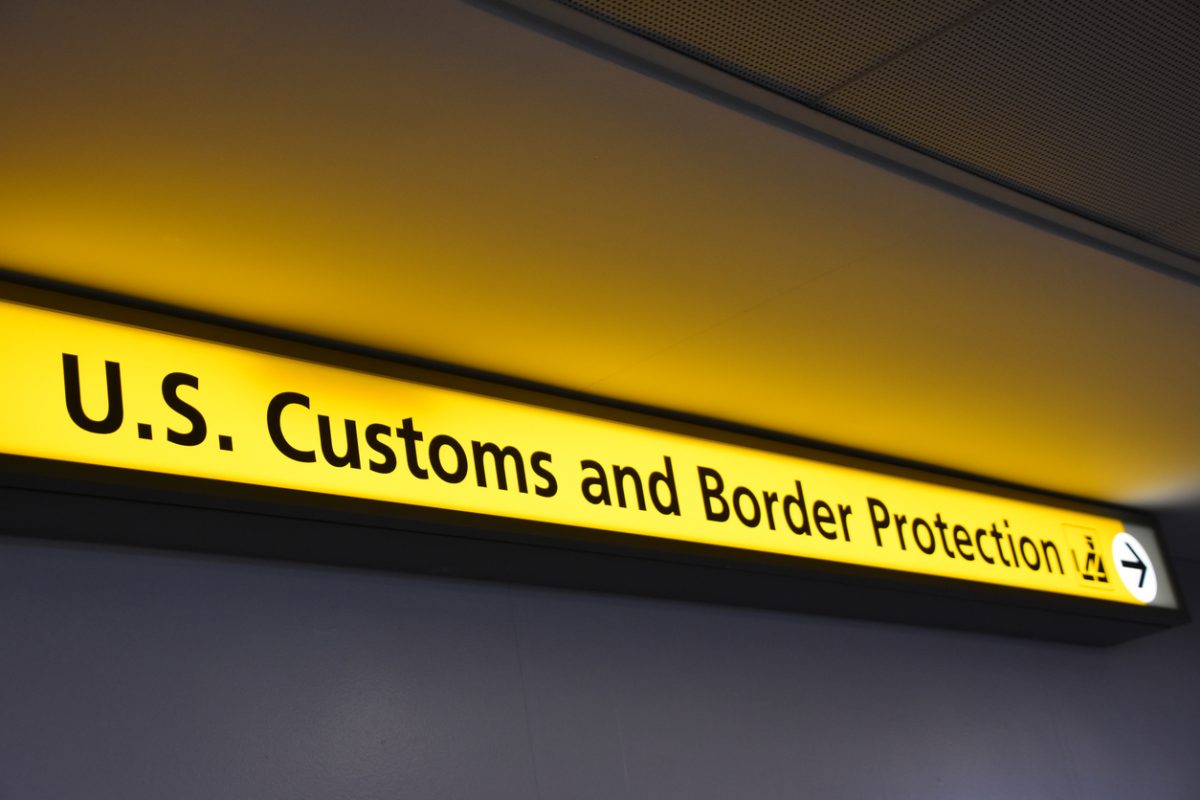
- A CBP interview happens during border inspection, where officers verify your identity, immigration status, and purpose for entering the U.S.
- Give honest, concise answers that match your visa and documents to reduce delays, inconsistencies, or referral to secondary inspection.
- Arrive prepared with required documents and financial proof so you can address questions about status, ties, and travel history quickly.
- If sent to secondary, stay calm and focused on admissibility, answer carefully, and request to contact your immigration attorney if needed.
Everyone who enters the U.S.—whether it’s their first time entering the country or they’re a returning citizen—is subject to inspection by U.S. Customs and Border Protection (CBP) officers.
Understanding the common questions officers ask, why they ask them, and the process can help you feel more prepared (maybe calmer, even) the next time you need to travel and seek entry or re-entry to the United States.
What the CBP interview is (and isn’t)
CBP is tasked with deciding whether to let someone enter the country, so everyone is questioned at border entry points. Citizens, lawful permanent residents, and visa holders are all inspected by CBP officers.
Officers ask questions to determine who is admissible and who is inadmissible, under immigration law.
The CBP interview isn’t part of the application process for a visa or a Green Card, and an officer won’t review all the details of everything you’ve ever submitted to the U.S. Citizenship and Immigration Services (USCIS).
It’s also not strictly a security screening like going through a Transportation Security Administration (TSA) line at an airport.
👉 New for late 2025: Under a new rule, CBP can photograph almost all travelers who are not U.S. citizens when they enter or leave the U.S.
What officers are checking for at CBP interviews
An interview with a CBP officer can look different depending on your status.
For U.S. citizens, officers will ask for identification, travel details, and the reason for travel. It’s usually a quick interview, and once CBP confirms you’re a U.S. citizen, you’re generally not refused entry, but you can still be delayed or asked more questions.
For Green Card holders, CBP is checking for proof that:
- You’re a returning resident.
- The U.S. is still your permanent home.
- You haven’t done anything that would make you inadmissible.
- You have maintain ties to the U.S. as your permanent home.
For visa holders, CBP is looking for proof that:
- Your visa is valid.
- Your travel intent and story match what is on your visa.
- For most temporary visas, you must demonstrate that your stay in the U.S. is temporary and that you will depart once your authorized period ends.
- .
- You’re following the rules of your specific status.
In all interviews, CBP officers are also watching for any of the following red flags:
- Fraud or misrepresentation (fake stories, fake documents)
- Security risks (watchlist hits, suspicious travel patterns)
- Criminal issues or outstanding warrants
- Customs violations (undeclared cash, prohibited items, commercial goods in luggage, etc.)
11 Common CBP interview questions for visa holders
Most interviews are short, often just a few minutes. Secondary inspection, during which they may ask you additional questions, could take hours.
Here are some of the basic questions CBP officers ask in interviews when a visa holder seeks entry to the U.S.
1. Where do you live?
Provide the city and state where you live. If you reside in another country, provide the city and country.
2. What is the purpose of your travel to the U.S.?
Let officers know whether you’re traveling to the U.S. for employment, to study, to visit family, or for vacation.
3. Are you traveling alone or with others?
If you’re with a group, officers might verify that everyone has the same answers to questions about travel purpose, where you’re staying, etc. If people in your group provide different responses, that can be a red flag that prompts a CBP officer to ask additional questions. CBP officers look for consistent answers as an indicator of honest responses.
4. How long do you plan to stay in the U.S.?
Provide specific travel dates, if possible. If your visa is for work or school, give a reasonable timeframe, and make sure it matches your visa. For example, you can state you plan to be in the U.S. for the length of your graduate degree program. Or you plan to be here for your H-1B visa role, which was approved for 3 years.
5. Have you been to the U.S. before?
CBP is looking to verify information they have about any past travel. Respond honestly if you’ve been to the U.S. before or travel to the U.S on a regular basis.
6. Where will you be staying?
Provide the name and address of your hotel or the residence where you’ll stay during your trip.
7. Who will you be visiting during your visit?
Give the names of family or friends you plan to see. You can also specify how you’re related to them or how you know them.
8. Have you traveled to any other countries recently?
Let the CBP officer know where you’ve been, if you’ve visited other countries recently. They may have follow-up questions depending on where you’ve traveled, as they’re on the lookout for security or health risks that can change from time to time.
9. Do you have anything to declare?
The officer may ask if you need to declare anything. Let them know if you’re bringing any food, plants, tobacco products, large amounts of cash, medications, or alcohol into the country.
10. Are you carrying any food, plants, or animal products?
This is an additional question related to U.S. Customs law, and you should let them know if you’re traveling with any of these items.
11. Have you been arrested or convicted of a crime?
CBP officers use this question to see whether any of your past cases would make you inadmissible under federal law.
| 👉 Manifest tip: In some circumstances, an arrest—even without a conviction—could make a person inadmissible to the U.S. If you have a prior arrest of any kind, it’s best to speak with an immigration attorney before you travel outside the U.S. and seek re-entry. Even an arrest that was expunged from your record could affect your status. Request a consultation with an attorney from Manifest Law to get guidance for your specific situation. |
Additional questions for certain visa categories
CBP officers might ask more questions depending on what type of visa you have. Here are some examples based on visa type
Visitors or short-term travel (B-1/B-2, Visa Waiver/ESTA)
CBP is checking whether you’re really here for a short visit and plan to return to your home country.
- What is the purpose of your trip?
- How long do you plan to stay?
- What do you do for work back home?
- Who is paying for your trip / do you have enough funds?
- Do you have family or friends in the U.S.?
Student categories (F-1 students, J-1 exchange visitors)
CBP is looking to determine whether you’re coming to the U.S. for a specific program and whether you can support yourself during that time.
- Which school or program are you attending?
- What are you studying? What type of program is it?
- When does your program start, and how long does it last?
- Where will you live while you’re here?
- How are you paying for tuition and living expenses?
- Do you plan to work, and if so, in what way?
Work-related visas (H-1B, L-1, O-1, E-1/E-2)
CBP is checking whether your responses align with the purpose of your visa.
- What visa are you entering on today?
- Who is your U.S. employer (or petitioner or sponsor)?
- What will you be doing in the U.S. (job duties)?
- Where will you live in the U.S.?
- How long is your job?
- Have you ever been refused a visa or denied entry to the U.S. before?
| 💡 Manifest tip: If you get stopped for a secondary interview, it doesn’t mean you’re in trouble. It means the officers need more information. |
Documents you should carry for a straightforward CBP inspection
When you enter the U.S., CBP primarily wants to see proof of your identity and the status you’re seeking. The exact documents you should carry depend on whether you’re a visitor, student, worker, immigrant, or Green Card holder.
- Valid passport
- U.S. visa or ESTA approval (if required)
- Green Card (Permanent Resident Card)
- Immigrant visa packet and details (for new residents)
- I-20 or DS-2019 (students and exchange visitors, F-1, M-1, and J-1 travelers)
- I-797 approval notice or similar USCIS approval (for H-1B, L-1, O-1, some E and TN cases, certain parolees, and others with USCIS-approved status)
- Travel documents like an advance parole or reentry permit
- Proof of funds and ties to your home country (students and exchange visitors might need this. These can include recent bank statements, employment letter, proof of enrollment, property or lease, and return ticket
- School, program, or job offer letters
- Copies of your most recent I-94 record and prior I-94s (if available)
- Consent or custody documents for children
- Copies of paystubs for the past 3 months (if you’re on an employment visa and are returning to the U.S. for your work)
What if CBP has additional questions?
Being selected for a second interview, often called secondary inspection, doesn’t mean there is a problem or that you’re in trouble. People are referred for many reasons, including routine checks, name or document mismatches, or travel patterns that warrant a closer look.
During busy travel times—like around holidays, for example—there can be increased scrutiny for everyone.
When CBP has more questions, they might take you to a separate area where officers can look more closely at your documents and run extra database checks. The best approach is to stay calm, answer questions truthfully and consistently, provide any documents the officer requests, and avoid arguing or guessing if you don’t know how to answer.
Tips for a smooth CBP interview
Being prepared to answer questions can help you respond calmly and confidently.
Memorize your immigration attorney’s phone number just in case you need it. You can request to call your attorney if you are selected for a secondary interview.
Manifest Law immigration attorney Ana Gabriela Urizar said one of the biggest points to remember is to answer the questions asked, and not volunteer additional information upfront.
Also, CBP officers may ask the same questions in different ways. It’s one way they test for inconsistent answers. If you don’t fully understand a question, don’t be afraid to ask the officer to repeat it.
“It’s better to ask the officer to repeat themselves than to say ‘yes’ to a question you didn’t fully understand,” Urizar said.
Getting help preparing for your CBP interview
An experienced immigration attorney can help you review your travel history, past applications, and any criminal or immigration issues so you’re not surprised by questions at the border. They can walk you through what CBP is likely to ask for your specific visa or Green Card, help you gather the correct documents, and explain your options if a problem comes up during inspection. If you know there are complications in your history, getting legal advice before you travel can make a big difference in how prepared you feel.
👉 Request a consultation with an attorney from Manifest Law to get guidance for your specific situation.
CBP interview questions FAQs
Do I have to answer CBP questions?
In general, if you’re not a U.S. citizen and you refuse to answer basic inspection questions, CBP can refuse to admit you to the United States. Even for U.S. citizens, refusing to answer questions can still lead to delays, additional screening, or, in some cases, seizure of devices or referral to other agencies.
| ‼️If you refuse to answer questions and aren’t a U.S. citizen, you could be denied entry. |
Can CBP look through my phone?
Yes, CBP officers can request to look at electronic devices under their border search authority. You can refuse to share a password, but that may lead to longer delays. For visa holders, you could be denied entry if you refuse to unlock your phone or device and allow them to look through it.
What should I do if I’m sent to secondary inspection after my CBP interview?
If you’re sent to secondary inspection, it usually means CBP needs more time to review your case. You can request to speak with your immigration attorney at this time.
Stay calm, answer questions honestly and consistently, and provide any documents the officers ask to see.
Avoid guessing if you don’t know the answer. If you have complex issues in your history (like past arrests, immigration violations, or very long trips abroad), be prepared to answer questions about those in a secondary interview.