On September 16, USCIS clarified that it will continue to honor certain editions of Form I-485, I-765, and I-539. Read our news coverage to find out why.
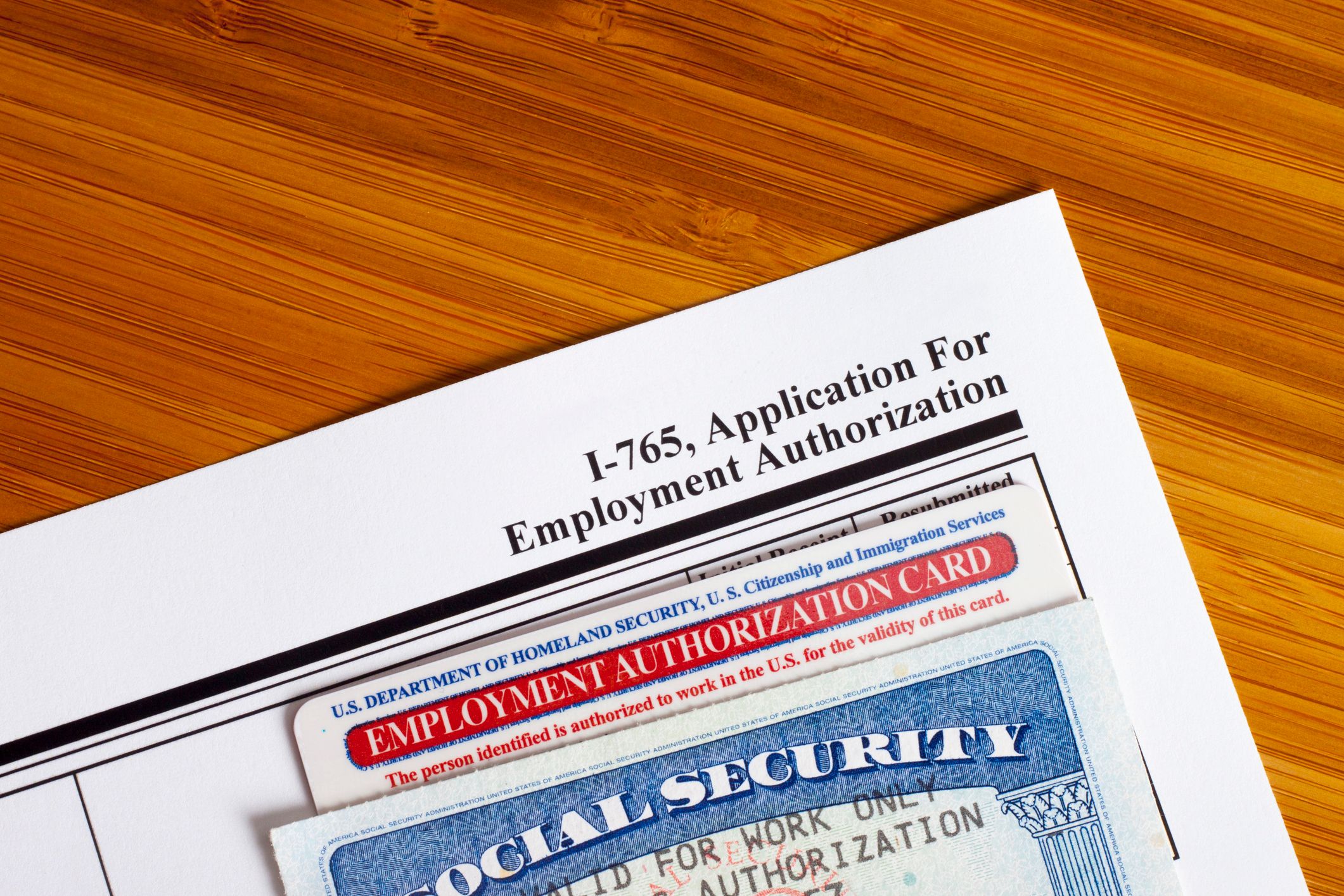
Starting September 15, U.S. Citizenship and Immigration Services (USCIS) will reject older editions of Form I-539 and Form I-765. These are the petitions used to request a change of status and a work authorization document, respectively.
The agency will publish revised versions of both forms on September 15, 2026, with previews available under the "Special Instructions" section of their respective websites. The new I-539 replaces the 08/28/24 edition, and the new I-765 replaces the 08/21/25 edition.
Since USCIS needs the updated forms to carry out the final rule that replaces duration of status with fixed admission periods for F, J, and I nonimmigrants, the agency will not provide a grace period for these petitions. The forms themselves changed very little, but the instruction booklets that come with them changed a great deal, including a cut to the window F-1 students have to apply for OPT.
What are the new filing deadlines?
Here are the new filing deadlines that foreign nationals should keep in mind:
- USCIS will accept the 08/28/24 edition of Form I-539 if it is postmarked or electronically submitted before September 15, 2026, and will reject it on or after that date.
- USCIS will accept the 08/21/25 edition of Form I-765 if it is postmarked or electronically submitted before September 15, 2026, and will reject it on or after that date.
- The 09/15/26 editions will only be accepted if they are postmarked or electronically submitted on or after September 15, 2026. Filing these versions before this date will result in a rejection.
- The previews on the Form I-539 and Form I-765 pages cover both the forms and their instruction booklets.
- For paper filings, the postmark date controls the filing date USCIS honors, not the date USCIS receives the package.
What changed between the old and new forms?
While almost nothing changed between the forms, their instructions changed considerably.
Form I-765 is functionally identical. Its only visible edit is a shortened web address in Part 1, from "www.uscis.gov/i-765" to "uscis.gov/i-765." The other difference is invisible: the 2D barcode on each page encodes the edition date, so the 09/15/26 version scans differently during intake.
Form I-539 adds one question. A new Item 8 in Part 3 asks filers changing to or extending F or J status to provide a list of all SEVIS ID numbers issued, as well as their educational level. The old edition asked only for a single current SEVIS ID.
Two other lines in Form I-539 also got reworded. The Part 1 duration of status checkbox now reads "admitted for the Duration of Status" instead of "granted Duration of Status (D/S)," and Part 2, Item 2 is now limited to I classification media representatives and their dependents.
How did the instructions for Form I-539 change?
The I-539 instructions grew by two pages, and its additions rewrite who has to file and what they have to prove:
- J-1 extensions now go on Form I-539. The new instructions require a Form I-539 with a valid DS-2019, all previously used SEVIS numbers, and evidence of continuously maintained status.
- F-1 extensions are no longer limited to public high school students. The old instructions restricted I-539 extensions to students admitted for a limited duration at a public secondary school and sent everyone else to their DSO. That restriction is gone.
- Reinstatement now takes two forms and two fees. A student seeking reinstatement whose admit-until date expires within six months must file a second Form I-539 for an extension of stay, with a separate filing fee. If the reinstatement is denied, USCIS says the extension is denied too, and neither fee is refunded.
- New evidence requirements for F and J filers. Every previously used SEVIS number, plus documentary proof of continuously maintained status such as prior Forms I-94 and transcripts.
- New limits on program extensions. A request to extend the same program now has to rest on a compelling academic reason, a documented medical condition, or circumstances beyond the student's control. The instructions specifically exclude delays caused by academic probation, suspension, or "a student's repeated inability or unwillingness to complete his or her course of study."
- No lateral or backward moves. A new note states that a student who completed a program at one educational level may not extend or change into F-1 status for a program at the same or a lower level.
- Extensions cap at four years. The total admission period for F and J nonimmigrants, including any extension, cannot exceed four years from the program start date. Students in F-1 status at a public high school remain capped at an aggregate 12 months.
Those evidence requirements carry more weight than they used to. Under a USCIS policy memo issued earlier this month, officers can deny a case outright for missing initial evidence rather than issuing a Request for Evidence, so a filing that skips a prior SEVIS number or omits proof of maintained status may not get a second chance.
What changed for F-1 students on OPT?
For F-1 students, the deadline to apply got cut in half in the revised version of the I-765 instructions.
The old I-765 instructions told post-completion OPT applicants under category (c)(3)(B) to file "up to 90 days before, but no later than 60 days after, your program end date." The new instructions change that to 30 days after, and clarify that anyone who misses this deadline will receive a denial.
In addition, students already on duration of status get a temporary reprieve. The new I-539 instructions say that if you are recommended for post-completion OPT or a STEM OPT extension and file your I-765 with the required fee before your admission period expires, you do not have to file a separate extension of stay request.
Who's affected and what should they do?
The window matters most for F-1 students, J exchange visitors, and I visa holders, along with their dependents. Those are the categories the new rule reaches, and many of them are filing Form I-539 for the first time.
Manifest immigration attorney Ana Gabriela Urizar says the OPT change is the one students should act on now. “Students have been working with a 60-day cushion after their program end date for years. It's 30 now, and it's in the instructions rather than the form, so it's easy to miss. If you're graduating this fall, treat your program's end date as a hard deadline.”
Urizar adds that filers should pin down their filing date before they pick an edition. “Check the edition date at the bottom of every page against what USCIS lists on the form's webpage. If you're mailing something in the first half of September, keep your postmark receipt. That date decides whether your case is accepted.”
This is a developing story. We’ll continue to update this article as more information gets released.
About the Author

Staff Writer
Caryl Espinoza Jaen is a Nicaraguan-born staff writer for Manifest Law. As a writer, he strives to cover complex topics like immigration policy with clarity, accuracy, and precision.
Read bioReviewed By

Immigration Lawyer to Manifest Law
Ana Gabriela Urizar is an award-winning immigration attorney licensed in Arizona and New York. With nearly a decade of experience, she advises global corporations on complex U.S. immigration matters. Originally from Guatemala, Ana Gabriela previously spent close to ten years at the world’s largest immigration firm, managing business immigration matters for leading technology, science, and financial companies. She has been recognized by Best Lawyers: Ones to Watch (2027) and Negocios Now’s Tri-State 40 Under 40.
Read bioShare this article: