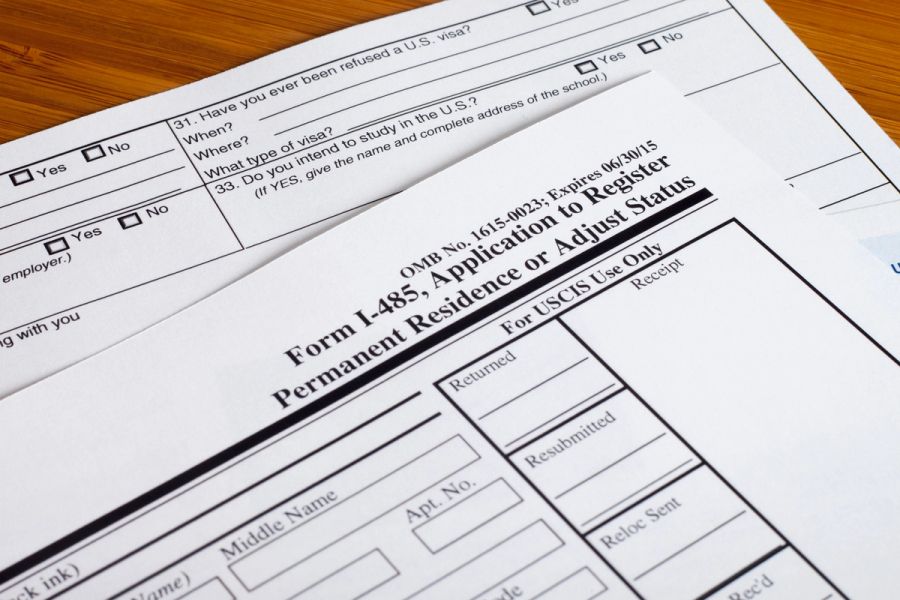
The Department of Homeland Security proposed a rule, to be published in the Federal Register on Oct. 14, 2026, that would change how U.S. Citizenship and Immigration Services (USCIS) reviews work visa extensions.
Today, officers generally approve an extension request for an H-1B, L-1, O-1, or other Form I-129 worker if nothing has changed since the last approval. Under the proposal, officers would instead review each extension as if it were a new petition.
The rule isn’t final. The public can comment on the proposal until about 30 days after it’s published in the Federal Register, which should fall on Nov. 13, 2026.
What would the deference proposal change?
Today, USCIS defers to an earlier approval when the employer, worker, and facts haven’t changed by the time an extension comes up. Officers can depart from it only for a material error, a material change, or new information that would hurt eligibility.
Without deference, a past approval would count for less. Officers could ask for new proof on points USCIS already accepted, like whether the job qualifies for the visa.
The rule would cover Form I-129 extensions, including H-1B, L-1, O-1, TN, and E visas. About 208,000 petitions a year qualified for deference in fiscal years 2022 to 2025, DHS said.
Why is DHS proposing to end deference?
DHS said deference leads officers to review extensions less closely and ask for less evidence.
USCIS adopted deference as a policy in 2004, dropped it in 2017, restored it in 2021, and made it a regulation as part of an H-1B modernization rule in December 2024.
DHS’s claimed rationale for the change is that USCIS allegedly found more fraud and noncompliance during worksite checks when deference applied. For H-1B extensions, it found fraud or noncompliance at 22.4% of the sites it visited in fiscal years 2022 to 2025, compared with 16.8% in fiscal years 2018 to 2020, when deference didn’t apply. For L-1A extensions, the rate was 24.5% compared with 18.4%.
How could this affect extension filings?
Employers should expect more requests for evidence (RFEs) and slower decisions, DHS said. When deference ended in 2017, the RFE rate for extensions rose 2.9% more than for other petitions. Denial rates stayed the same.
Extensions are already getting harder. On Sept. 9, 2026, a $4,000 H-1B fee and a $4,500 L-1 fee began applying to extensions at employers with 50 or more U.S. workers, if more than half of them hold H-1B, L-1A, or L-1B visas. DHS also proposed ending the 60-day grace period for H-1B, L-1, O-1, TN, and E workers who leave or lose their jobs.
What should employers do now?
Employers don’t have to change anything yet. Deference will stay in place unless DHS issues a final rule.
But employers can still prepare: Build each extension like a new petition, with current job duties, wage records, company documents, and proof the worker has kept up their status. Leave extra time for possible RFEs.
“Employers should be careful to file complete petitions that establish prima facie eligibility for the benefit sought,” said Jeff Joseph, President of Immigration Strategy at Manifest Law and the 79th President of the American Immigration Lawyers Association. “USCIS has already indicated that petitions that are not filed with initial evidence of eligibility can be rejected. This new proposal also means that each petition should be filed as if it were a first-time filing and no eligibility should be assumed based on a prior approval in the same category for the same position.”
The public can comment on the proposal at regulations.gov under USCIS-2026-0529 until Nov. 13, 2026. DHS must review comments before issuing a final rule. It could also change or drop the proposal.
Disclaimer. This article is for general informational purposes only and does not constitute legal advice. Reading it, or contacting Manifest Law through this site, does not create an attorney-client relationship. Immigration law changes frequently, and the information here is current only as of the publication date. For advice on your specific situation, consult a licensed attorney. Prior results do not guarantee a similar outcome. This communication is attorney advertising.
About the Author

Senior Staff Writer
Myles Ma is a veteran editor and journalist who has spent his career untangling complicated, sometimes unpleasant topics to help readers make smarter decisions. His reporting and insights have been featured in major outlets including the Washington Post, PBS, and CNBC.
Read bioReviewed By

President of Immigration Strategy
Jeff Joseph is the President of Immigration Strategy at Manifest Law and the 79th President of the American Immigration Lawyers Association, the national bar association of more than 18,000 immigration attorneys. A nationally recognized litigator and corporate immigration strategist, Jeff brings almost 30 years of experience advising employers — from global enterprises to high-growth startups — and has personally led or participated in federal litigation that reshaped the rules employers hire under, including the COVID-19 visa ban, the DOL H-1B wage rule, and the DHS specialty occupation case. Prior to joining Manifest, he was a Partner at Berry, Appleman & Leiden LLP and participated on the firm's litigation and compliance, and government strategies teams.
Read bioShare this article: