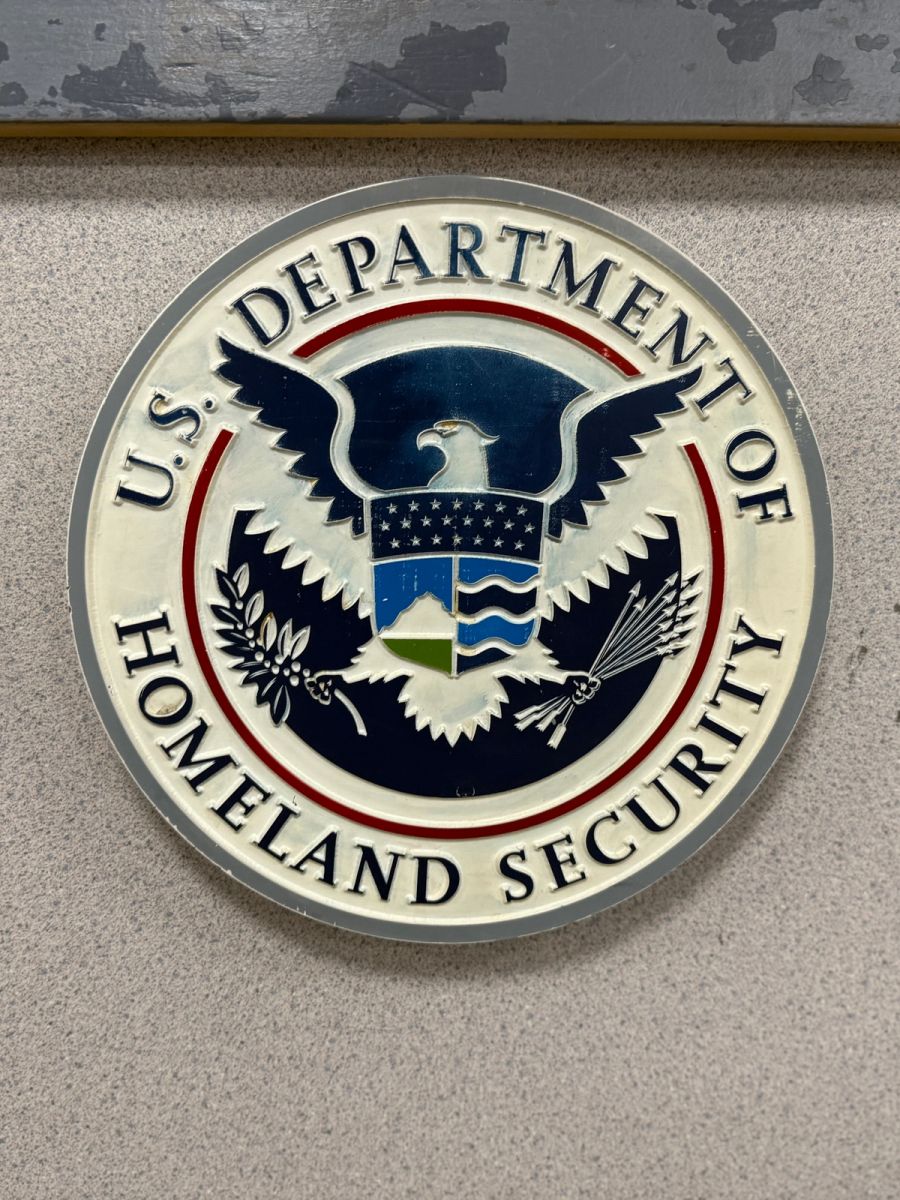
September 14, 2026: A federal judge in Massachusetts has blocked the Department of Homeland Security’s final rule that ends Duration of Status. The ruling postpones the rule’s September 15 effective date, which means the existing admission rules for F, J, and I visa holders remain in place for now.
In their decision, the judge found that the plaintiffs are likely to succeed in their challenge. However, it did not vacate the rule or issue a final decision on its legality, so the case remains ongoing.
This is a developing story. We’ll continue to update this article as more information gets released.
The Department of Homeland Security has finalized a rule that ends Duration of Status (D/S) for international students and exchange visitors. After September 15, 2026, F and J visa holders will be admitted for the length of their program, capped at four years, plus a 30-day grace period.
This embedded content is hidden until you accept functional cookies.
What is Duration of Status, and why did DHS end it?
Duration of Status (D/S) is a special period of stay designation that allows F and J visa holders to remain in the U.S. for the duration of their academic or vocational programs. On August 27, 2025, DHS announced a proposal to end D/S, arguing that the long-standing policy of admitting international students and exchange visitors for the length of their program allowed people to stay in the U.S. for indefinite periods without sufficient oversight.
DHS framed the change as a way to improve monitoring and oversight of F, J, and I categories and address program integrity and national security risks associated with open-ended D/S.
What happens to students already in the U.S. when the rule takes effect?
The final rule includes a transition period for F and J visa holders who were admitted under D/S and are inside the U.S. on September 15, 2026.
The rule does not retroactively count unlawful presence. However, if your program has already ended, your I-20 has expired, and you are not in another authorized period of stay, unlawful presence generally begins accruing on the rule's effective date unless, before that date, you have already filed:
- A reinstatement application,
- A change of status application, or
- An OPT or STEM OPT employment authorization application covered by the transition provisions.
If your program has already ended, it is important to seek legal advice before the rule takes effect.
What does the Duration of Status final rule change?
The D/S final rule makes several substantial changes to how long F, J, and I visa holders can remain in the U.S.
F and J visa holders
- Admission now matches program duration: F and J visa holders, along with their dependents, can remain in the country until the date listed on their Form I-20 or DS-2019.
- Four years is the ceiling: With admission periods being capped at four years, any international student who needs more time to complete their program will likely need to file for an extension of status with USCIS using form I-539. The 60-day grace period students had to leave after finishing a program or practical training has also been cut in half.
- Staying longer means filing with USCIS: Students who need more time, whether to finish a degree, start Optional Practical Training (OPT), or complete academic training, must file Form I-539 before their current stay runs out. A timely filing lets a student continue a full course of study while USCIS decides the application.
- Every extension gets vetted: An extension request is not a rubber stamp. DHS reviews each application fresh, may require biometrics, and holds the discretion to deny requests that fall short of the criteria.
- Transfers and program changes face new guardrails: An F-1 student must finish the first academic year at the school that issued the initial Form I-20 before transferring or changing educational objectives, unless SEVP authorizes an exception.
- At the graduate level, this policy is stricter. F-1 holders cannot change their educational objectives, and may only transfer if SEVP grants an exception for extenuating circumstances, such as a school closure. After completing a program, students can also only move up to a higher educational level, not to the same or a lower one.
- Language training has its own clock: English language training students are capped at 24 months of total stay, and the clock keeps running through breaks and annual vacations.
Media Representatives (I Visas)
- Shorter initial stays: Journalists and other foreign media workers receive up to 240 days on arrival. I-visa holders from the People's Republic of China (excluding Hong Kong and Macau) receive up to 90 days.
- Assignment-based renewals: Extensions come in blocks of up to 240 days and only cover the length of the assignment, which closes the door on indefinite stays.
Expanded Oversight and Vetting
- A built-in screening cycle: DHS frames the extension requirement as a national security tool that enables "periodic vetting." Every filing gives the agency a fresh look at a visa holder's background and compliance.
- Closer compliance tracking by DHS: Enrollment, work authorization, and school compliance will be monitored more closely through the Student and Exchange Visitor Program (SEVP) and SEVIS database.
- More paperwork for students and schools: The supporting forms are changing too. SEVIS forms (I-17 and I-20) and USCIS forms (I-539 and I-765) are being revised, which adds administrative steps on both sides.
How could the end of Duration of Status affect international students and U.S. universities?
Manifest immigration attorney Ana Gabriela Urizar says the end of D/S places a higher burden of legal status for international students and exchange visitors. "Under the new rule, F-1 and J-1 holders who need more than four years to complete their undergraduate degree likely need to file for an extension of status with USCIS," she says. "Now, more than ever, it's important to explore career options beyond the traditional way students used to."
How can international students and exchange visitors prepare for the end of Duration of Status?
With changes expected to hit by the upcoming academic year, Urizar recommends F and J visa applicants to consult with an immigration attorney as soon as possible. "Compliance will be a bigger thing to navigate once these changes go into effect, and legal counsel can help you deal with those challenges."
To talk to an immigration lawyer about your unique situation, request a consultation with Manifest Law today.
FAQs about the Duration of Status final rule
Does the Duration of Status final rule apply retroactively?
No. The rule is not retroactive, meaning DHS will not go back and count unlawful presence for time that accrued before the rule takes effect on September 15, 2026.
However, if your academic program has already ended, your I-20 has expired, and you are not in another authorized period of stay, unlawful presence may begin accruing on the rule's effective date, unless you qualify for one of the transition provisions, such as having a timely filed application for reinstatement, a change of status, or certain OPT or STEM OPT benefits.
Every situation is fact-specific, so it's important to review your status before the rule becomes effective.
About the Author
Staff Writer
Caryl Espinoza Jaen is a Nicaraguan-born staff writer for Manifest Law. As a writer, he strives to cover complex topics like immigration policy with clarity, accuracy, and precision.
Read bioReviewed By

Immigration Lawyer to Manifest Law
Ana Gabriela Urizar is an award-winning immigration attorney licensed in Arizona and New York. With nearly a decade of experience, she advises global corporations on complex U.S. immigration matters. Originally from Guatemala, Ana Gabriela previously spent close to ten years at the world’s largest immigration firm, managing business immigration matters for leading technology, science, and financial companies. She has been recognized by Best Lawyers: Ones to Watch (2027) and Negocios Now’s Tri-State 40 Under 40.
Read bioShare this article: