Fast Facts
- Matter type: EB-2 National Interest Waiver (NIW)
- Client profile: Pediatric neurologist and epileptologist, and assistant professor, with subspecialty expertise in epilepsy and clinical neurophysiology, active in multicenter clinical trials and neurotechnology research
- Industry: Academic medicine / Pediatric neurology
- Location: Applying from within the United States
- Core obstacle: The client had incomplete documentation around their role in four active research projects, which were necessary proof for the NIW’s criteria.
- Strategy focus: Used active clinical trial participation, a detailed mentor letter, and federal agency data to show the client was already advancing a nationally important research endeavor, not just proposing one.
- Dhanasar prongs addressed
- Substantial merit and national importance
- Well-positioned to advance the proposed endeavor
- On balance, beneficial to waive the job offer and labor certification requirements
- Lead attorney: Guilherme Castilho Zaia
- Filed date: March 27, 2026
- Approved date: May 8, 2026
- Request for Evidence? None
- Premium processing? Yes
Who was the client?
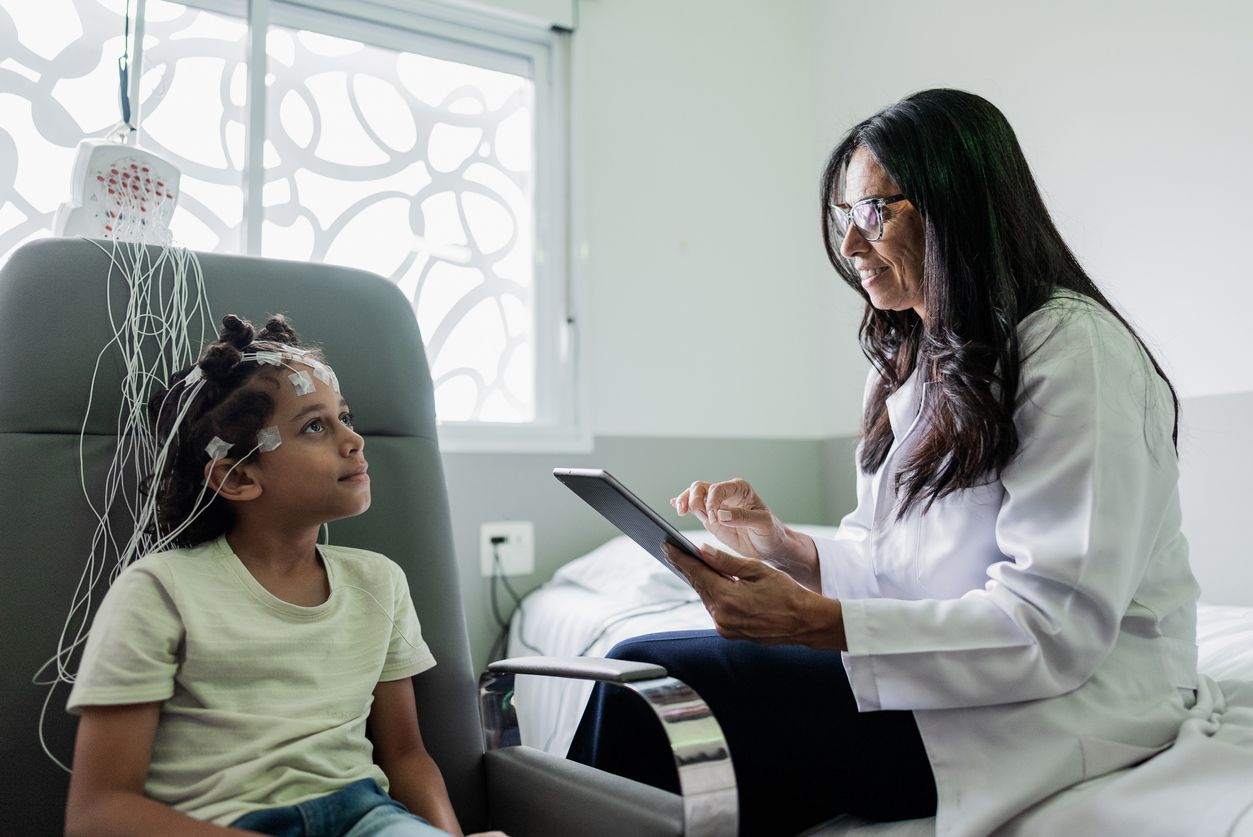
The client is a pediatric neurologist and clinical neurophysiologist specializing in epilepsy treatment. At the time they reached out to Manifest Law, they worked as an assistant professor at a major academic medical school and had worked in the United States on H-1B status for several years.
By securing an EB-2 NIW approval, the client could apply for a Green Card through an adjustment of status and pursue independent research funding and principal investigator roles without being tied to a single employer.
The problem: What made this a challenging case?
- The client had incomplete documentation of their research roles: At the time, they were contributing to four active research projects, but the institutions running them had not formally named him as an investigator in their records. That created a real evidentiary gap for a petition built on research.
- The EB-2 NIW’s prongs are highly discretionary. Unlike the O-1A, the EB-2 NIW does not use a checklist. USCIS officers apply their own judgment about what is nationally important, which creates unpredictable RFE exposure, especially in physician cases.
Guilherme Zaia’s EB-2 NIW strategy
Before drafting the petition, Manifest immigration attorney Guilherme Castillo Zaia chose to file the client’s I-140 under the standard EB-2 NIW pathway instead of the Physician NIW subclassification. He did this because the Physician NIW targets doctors who work full-time in a clinical setting at an underserved area or a Veterans Affairs office. The client worked in research, so framing him as a physician would increase the likelihood that he would receive a request for evidence.
“We did not want to approach him as a neurosurgeon. That framing is still appealing, but we have seen the rise in RFEs in NIW cases, and we did not want to leave room for discretion or subjectivity. So we went with the research project.”
As a result, Guilherme defined the proposed endeavor as improving the diagnosis, monitoring, and treatment of drug-resistant pediatric epilepsy and acute seizure emergencies.
Resolved missing research documentation through a mentor letter
Four of the client’s active research projects lacked formal records naming them as a researcher. Guilherme worked with the client’s mentor, the senior epileptologist who had recruited him for those roles, to obtain a detailed affidavit that credited the client’s specific contributions and confirmed the funding they received for their work.
As a result, Guilherme could use this document as formal proof of his client’s accomplishments.
Built a record of present participation to satisfy the well-positioned prong
A recurring weakness in NIW petitions is that the endeavor looks speculative, something the beneficiary hopes to do rather than something already underway. Guilherme addressed this by documenting active, investigator-level participation in several multicenter clinical trials.
Those studies included work on refractory pediatric epilepsy, seizure monitoring wearables, and neurotechnology-based fetal brain monitoring. The record showed USCIS that the endeavor was not contingent on future opportunities. It was already in progress.
Argued that labor certification was ill-suited to the work
For the third EB-2 NIW prong, Guilherme argued that the client’s contributions could not be meaningfully tested by a labor market inquiry. Their work spanned clinical care, protocol development, multicenter research, specialty education, and neurotechnology ventures.
No single job description would capture that combination. Requiring labor certification would obstruct work that was already underway and already serving the national interest.
Key evidence that supported this case
| Evidence type | Details |
|---|---|
| Advanced degree documentation | Medical degree and transcripts confirming the EB-2 advanced degree requirement. |
| Curriculum vitae | Comprehensive record of training, clinical appointments, and research roles. |
| Statement of proposed endeavor | First-person narrative defining the research endeavor and its national significance. |
| Federal agency documentation | Materials from government health agencies establishing the national importance of the client’s focus area. |
| National importance compilation | Research and policy materials documenting the pediatric neurology shortage, the consequences of delayed care, and the scope of drug-resistant epilepsy in children. |
| Active clinical trial materials | Independent study materials confirming investigator-level participation in multicenter trials, including a Phase 3 therapeutic trial and a seizure monitoring study. |
| Neurotechnology venture materials | Documentation from companies developing wearable and AI-assisted neurophysiologic tools, corroborating the client’s involvement. |
| Faculty appointment offer | Written confirmation of the assistant professor role, specifying clinical, research, and teaching responsibilities. |
| Mentor recommendation letter | Detailed letter from the senior epileptologist who recruited the client, documenting each project and corroborating his contributions where formal records were unavailable. |
| Board certification and licensure | ECFMG certificate, state medical licenses, and ABPN board certifications in Child Neurology and Clinical Neurophysiology. |
Outcome
The I-140 petition was filed on March 27 and approved on May 8, using premium processing. It did not receive a Request for Evidence.
Why this result mattered for the client
The approval gave the client a direct path to a Green Card and ended their dependence on employer-sponsored H-1B status. They could now pursue independent research funding, take on principal investigator roles, and collaborate across institutions without needing a new employer to sponsor their visa each time.
Their spouse, who had been on a dependent visa, would also benefit from the I-140 approval as the family moved toward adjustment of status.
Related FAQs
Why didn’t the attorney file under the physician NIW subclassification?
The physician NIW pathway requires a commitment to work full-time for five years in a federally designated underserved area or for the VA. Because the client’s goals centered on independent research rather than underserved-area clinical practice, that pathway was not the right fit. Filing under the standard NIW lets Guilherme build the case around the research endeavor.
What made the national importance argument work without leading with the shortage?
Guilherme built the national importance case around the research endeavor itself, the scope and consequences of drug-resistant pediatric epilepsy and the documented gaps in diagnosis, monitoring, and treatment. Federal agency data established why that work carries national significance. The shortage reinforced the case; it did not make it.
Why does framing an NIW as a research endeavor reduce RFE risk?
Clinical practice arguments are harder to distinguish and more exposed to discretionary scrutiny. A research-centered endeavor can be defined precisely, tied to documented national gaps, and grounded in specific ongoing projects. That precision gives USCIS a clearer basis for approval under Dhanasar.
What role did active clinical trial participation play in the approval?
The well-positioned prong requires showing the beneficiary can advance the endeavor now, not just someday. Guilherme documented active, investigator-level participation in trials already underway. That turned the second prong from a forward-looking promise into a present-tense record.
About Guilherme Castilho Zaia, Manifest immigration attorney
Guilherme Castilho Zaia earned his law degree in Brazil in 2018 and completed his JD at Penn State in 2023. He focuses on business immigration, with an emphasis on extraordinary-ability petitions and national-interest waivers.
Guilherme treats each case as a collaboration, working closely with clients to learn their field well enough to build the evidentiary narrative himself, rather than relying on clients to do it for him.
Disclaimer: Past results do not guarantee future outcomes.
About the Author
Staff Writer
Caryl Espinoza Jaen is a Nicaraguan-born staff writer for Manifest Law. As a writer, he strives to cover complex topics like immigration policy with clarity, accuracy, and precision.
Read bioReviewed By
Immigration Lawyer Co-Counsel to Manifest Law
Guilherme Castilho Zaia is an immigration attorney recognized for his strategic and personalized approach to complex immigration matters. He is a co-counsel to Manifest Law—a new kind of immigration law firm. With extensive experience representing clients from around the world, he has built a reputation for crafting compelling, detail-oriented petitions that capture both the professional achievements and personal aspirations of each client.
Read bioShare this article: