Update — June 17, 2026: The White House’s Office of Management and Budget has cleared the final rule that could limit the duration of status for F and J visas to four years.
While the final rule has not yet been published in the Federal Register, that is expected soon; the proposed rule would affect international students and certain exchange visitors when the rule takes effect. F and J visa holders already inside the U.S. and maintaining valid status would be allowed to remain through their current program end date (up to four years). After that, they would be subject to the new fixed-period rules.
For more than three decades, international students (F visas) and exchange visitors (J visas) have been admitted to the U.S. for the “duration of status” (D/S)—meaning they could remain in lawful status as long as they maintained their academic or exchange program.
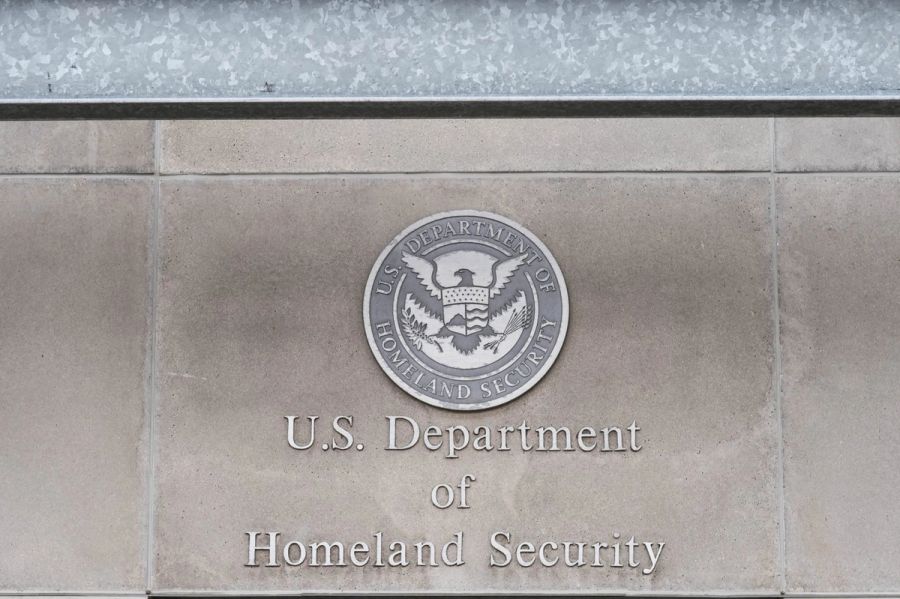
On August 28, 2025, the Department of Homeland Security (DHS) formally published a proposed rule to end D/S. If finalized, F and J visa holders would be admitted only until the end date listed on their Form I-20 or DS-2019, capped at four years plus a 30-day grace period.
Anyone needing additional time—whether to finish studies, pursue practical training, or change academic levels—would have to apply for an extension with USCIS before their status expires.
The proposed change would force more mid-program filings and could create status/work-authorization uncertainty if filings are late or denied, even though the NPRM includes some ‘while-pending’ protections.
What DHS Announced
On Aug. 27, 2025, the administration announced the proposal, characterizing it as needed to curb abuse and improve oversight. DHS argued that the long-standing policy of admitting students and exchange visitors for “duration of status” (D/S) has allowed individuals to stay in the U.S. for indefinite periods without sufficient oversight.
DHS framed the change as a way to improve monitoring and oversight of F, J, and I categories and address program integrity and national security risks associated with open-ended D/S.
What the Proposed Rule Would Do—And the Impact to Students
The proposal represents one of the most significant shifts in student and exchange visitor policy in over 30 years. DHS outlines several specific changes across different visa categories and programs:
F and J Visa Holders
- Fixed Admission Periods: Students (F visas) and exchange visitors (J visas), along with their dependents, would no longer be admitted for an open-ended “duration of status.” Instead, admission would be tied to the program end date listed on their Form I-20 (students) or DS-2019 (exchange visitors).
- Four-Year Cap: Even if a program runs longer, DHS would set a maximum admission period of four years, followed by a 30-day grace period.
- Extensions Required: Anyone needing more time—whether to complete studies, pursue Optional Practical Training (OPT), academic training, transfer schools, or change academic levels—would need to file Form I-539 (Application to Extend/Change Nonimmigrant Status) with USCIS before the expiration of their authorized stay.
- USCIS Review: Each extension request would trigger a new vetting process by DHS, with discretion to deny if criteria aren’t met or if delays occur.
Media Representatives (I Visas)
- Shorter Terms: Foreign media representatives (e.g., journalists, correspondents) would be admitted for an initial period of up to 240 days.
- Renewal Process: They could apply for extensions of up to another 240 days, but only for the length of the assignment. No long-term, indefinite stays would be possible.
Expanded Oversight and Vetting
- Regular Screening: DHS emphasizes that requiring extensions will allow for “regular assessments” of visa holders. Each extension filing would act as a checkpoint for background checks and compliance.
- SEVP & SEVIS Integration: Through the Student and Exchange Visitor Program (SEVP) and the SEVIS database, DHS aims to more closely track enrollment, employment authorization, and school compliance.
- Data Collection: The rule also proposes changes to related “information collection” instruments, including SEVIS forms (I-17/I-20) and USCIS forms (I-539, I-765). This could add administrative steps for both students and institutions.
DHS vs. Higher Ed Concerns
While DHS positions the proposal as a matter of national security and fiscal responsibility, higher education advocates warn it will cause significant disruption to the stability of foreign national students in the United States. Under the current D/S model, students can focus on their studies without having to repeatedly file with the government. A fixed-term system, they argue, creates:
- Mid-program uncertainty about whether extensions will be processed in time.
- Risk of falling out of status due to USCIS delays.
- Interruptions to work authorization for students relying on OPT or academic training.
- Financial strain on U.S. colleges, which depend heavily on international student tuition.
NAFSA and other education associations have previously projected that such changes could lead to steep declines in U.S. international enrollment—potentially a 30–40% drop, costing the U.S. economy billions.
Subscribe to our newsletter.
*By clicking Submit and subscribing to our newsletter, you agree to the Manifest Terms and Privacy Policy.
What Happens Next
The proposal will be formally published in the Federal Register on August 28, 2025, triggering:
- A 30-day public comment period on the rule itself.
- A 60-day comment period on changes to SEVIS and related USCIS forms (I-17, I-20, I-539, I-765).
From there, DHS must review comments, finalize the rule, undergo OMB review, and issue a final publication before any changes take effect. For now, no immediate impact applies to current students or scholars.
What Students Should Do Now to Prepare
Although the proposed rule has not yet taken effect, students and exchange visitors should start thinking ahead. The comment period opens on August 28, 2025, and DHS will need to review public input before finalizing any changes. Still, the proposal signals a likely shift in how student visas will be managed going forward.
Manifest Law’s Principal Immigration Attorney, Nicole Gunara, says, “This is still a proposal, so nothing changes today. But international students should use this time to prepare—review your timelines, talk to your school’s international office, and think about how this could affect your OPT or future career plans. For some, it may make sense to start exploring alternative visas, such as the O-1, to secure greater stability. The worst outcome is being caught off guard mid-degree because of a policy change.”
Looking Ahead
For now, international students and exchange visitors should remember that the proposal is just that—a proposal. Nothing changes until DHS reviews public comments, issues a final rule, and sets an effective date. Even if adopted, students will not be forced out overnight; there will be time to adjust, file extensions, and explore other pathways.
While the rule raises valid concerns about added uncertainty and bureaucracy, students who stay proactive—keeping their documents updated, planning ahead for possible filings, and exploring long-term visa options—can continue to build their future in the United States.
To talk to an immigration lawyer about your unique situation, request a consultation with Manifest Law today.
For a deeper look, see our guide: USCIS Proposes Changes to AR-11 Address Form.
About the Author

Content Lead
Haley Davidson is Manifest Law's Content Lead, covering all topics related to U.S. visas and Green Cards. She's passionate about making complex topics easy to understand, like immigration law.
Read bioReviewed By

Senior Immigration Attorney at Manifest Law
Henry is an Estonian American attorney licensed in Arizona with broad experience in employment-based immigration. He handles EB-1A, EB-2 NIW, O-1, and E-2 cases for founders, professionals, and creatives across industries worldwide, and has helped hundreds of clients achieve successful outcomes.
Read bioShare this article: