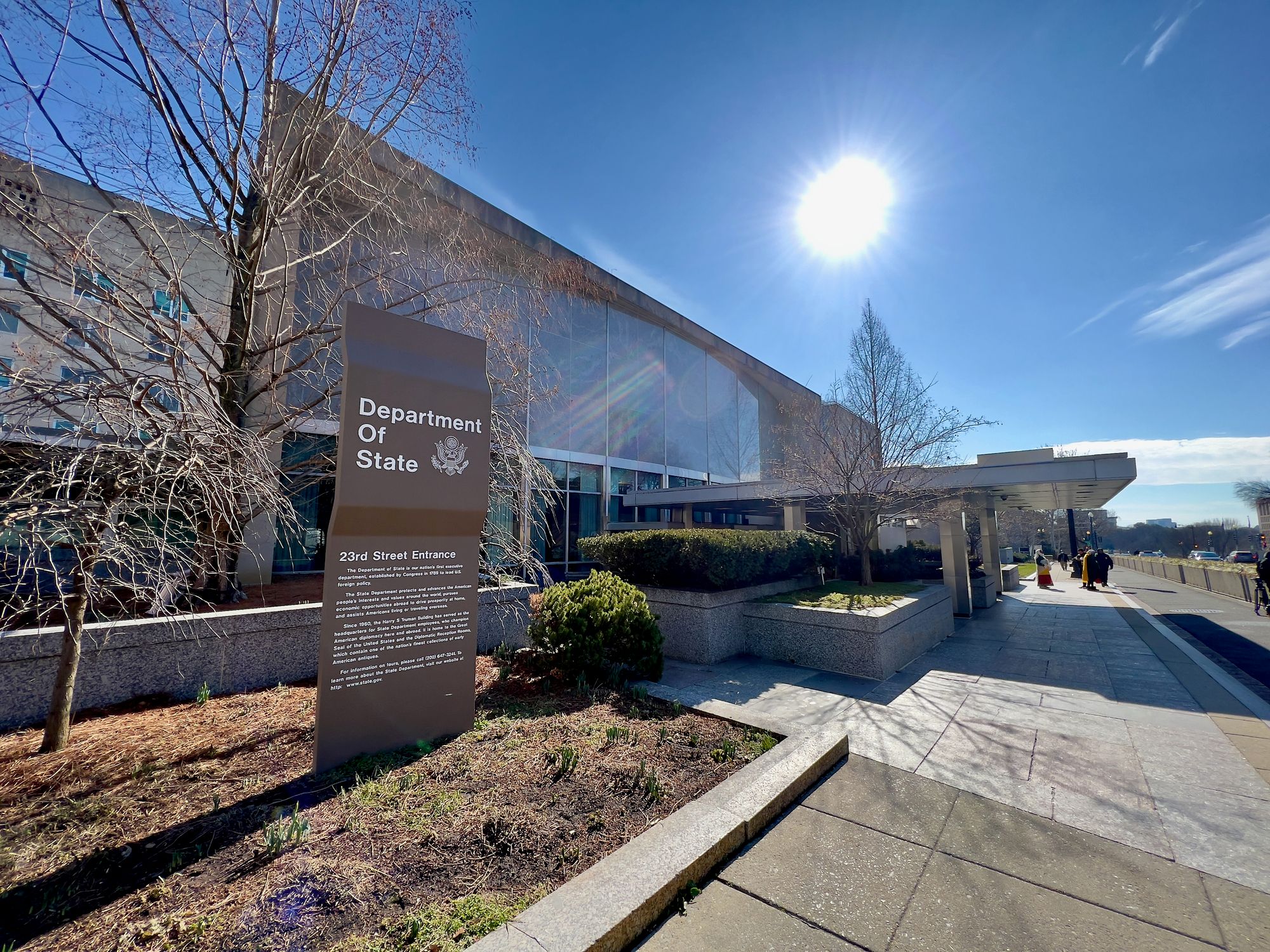
On July 30, 2026, the U.S. Department of State (DOS) will publish a proposal that will change how J-1 exchange visitor programs get terminated, extended, and reinstated when a SEVIS record falls out of status.
If implemented as is, the rule would add falsifying information as a mandatory ground for terminating a J-1 program, set a hard three-month deadline on extension requests beyond a category's maximum duration, delete the separate au pair extension timeline, and replace the tiered reinstatement system with a single 30-day SEVIS self-correction window.
What does the proposed rule change for the J-1 program?
Jeff Joseph, President of Immigration Strategy at Manifest Law and the 79th President of the American Immigration Lawyers Association, says the State Department rule would change the J-1 program in the following ways:
New ways a J-1 program can end
Sponsors already have to end a program when a J-1 holder stops pursuing or cannot continue the activity they were admitted for, breaks sponsor rules, or lets their required insurance lapse.
Should the proposed rule go into effect, a sponsor would also have to terminate a foreign exchange visitor's status if they falsify or fail to give complete, accurate information and documents either in the application or during the program. Examples mentioned by the State Department include proof of a U.S. address, educational qualifications, or attendance at the site of activity.
Changes sponsors' abilities to end J-1 programs
In addition, the proposal removes the word "willfully" from the J-1 visa's insurance grounds, which require holders to maintain health insurance throughout their stay. If implemented without changes, that could mean even an accidental lapse could result in a loss of status.
The proposal would also drop violations of the Exchange Visitor Program regulations themselves as a mandatory termination ground. Right now, sponsors must end a J-1 holder's status if they break the rules of their exchange program or the State Department's regulations. The proposed rule would only require sponsors to terminate for breaking their own rules, which could make it easier for J-1 holders to maintain status.
Gives the State Department more discretionary power
Under the proposal, the DOS could terminate the J-1 program when the DOS or the Department of Homeland Security (DHS) has revoked or canceled the exchange visitor's visa with immediate effect. Right now, a J-1 "status" does not end when a foreign national loses their visa through revocation. If this occurs, the J-visa holder would have to leave right away or risk removal.
Grounds for revocation, according to the proposed rule, include unauthorized employment.
Extensions get a hard deadline
If the proposed rule goes into effect, a sponsor would have to email supporting documentation to the State Department no later than three months before the desired extension period begins, along with proof of payment of the non-refundable extension fee and documentation justifying the extension. Sponsors can already extend a J-1 program in SEVIS up to the maximum period allowed for the category, and they still need State's approval to go past it.
Au pairs lose their own extension track
Currently, sponsors of J-1 au pairs can request an extension of status for six, nine, or 12 months, with applications due at least 30 calendar days before the initial authorized stay expires. The proposal moves au pair extension rules out of their standalone provision and into the general extension section, though the rule's own preamble and its codified text describe this differently, so we're seeking clarification on which controls.
To Joseph, the suggested change here is about consistency and compliance. "The government is eliminating the different deadlines that apply to the au pair program so that all extension requests have the same deadline," he says. "It also forces sponsors into strict compliance with those deadlines. Late submissions will not be acceptable."
Reinstatement rules get simpler, with new limits
Today, exchange visitor program violations are categorized as either minor or technical infractions, substantive violations, and non-reinstatable violations. If implemented, the proposal would combine the first two brackets, and sponsors would get 30 days from the date a record went into the wrong status to use the "Correct SEVIS Status" action and put it back to Active or Inactive, with no application to State and no fee.
What happens next?
Because this is only a proposed rule, the changes outlined above are not in effect. The State Department will accept comments on this rule until September 28, 2026, which the agency will then review to finalize its rule.
"For now, J-1 participants and sponsors are on notice as to what the intended rule is designed to achieve," Joseph says. "Stakeholders who are impacted by the rule should make sure to submit comments before the deadline."
Comments on this proposed rule can be submitted through regulations.gov or JExchanges@state.gov with "RIN 1400-AF23" in the subject line.
About the Author

Staff Writer
Caryl Espinoza Jaen is a Nicaraguan-born staff writer for Manifest Law. As a writer, he strives to cover complex topics like immigration policy with clarity, accuracy, and precision.
Read bioReviewed By

President of Immigration Strategy
Jeff Joseph is the President of Immigration Strategy at Manifest Law and the 79th President of the American Immigration Lawyers Association, the national bar association of more than 18,000 immigration attorneys. A nationally recognized litigator and corporate immigration strategist, Jeff brings almost 30 years of experience advising employers — from global enterprises to high-growth startups — and has personally led or participated in federal litigation that reshaped the rules employers hire under, including the COVID-19 visa ban, the DOL H-1B wage rule, and the DHS specialty occupation case. Prior to joining Manifest, he was a Partner at Berry, Appleman & Leiden LLP and participated on the firm's litigation and compliance, and government strategies teams.
Read bioShare this article: