On September 16, USCIS clarified that it will continue to honor certain editions of Form I-485, I-765, and I-539. Read our news coverage to find out why.
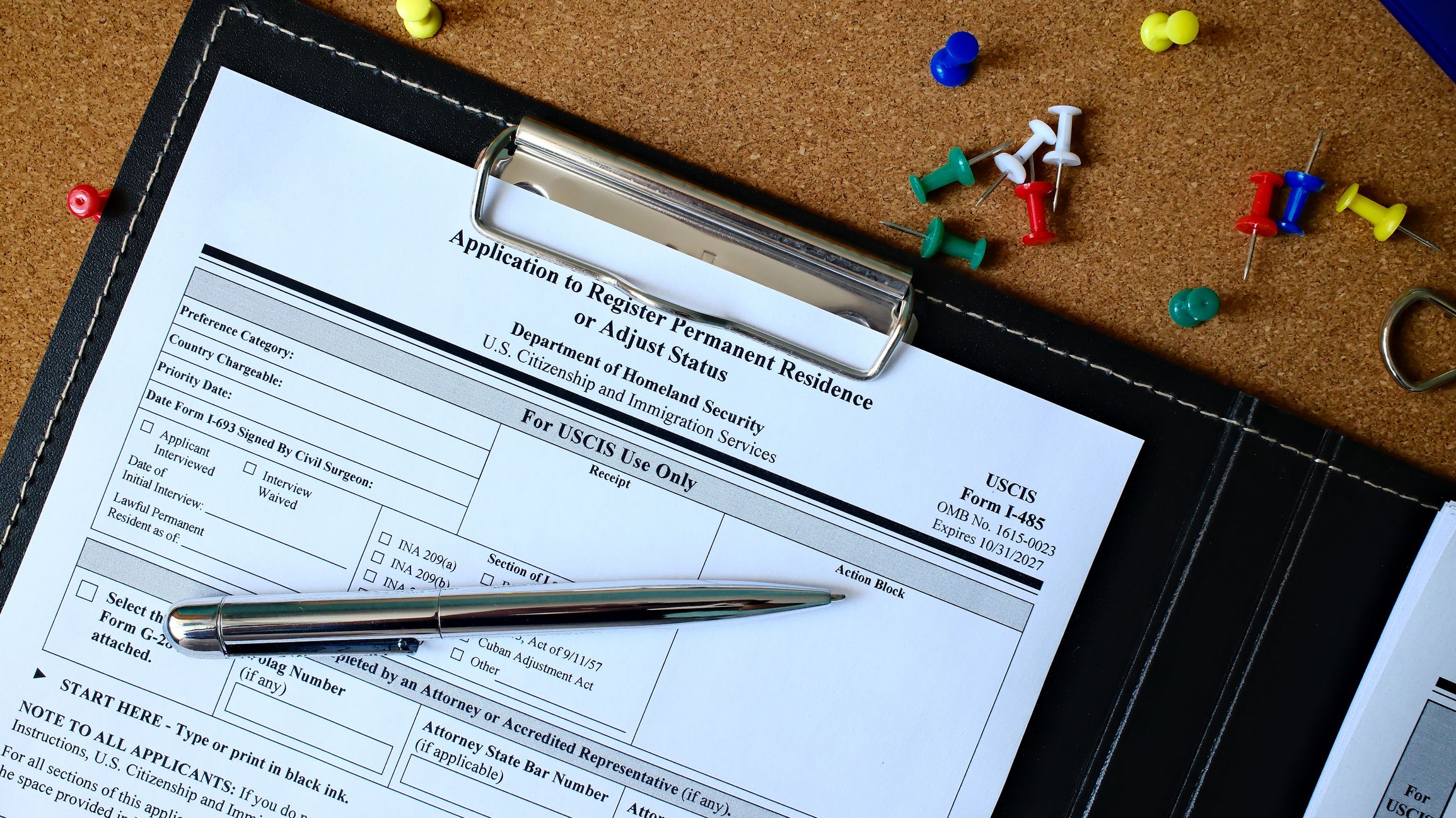
USCIS is rolling out a new edition of Form I-485, the application people use to apply for a Green Card from inside the United States. There will be no grace period once it goes into effect.
The new edition, dated 09/18/26, implements the changes outlined in the Department of Homeland Security’s public charge final rule. That rule takes effect September 18, 2026, the same day the updated form becomes mandatory, and asks adjustment of status applicants to disclose prior use of means-tested public benefits.
What are the new filing deadlines?
U.S. Citizenship and Immigration Services (USCIS) has outlined a strict deadline between the current form and its new edition.
- Before September 18, 2026: USCIS will accept the current 01/20/25 edition of Form I-485, as officers continue to use the more narrow 2022 public charge standard.
- On or after September 18, 2026: Applicants must file the new 09/18/26 edition. USCIS will reject the older edition if it's postmarked or submitted electronically on or after that date. By this date, officers will take into account all means-tested public benefits.
- Pending and pre-filed cases: Adjustment of status applications received before September 18 will be assessed under 2022 guidelines, even if USCIS decides the case after that date.
What changed between the new and current I-485 editions?
The main change between the current and upcoming Form I-485 edition lies in Part 9: the public charge section.
The current edition asks two separate questions: Whether an applicant ever received cash assistance, such as Supplemental Security Income or Temporary Assistance for Needy Families, and if they accepted long-term institutionalization paid for by the government.
In contrast, USCIS’s new I-485 petition only asks whether the beneficiary ever received any means-tested public benefit. If a Green Card applicant answers yes, they must list the benefit, the dates they received it, the dollar amount, and the reason they needed it.
How does this new I-485 edition impact Green Card applicants in the U.S.?
Manifest immigration attorney Ana Gabriela Urizar says the most important thing applicants can do right now is check the edition date at the bottom of the form before they file. “If you submit the wrong version on or after September 18, USCIS will automatically reject your case,” she says. “While that's different from a denial, which goes in your record, it can still delay your case by weeks.”
Urizar also pointed to the new combined benefits question as a bigger evidentiary lift than it looks. “Just as the final rule suggested, applicants who've ever used a public benefit now need to be ready to document it in one consolidated table: what they received, when, how much, and why,” she said. “Of course, prior usage of this means-tested assistance doesn't automatically result in a denial, but people should start pulling together those records now instead of waiting.”
This is a developing story. We'll continue to update this article as more information gets released.
About the Author

Staff Writer
Caryl Espinoza Jaen is a Nicaraguan-born staff writer for Manifest Law. As a writer, he strives to cover complex topics like immigration policy with clarity, accuracy, and precision.
Read bioReviewed By

Immigration Lawyer to Manifest Law
Ana Gabriela Urizar is an award-winning immigration attorney licensed in Arizona and New York. With nearly a decade of experience, she advises global corporations on complex U.S. immigration matters. Originally from Guatemala, Ana Gabriela previously spent close to ten years at the world’s largest immigration firm, managing business immigration matters for leading technology, science, and financial companies. She has been recognized by Best Lawyers: Ones to Watch (2027) and Negocios Now’s Tri-State 40 Under 40.
Read bioShare this article: