If you have accrued more than 180 days of unlawful presence and hold Advance Parole, traveling abroad on that document can now trigger a 3- or 10-year bar on returning. Everyone else with a pending adjustment of status application, including anyone in valid nonimmigrant status who has not accrued unlawful presence, is not affected.
The Board of Immigration Appeals (BIA) ruled on August 13, 2026 that leaving the United States on advance parole counts as a departure under immigration law. U.S. Citizenship and Immigration Services (USCIS) has since posted an alert confirming it is applying that reading.
For someone who reaches more than 180 days of unlawful presence (which triggers the 3-year bar) or more than a year (which triggers the 10-year bar), an international trip abroad can now make them inadmissible on return, affecting their ability to adjust status and secure a Green Card.
However, the decision only applies prospectively. If you traveled and reentered before August 13, 2026, you should not be affected.
What does inadmissible mean for immigration? Being inadmissible means you are not legally allowed to enter the U.S., obtain a visa, or get a Green Card because you meet specific disqualifying criteria.
Who is affected by the BIA decision on advance parole?
The decision does not affect all foreign nationals who use advance parole to travel internationally. You may be affected if all three of these are true:
- You have accrued more than 180 days of unlawful presence in the United States.
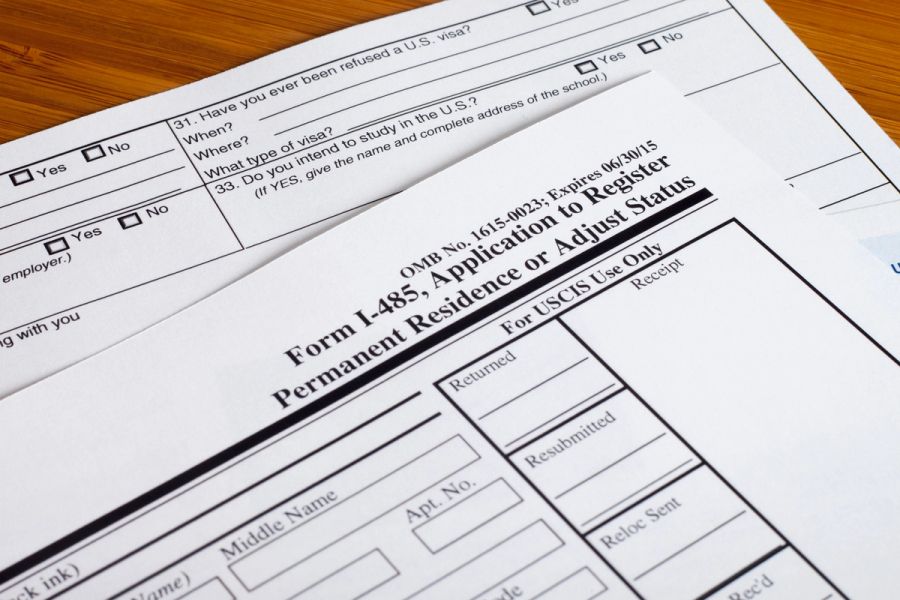
- You have a pending green card application (Form I-485) or have an Advance Parole document (e.g., pursuant to Temporary Protected Status (TPS))
- You are planning to travel abroad on advance parole (Form I-131).
You are not affected in any of these situations, assuming you are otherwise admissible:
- You hold a valid nonimmigrant status such as H-1B or L-1 and you travel utilizing that visa rather than on advance parole.
- You have accrued no unlawful presence, whatever status you hold.
- You already traveled on advance parole and reentered the U.S. before August 13, 2026, even if you had accrued unlawful presence.
What did the BIA decision on advance parole actually find?
The Board held that the word “departure” under the Immigration and Nationality Act (INA) has no exception for people who leave the country temporarily on advance parole. That statute makes someone inadmissible if they were unlawfully present for a year or more and then seek admission within 10 years of leaving.
The decision itself is narrow on this point: the Board ruled only on the 10-year bar that applies at one year or more of unlawful presence. However, USCIS has taken a broader interpretation, stating in its alert that the agency will apply the same rule to the 3-year bar.
In 2012, the Board read the statute the opposite way. It found that advance parole travel was qualitatively different from other departures, because it assumes the traveler will be allowed back and will keep pursuing their adjustment of status application.
The Board’s new analysis rests on a plain language reading of “depart” and “departure” which are not defined anywhere in the INA. The BIA reasoned that the ordinary dictionary meaning is simply to go away or leave, and Congress wrote in no language exempting any category of departure.
What should you do now?
Your next step depends on which group you fall into.
- If you have a pending I-485 or Advance Parole, and any period of unlawful presence, do not travel on advance parole until you have spoken with your attorney.
- If you hold valid H-1B, L-1, or similar status, and assuming you are otherwise admissible, you can travel on your underlying visa as you normally would. If you happen to hold advance parole as well, it is advisable to use the visa rather than the parole document, especially if you have accrued unlawful presence.
- If you already traveled on advance parole and returned, the prospective-only BIA ruling means this decision does not apply to that trip. Raise it at your next attorney check-in for peace of mind.
- If you are an employer or HR leader, the direct impact on a typical employment-based population should be minimal. Employees who maintain status and travel on their visas are generally unaffected. The likelier scenario is questions from employees who saw a headline and want reassurance.
If you’re unsure of whether this affects you, Manifest immigration attorney Sairah Saeed says you should contact an immigration attorney. “If you are unsure about whether you have accrued unlawful presence and are considering traveling on Advance Parole, reach out to your attorney before making final plans.”
This is a developing story. We’ll continue to update this article as more information becomes available.
Frequently asked questions
Does traveling on advance parole trigger the unlawful presence bar?
It can, as of August 13, 2026. The BIA ruled on the 10-year bar, which applies to people who have accrued one year or more of unlawful presence. USCIS has said it is applying the same reading to the 3-year bar, which starts at more than 180 days. For either group, travel on advance parole counts as a “departure.” Travelers with no unlawful presence do not trigger any bar, assuming they are otherwise admissible, because the statute is only triggered on seeking admission after a departure.
Is this decision retroactive?
No. The Board explicitly decided to apply its holding prospectively only. It declined to decide whether the traveler in this very case had made a “departure.” If you traveled and reentered on advance parole before August 13, 2026, this holding should not affect you.
I have an approved advance parole document. Is it still valid?
Your document remains valid, and this decision does not revoke it. What has changed is the consequence of using it if you have accrued more than 180 days of unlawful presence. Safely using it is now something to consider.
Does this affect people with a pending I-130 but no I-485 yet?
Advance parole is tied to a pending adjustment application, so someone with only a pending I-130 generally has no advance parole to travel on. If you are weighing whether to file an I-485 and then travel, raise the sequence with your attorney before you file.
Does the decision change anything about DACA or TPS?
The traveler in this case was a DACA recipient with a final removal order, so the decision touches that population factually. It does not announce any new rule specific to DACA or TPS but the decision should be read to apply to those traveling pursuant to AP.
Can a waiver still help?
Congress created a waiver of the 212(a)(9)(B) inadmissibility grounds at INA 212(a)(9)(B)(v), and the Board mentioned it in its reasoning. Whether you qualify depends on your qualifying relatives and the facts of your case. You should discuss it with your attorney.
Does this apply to the 3-year bar or only the 10-year bar?
The BIA’s holding addressed only the 10-year bar, but USCIS’s alert is broader and refers to both the 3- and 10-year periods. If you have between 180 days and one year of unlawful presence, the 3-year bar could apply. If you have a year or more of unlawful presence, the 10-year bar could apply.
About the Author

Staff Writer
Caryl Espinoza Jaen is a Nicaraguan-born staff writer for Manifest Law. As a writer, he strives to cover complex topics like immigration policy with clarity, accuracy, and precision.
Read bioReviewed By

Legal Quality Lead
Former Associate General Counsel at USCIS overseeing various agency training and professional responsibilities programs. Prior to USCIS, Sairah was a trial attorney at the Department of Justice in Washington DC. Before her work in the public sector, Sairah was in the private sector as an attorney in leading immigration law firms handling a variety of cases ranging from litigation and litigation support to business immigration and naturalization cases.
Read bioShare this article: