Key Takeaways
- The N-400 approval rate sits near 90%. USCIS has approved roughly nine in 10 naturalization applications across the quarters it has reported through FY 2026 Q1, with the denial rate edging past 10%.
- Denials may arise from a few eligibility issues. N-400 denials generally arise from good moral character, continuous residence and physical presence, or the English and civics tests.
- 2026 brings closer scrutiny. An August 2025 USCIS policy memo on good moral character, the return of neighborhood investigations, and a new 128-question civics test for filers on or after October 20, 2025 all raise the bar on documentation.
- A denial is not the end. Form N-336 asks USCIS to review a denial within 180 days before a different officer, and an applicant can reapply with a new N-400 once the underlying problem is resolved.
Where N-400 Approval and Denial Rates Stand in 2026
USCIS approves roughly nine in ten naturalization applications. The N-400 approval rate has held near 90% through the most recent quarter USCIS has reported (FY 2026 Q1, about 89%), with a denial rate near 10%. Naturalization remains one of the higher-approval filings USCIS handles, well above categories like the EB-2 NIW, where the FY 2025 approval rate was 55.2%.
That stability sits next to a tighter 2026 backdrop. USCIS revised its good moral character standard in August 2025, brought back neighborhood investigations, and put a longer civics test in front of anyone who filed on or after Oct. 20, 2025. None of that has moved the approval rate yet, but it raises the cost of a thin or inconsistent application.
What Is the N-400 Approval Rate in 2026?
The approval rate is the share of completed N-400s that USCIS approves rather than denies, approvals divided by approvals plus denials. By that measure, naturalization approval has stayed close to 90% across the quarters USCIS reports in its Form N-400 performance data, running near 91% earlier in FY 2025 before easing to about 89% in the first quarter of FY 2026 as the denial rate rose past 10%. USCIS had not published a full-year FY 2025 naturalization statistics report as of July 2026, though quarterly performance data runs through FY 2026 Q1.
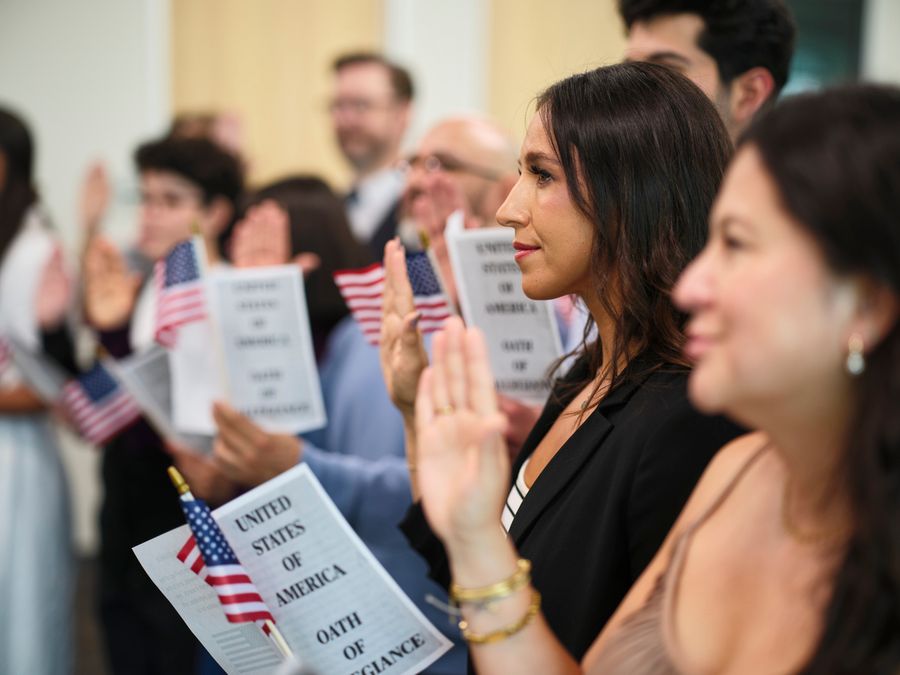
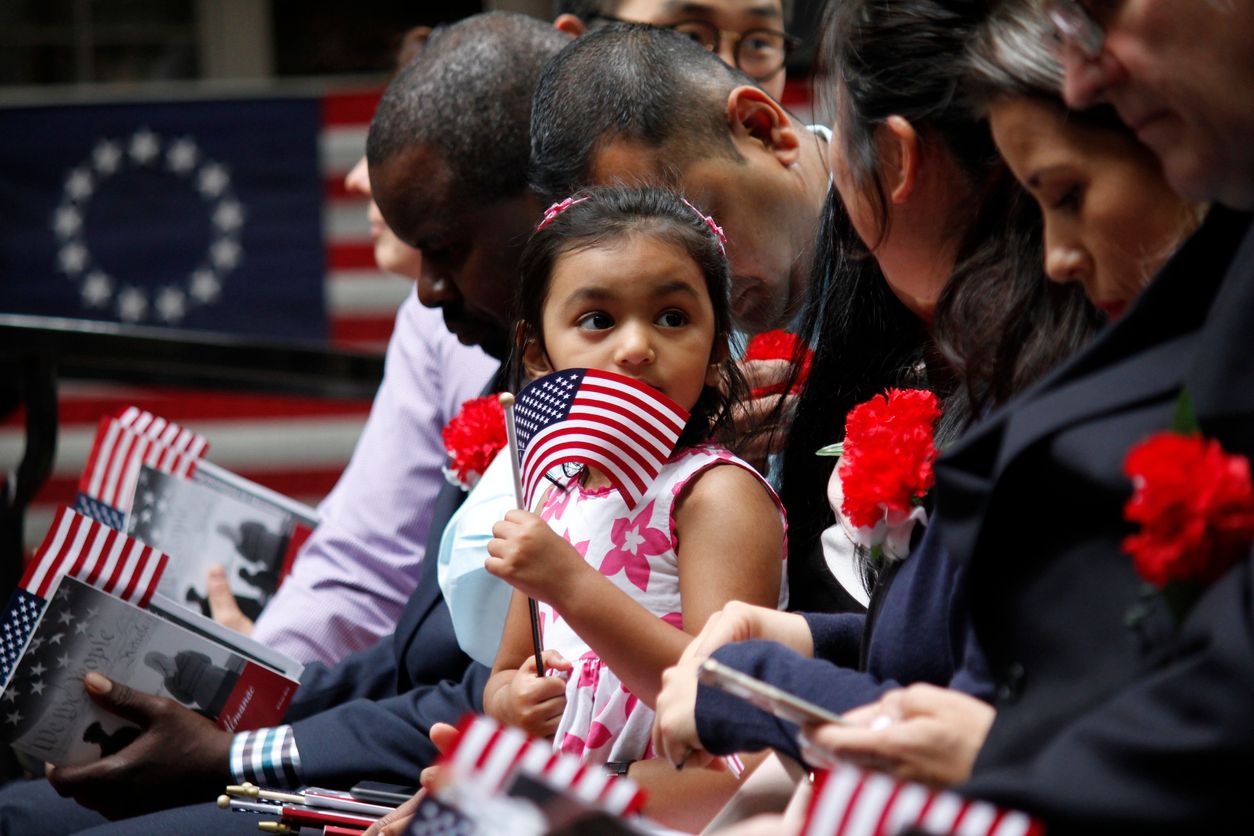
These adjudication counts are separate from the number of people who took the oath of citizenship in a given year, which USCIS reports as 818,500 for FY 2024, down from 878,460 in FY 2023 and 969,380 in FY 2022. Oath totals track how many cases finished and ceremonies were held; the approval rate tracks how USCIS decided the cases it adjudicated.
The figure worth holding next to the approval rate is the wait, and there the movement has been toward speed. The Congressional Research Service, drawing on USCIS data, reports the median N-400 processing time fell from 11.5 months in FY 2021 to about 5.5 months over the first nine months of FY 2025, even as roughly 536,000 applications sat pending as of March 31, 2025. A backlog changes how long an applicant waits; it does not change the odds that a well-documented case is approved.
How the N-400 rate compares to other USCIS filings
A 90% approval rate is high for USCIS work. The contrast with employment-based Green Card categories is stark: the EB-2 NIW approval rate, tracked in Manifest's analysis of the latest EB-2 NIW data, dropped from 71% in FY 2024 to 55.2% in FY 2025. Naturalization sits at the opposite end because it is a status-confirmation step rather than a discretionary merits test. An applicant who already holds a Green Card, meets the residence clock, and passes the tests has met an objective checklist, not made a case for why their work serves the national interest.
That difference shapes where the risk lives. For an employment-based Green Card petition, the hard part is persuading USCIS the petition qualifies. For the N-400, the hard part is making sure a fact in the applicant's own history, a long trip abroad, an old arrest, an unfiled tax year, does not collide with a statutory requirement.
Why N-400 Applications Get Denied
The roughly one in ten N-400s that USCIS denies often fail on a small set of requirements set by the Immigration and Nationality Act and applied through the USCIS Policy Manual. Each is documentable before filing.
Good moral character
An applicant must show good moral character during the statutory period, the five years before filing under the general rule and three years for spouses of U.S. citizens, and USCIS can look beyond that window too. The bars range from permanent (murder, an aggravated felony) to conditional (offenses that block naturalization during the statutory period but not for life). USCIS applies a rebuttable presumption that someone with two or more DUI convictions in the statutory period lacks good moral character. False testimony to obtain an immigration benefit, failure to file required tax returns, and willful failure to pay court-ordered child support all bear on the analysis.
The August 15, 2025 USCIS policy memorandum, "Restoring a Rigorous, Holistic, and Comprehensive Good Moral Character Evaluation Standard for Aliens Applying for Naturalization," directs officers to weigh positive factors alongside the absence of misconduct and to apply closer scrutiny to disqualifying conduct, including a pattern of traffic offenses. A memo dated August 22, 2025 directed officers to resume neighborhood investigations under INA 335(a). Both raise the value of disclosing and documenting the full record rather than leaving an officer to surface it.
Continuous residence and physical presence
Naturalization requires continuous residence as a lawful permanent resident, five years under the general rule and three for spouses of citizens, plus physical presence in the U.S. for at least half of that period, 30 months out of 5 years. Trips abroad are where this trips people up. An absence of more than six months but less than a year creates a rebuttable presumption that continuous residence was broken, which an applicant can overcome with evidence of ongoing ties such as a maintained job, home, and tax filings. An absence of a year or more breaks continuous residence outright; the applicant generally cannot file again until 4 years and 1 day after returning (under the 5-year rule), rather than waiting a full fresh five years.
The English and civics tests
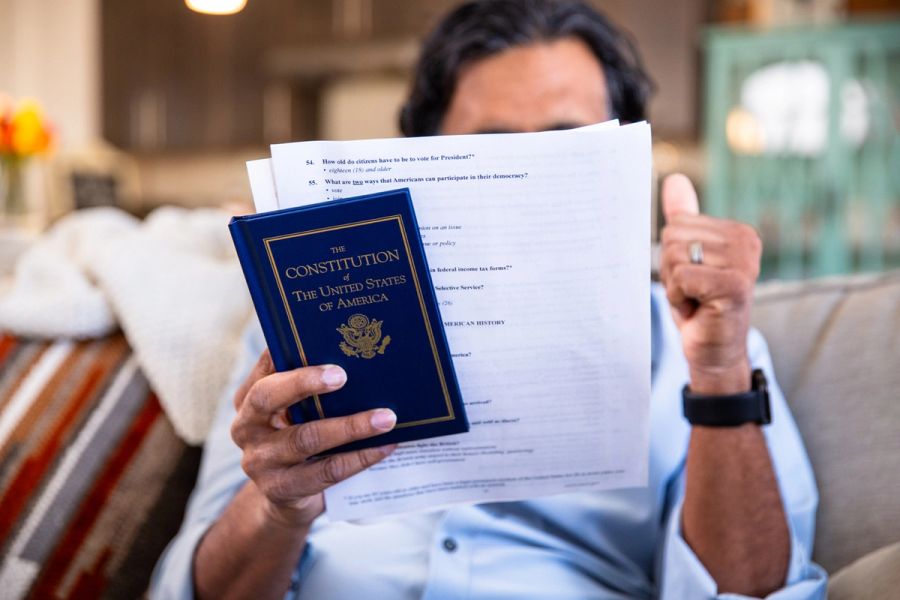
Applicants read, write, and speak basic English and answer civics questions at the interview. The format depends on the filing date. An N-400 filed before October 20, 2025 uses the 2008 test: officers ask up to 10 of 100 possible questions, and 6 correct passes. An N-400 filed on or after October 20, 2025 uses the 2025 civics test, which draws from a 128-question bank, asks 20, and requires 12 correct to pass. A failure is not an automatic denial: USCIS reschedules a second exam 60 to 90 days later and re-tests only the failed portion. Failing the second time results in a denial.
Exemptions exist based on age and time as a permanent resident. Under the "50/20" rule, an applicant who is 50 or older and has lived in the United States as a green card holder for at least 20 years is exempt from the English requirement and takes the civics test in their native language. The "55/15" rule works the same way for applicants who are 55 or older and have been permanent residents for at least 15 years: they too skip the English test and take civics in their native language. Under the "65/20" rule, an applicant who is 65 or older and has been a permanent resident for at least 20 years is exempt from English and takes a simplified civics test drawn from 20 specially designated questions. Separately, a qualifying medical disability documented on Form N-648 can waive the English and/or civics requirements.
Selective Service, disclosure, and the interview
A male applicant who knowingly and willfully failed to register for Selective Service between ages 18 and 26 can be found to lack good moral character or attachment to the Constitution, though the effect fades once the failure falls outside the statutory period. Omitting a material fact on the N-400 or giving inconsistent testimony at the interview can sink a case on its own, because USCIS pulls FBI records and prior filings and compares them to the form. Missing the interview without good cause leads USCIS to deny or administratively close the application.
What a Denial Means, and What Comes Next
A denied N-400 is reviewable. Form N-336, Request for a Hearing on a Decision in Naturalization Proceedings, asks USCIS to take a second look, and it must be filed within 30 days of the denial (33 if the decision was mailed). USCIS schedules a hearing within 180 days before an officer different from the one who issued the denial. If that hearing also ends in denial, the applicant can seek review in federal district court under INA 310(c), where the court decides the question fresh rather than deferring to USCIS.
Whether to appeal or reapply depends on why the case was denied, which is the first thing to pin down after reading the decision. A denial that turns on a fixable gap can be cleaner to cure with a new N-400 than to litigate: someone denied for breaking continuous residence can file again once they have rebuilt the required time, and someone who failed the test can file a new N-400 and sit the exam again.
How Manifest Law Approaches Naturalization Cases
The variables that decide an N-400 are almost all on the applicant's side of the table, and they are knowable before filing. Manifest's immigration attorneys focus on the inputs a firm actually controls: confirming the residence and physical-presence math against travel history, surfacing and documenting anything in the record that touches good moral character, and preparing the applicant for the interview and the civics test version that applies to their filing date. Reducing the risk of a request for evidence or an avoidable denial is where preparation pays off, since a clean filing moves through the queue without the detours that add months.
Manifest works across the path that leads to naturalization, from employment-based green cards through the years of permanent residence that make an applicant eligible to file. The firm charges a flat, published per-case fee with no hourly billing, and clients track every step, document request, and deadline through the Manifest client portal. To see where you stand, request a consultation.
Frequently Asked Questions
What is the N-400 denial rate?
USCIS has denied roughly one in ten naturalization applications, a denial rate near 10% that has held through the most recent reported quarter, FY 2026 Q1. The denial rate is the share of completed applications USCIS denies rather than approves, reported in USCIS Form N-400 performance data.
Why was my N-400 denied?
Common reasons for N-400 denials can include: good moral character problems, a break in continuous residence or physical presence from extended travel, and failing the English or civics test twice. Other grounds include failure to disclose a material fact, unresolved tax or child-support obligations, a Selective Service registration issue, or missing the interview. The denial notice states the specific ground, which determines whether an appeal or a new application is the better response.
Can I appeal an N-400 denial?
Yes. File Form N-336 within 30 days of the denial (33 days if it was mailed) to request a hearing, which USCIS holds within 180 days before a different officer. If the N-336 hearing is also denied, you can ask a U.S. district court to review the decision de novo under INA 310(c).
How long does naturalization take in 2026?
The Congressional Research Service, drawing on USCIS data, reported a median N-400 processing time of about 5.5 months over the first nine months of FY 2025, down from 11.5 months in FY 2021. Processing time runs separately from the approval rate; it affects how long the case takes, not the likelihood of approval. USCIS posts current times by field office, and Manifest tracks them on its USCIS processing times page.
Does a long trip abroad affect my application?
It can. An absence of more than six months but less than a year creates a rebuttable presumption that you broke continuous residence, which you can overcome with evidence you kept your home, job, and tax ties in the U.S. An absence of a year or more breaks continuous residence, after which you generally must wait 4 years and 1 day from your return to file again (under the 5-year rule), so timing the application around travel history matters.
Disclaimer. This article is for general informational purposes only and does not constitute legal advice. Reading it, or contacting Manifest Law through this site, does not create an attorney-client relationship. Immigration law changes frequently, and the information here is current only as of the publication date. For advice on your specific situation, consult a licensed attorney. Prior results do not guarantee a similar outcome. This communication is attorney advertising.
About the Author
Staff Writer
Reviewed By

Immigration Lawyer to Manifest Law
Ana Gabriela Urizar is an award-winning immigration attorney licensed in Arizona and New York. With nearly a decade of experience, she advises global corporations on complex U.S. immigration matters. Originally from Guatemala, Ana Gabriela previously spent close to ten years at the world’s largest immigration firm, managing business immigration matters for leading technology, science, and financial companies. She has been recognized by Best Lawyers: Ones to Watch (2027) and Negocios Now’s Tri-State 40 Under 40.
Read bioShare this article: