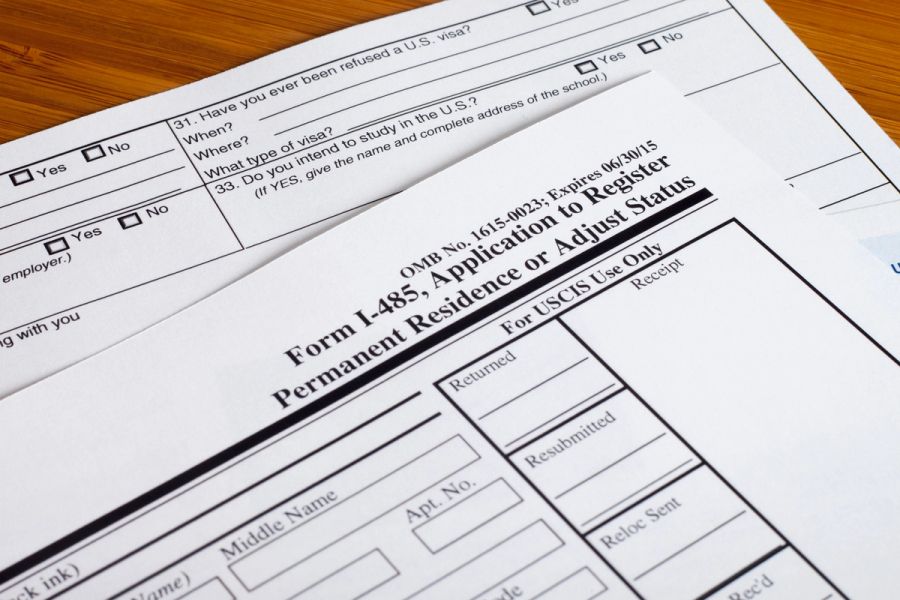
U.S. Citizenship and Immigration Services (USCIS) has withdrawn its plan to rewrite the rules for employment-based Green Cards.
The agency pulled the proposal, called Petition for Immigrant Worker Reforms (RIN 1615-AC85), from the federal Unified Agenda on November 12, 2025. USCIS confirmed the withdrawal in the Department of Homeland Security's Semiannual Regulatory Agenda, which appeared in the Federal Register on August 13, 2026.
Why did DHS and USCIS withdraw this proposed rule?
Nicole Gunara, Principal Immigration Attorney at Manifest Law, says we may never know the full reasons, but it's worth putting the withdrawal in context with the recent Mukherji decision.
“USCIS has long used a second step in EB-1A cases. A petitioner meets three of the regulatory criteria, and then an officer decides separately whether the person is truly extraordinary,” she says. “That second step came from an internal memo, not from a regulation.”
Earlier this year, a federal court in Nebraska held the agency could not build a requirement that way, vacated the denial, and ordered the petition approved. USCIS appealed and then dropped the appeal. The standards this rule would have codified now rest on a shaky foundation. “A future proposal either runs that second step through notice and comment or leaves it to policy. Either one is a different rule than what was on the agenda,” Gunara explains.
What the withdrawn rule would have changed for EB-1s, EB-2s, and beyond
According to DHS's summary in the Spring 2025 Unified Regulatory Agenda, the Petition for Immigrant Worker Reforms rule would have modernized how the government evaluates and administers employment-based immigrant petitions. Here's what the proposal would have covered, based on DHS's own description. None of it ever became law.
1. Codifying existing USCIS policy guidance
Many key standards for employment-based petitions currently live in the USCIS Policy Manual, not in federal regulation. The rule would have moved these long-standing internal policies into official regulatory text. Examples include:
- Successorship in interest: What happens when one company acquires or merges with another and assumes immigration obligations.
- Ability to pay: The evidence an employer must provide to show it can pay the offered wage.
By formally writing these principles into law, DHS said the change would have created more consistent and predictable USCIS decisions on employment-based Green Card petitions.
2. Clarifying EB-1A, EB-1B, EB-2 NIW evidentiary requirements
The rule also would have clarified what kinds of documentation are required for specific immigrant classifications, including EB-1A, EB-1B, EB-2 NIW, and physicians of national or international renown.
Right now, officers interpret these requirements through policy memos and precedent decisions such as Matter of Dhanasar. Codifying these evidentiary standards would have given USCIS officers a clearer checklist for evaluating petitions. The intention was likely to reduce room for subjective interpretation and help cases move more consistently and efficiently through the system.
3. Updating outdated provisions
Many of the rules for employment-based green cards were written more than 30 years ago. Back then, companies looked very different. Startups weren't raising global capital. Remote work barely existed. Contractors and cross-border teams were rarely, if ever, part of the system.
The rule would have updated parts of the federal immigration regulations so they reflect how businesses actually operate today, instead of relying on language written for a 1980s-era workplace.
4. Strengthening program integrity
According to what was listed at Reginfo.gov, DHS had also planned to reinforce oversight and fraud prevention by:
- Defining what qualifies as a bona fide job offer,
- Clarifying site visit authority for immigrant petitions (similar to H-1B compliance checks), and
- Expanding internal integrity and verification tools.
These measures were meant to ensure petitions reflect legitimate employment relationships without adding unnecessary burden for compliant employers.
5. Correcting technical errors
Finally, DHS had planned to fix typographical and cross-reference errors in the regulations that have caused confusion in past adjudications.
What happens now that the rule is withdrawn
USCIS withdrew this rule before it ever reached the public. That means:
- No Notice of Proposed Rulemaking (NPRM) was ever published.
- The public never got a chance to review or comment on a draft.
- Current EB-1, EB-2, and EB-3 regulations remain exactly as they were before DHS listed this proposal in 2025.
Here's how the rule's status changed over time:
| Stage | What It Means | Status |
|---|---|---|
| Spring 2025 | DHS adds the rule (Petition for Immigrant Worker Reforms, RIN 1615-AC85) to the Unified Regulatory Agenda. | ✅ Completed |
| November 12, 2025 | USCIS withdraws the rule from the Unified Agenda, before publishing any draft text. | ✅ Completed |
| January 2026 (originally planned) | DHS's original target date for publishing a draft rule (Notice of Proposed Rulemaking). | ❌ Never happened — withdrawn first |
| 2026 | The current Unified Agenda no longer lists this rule at all. | ✅ Confirmed |
DHS has not said whether it will revisit these changes under a new rulemaking in the future. For now, there's no pending proposal, no comment period, and no timeline to track.
What this means for skilled immigrants and employers
If you're an employer or a skilled immigrant, this news doesn't change anything about the employment-based Green Card process. The rules USCIS uses today to evaluate EB-1, EB-2, and EB-3 petitions are the same ones that were in place before DHS proposed this rule, and they'll stay that way unless USCIS starts a new rulemaking from scratch.
In the meantime, here are a few tips from Manifest Law's Principal Immigration Attorney, Nicole Gunara:
- Employers should review their immigration-related strategies, opting to accelerate cases that would benefit with the existing system while exploring methods to improve evidence on behalf of their employees.
- Individuals pursuing EB-1 or NIW petitions can keep building strong evidence: publications, media, letters, or proof of national impact — with an eye directly on higher quality of evidence; think “proofs of the proof.”
- Everyone should treat the current USCIS Policy Manual as the governing standard, since the codification effort that would have replaced parts of it is no longer moving forward.
Should I file now, or file later?
With this rule withdrawn, there's no pending change to evidentiary standards for EB-1A or EB-2 NIW petitions to wait for. The standards in the current USCIS Policy Manual and case law, including the Kazarian and Dhanasar frameworks, still apply.
That said, U.S. immigration policy is always evolving. Think of it like waiting at the DMV: the earlier you take your ticket, the sooner you'll reach the front of the line, even if the process moves slowly. Filing your EB-1A or EB-2 NIW green card application now puts you in the queue ahead of future applicants, so when your turn comes, you're already well-positioned.
About the Author

Content Lead
Haley Davidson is Manifest Law's Content Lead, covering all topics related to U.S. visas and Green Cards. She's passionate about making complex topics easy to understand, like immigration law.
Read bioReviewed By

Princ. Immigration Attorney
Nicole is the founding legal architect and an immigration attorney with extensive experience across extraordinary ability, employment-based, and investment visas. As the founding legal architect, Nicole helped shape the engine of Manifest Law to serve our clients as effectively and strategically as possible.
Read bioShare this article: