Key Takeaways
- Concurrent filing allows you to submit your I-140 (or I-130) and I-485 together, potentially saving months in the Green Card process.
- You must have a current priority date under your immigration category before filing both forms.
- If eligible, filing concurrently can help you reach the final step in the Green Card process faster.
If you’re working toward a Green Card, you know the application process can stretch for months or even years. And if your current status expires before your Green Card is approved, that uncertainty can feel stressful and risky.
That’s where concurrent filing comes in. Concurrent filing means you can file Forms I-140 (or I-130) and I-485 at the same time, if you’re eligible. While it doesn’t reduce your filing fees, it may save valuable time—and when it comes to moving forward with your career and life in the U.S., timing can make all the difference.
Clear guidance, without the legal jargon. This article is informed and reviewed by Manifest Law’s experienced immigration attorneys—and written to make the law make sense. Because you deserve to understand the system, not fight it. Check out our editorial policy for more info.
What is concurrent filing?
Concurrent filing is the process of submitting two major parts of your Green Card application at the same time. Normally, you would file your immigrant petition (Form I-140 or I-130), wait for it to be approved, and only then file your I-485 to adjust status. That gap can add months or years of wait time before you actually receive your Green Card.
Concurrent filing is only an option when a visa number is immediately available in your category—or in other words, when your priority date is current on the Visa Bulletin. If it’s not current, you’ll need to wait before filing your I-485.
You might be eligible for concurrent filing. Though many categories on the Visa Bulletin are currently backlogged, the EB-1 category is Current for all countries except China and India (as of November 2025). That means some applicants may be eligible for EB-1A concurrent filing. An experienced EB-1 immigration attorney can help you decide if this is the right path for your unique situation and immigration goals.
Understanding the two-stage Green Card process
To truly understand the benefits of concurrent filing and who’s eligible, let’s take a closer look at how the Green Card process works for most applicants applying from within the United States.
Stage 1: The immigrant petition
This is the foundation of your immigration case, the petition that shows you qualify for a Green Card. Employment-based applicants must have Form I-140 filed on their behalf, while family-based applicants must have Form I-130 filed on their behalf.
If you’re self-petitioning under EB-1A or EB-2 NIW, you file the I-140 yourself. You won’t need employer sponsorship or a job offer if you qualify. If you’re filing under other categories like the EB-3 visa, your employer would handle this step.
Stage 2: Adjustment of status
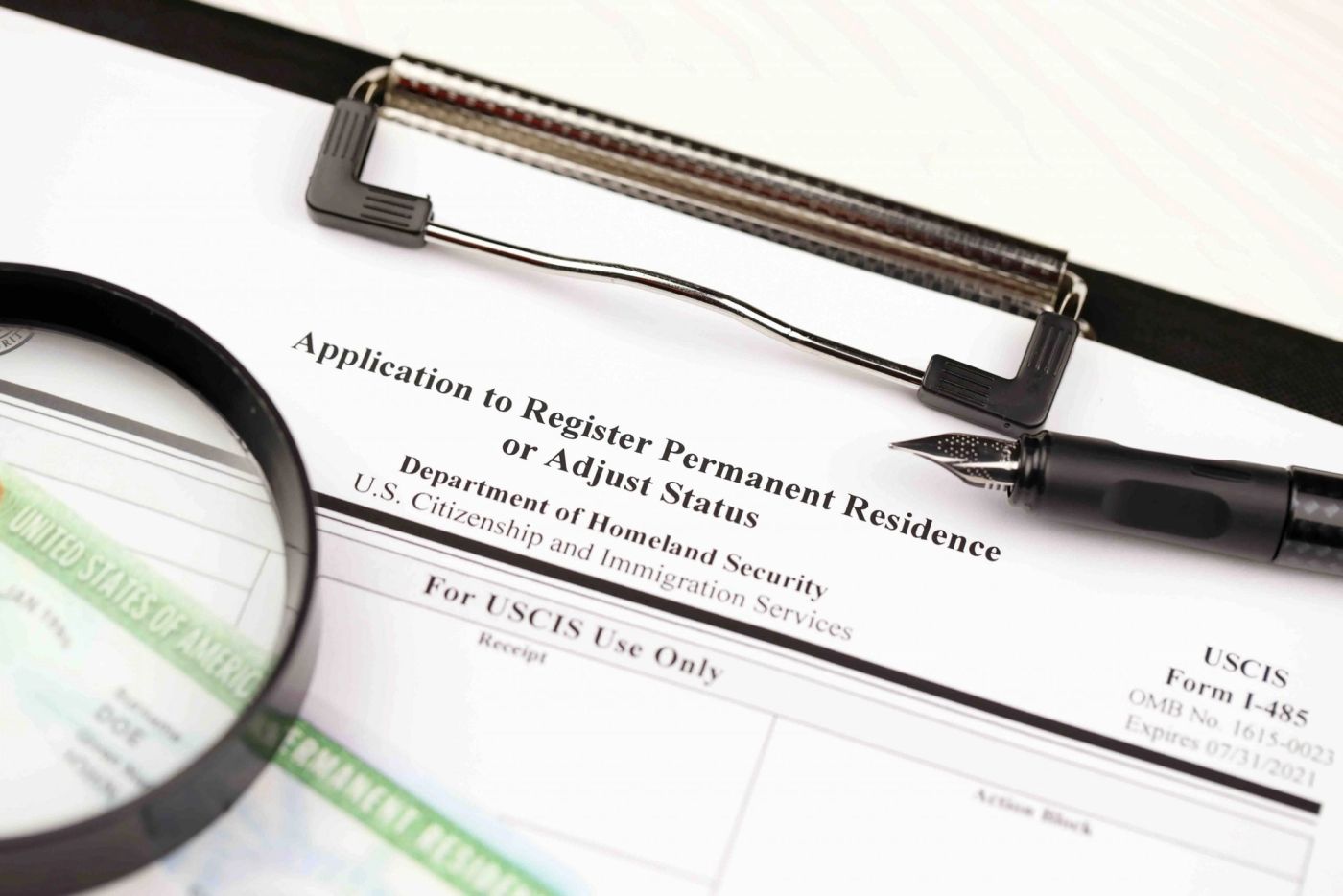
When a visa number is available, you can file Form I-485 to adjust status to lawful permanent resident. This is the actual Green Card application.
In many cases, you must wait for Stage 1 approval—and there may even be a waitlist after that—before moving to Stage 2. This gap can last anywhere from a few months to several years, depending on your immigration category and country of birth.
If you’re applying for your Green Card from outside the United States, concurrent filing usually isn’t an option—except in rare emergency cases. In urgent situations, like if a U.S. military service member abroad needs to return home with a non-U.S. citizen spouse, the U.S. embassy can agree to process the I-130. These exceptions are limited to immediate relatives of U.S. citizens and are evaluated on a case-by-case basis.
Immigration lawyer explains the benefits of concurrent filing
When you concurrently file your immigrant petition and your adjustment of status form, U.S. Citizenship and Immigration Services (USCIS) still reviews the immigrant petition first. However, because both forms are pending at the same time, your Green Card application can start moving forward without waiting months—or years—in between processing.
Manifest Law’s Senior Counsel Henry Lindpere explains:
“The main benefit of concurrent filing is that applicants can receive a temporary work permit while the I-485 is pending. That allows them to begin or continue working, even if they currently lack work authorization or it’s about to expire. It can also slightly speed up the overall process, since USCIS can start the background checks for the I-485 while processing the I-140 or I-130.
But there’s a risk applicants should understand: the I-485 depends entirely on the underlying petition. If the I-140 or I-130 is denied, the I-485 is automatically denied too. So for some people, it may not be worth paying the I-485 filing fee upfront, especially if the petition has a high chance of rejection. Whether concurrent filing is the right move depends on each applicant’s immigration status, finances, and personal and professional priorities.”
USCIS processing times are always changing. Learn more about current processing times for Form I-140, Form I-130, and beyond in our comprehensive guide here.
When can I use concurrent filing for my Green Card application?
Concurrent filing is only an option when a visa number is immediately available in your category. That depends on your priority date (the date USCIS received your petition) and whether that date is “current” in the U.S. Department of State’s monthly Visa Bulletin.
If your date is current, you can file your immigrant petition (Form I-140 or I-130) and your Green Card application at the same time. You’ll also need to have your supporting documents ready, such as a job offer or employment verification letter, if needed for your Green Card category, and a record of your medical exam (Form I-693 completed by a certified civil surgeon).
Here are some examples of who may be eligible to file concurrently for a Green Card:
- Immediate relatives of U.S. citizens —spouses, unmarried children under 21, and parents (when the sponsoring child is over 21)
- Employment-based applicant,including self-petitioners (EB-1A and EB-2 NIW) and employer-sponsored petitions (EB-2, EB-3), when a visa number is available
- Self-petitioning battered spouses or children under the Violence Against Women Act (VAWA), if their abuser is a U.S. citizen or if an immigrant visa is available under their preference category
Remember that concurrent filing is only available if you are physically present in the United States and applying for an adjustment of status. It doesn’t apply to consular processing cases handled through a U.S. embassy or consulate abroad. Note that in consular processing cases, the Department of State (DOS) does not begin processing until USCIS has approved the immigrant petition and notified the DOS of the approval.
Did you know? Unlike employment-based cases—where applicants may sometimes reuse an old priority date from a previous petition—family-based applicants cannot carry over a priority date. This means there’s no option for concurrent filing in backlogged family categories. The I-130 must be filed and approved first, and the I-485 can only be filed (or consular processing begun) once a visa number becomes available.
How to file concurrently for your Green Card: step-by-step
Here’s how the concurrent filing process works, step by step:
1. Confirm visa availability on the Visa Bulletin
Check the monthly Visa Bulletin to make sure a visa number is available for your category and country of birth. For immediate relatives of U.S. citizens, visa numbers are always available, and your filing category will not even be listed in the Visa Bulletin.
Tip: For details on how to read the Visa Bulletin and track your category, see our guide on how to read the USCIS Visa Bulletin explainer.
2. Prepare your immigrant petition (Form I-140 or I-130)
Your immigrant petition establishes your eligibility for a Green Card. The form depends on who’s sponsoring you:
- Employment-based applicants: Your employer prepares Form I-140, listing you as the beneficiary. If self-petitioning under EB-1A or EB-2 NIW, then you fill out the I-140 yourself.
- Family-based applicants: Your U.S. citizen relative fills out Form I-130.
3. Prepare your I-485 (Adjustment of Status)
This is your actual Green Card application. You’ll include:
- Completed Form I-485
- Two passport-style photos
- Copy of your passport, current visa, and birth certificate
- Medical exam (Form I-693) from a USCIS-approved civil surgeon
- Proof of lawful entry and current status in the U.S.
- Financial documentation (Form I-864 or assets), if needed for your visa category
Most applicants also file Form I-765 (for an Employment Authorization Document) and Form I-131 (for Advance Parole) at the same time.
This article is for general information only and is not legal advice. If your Form I-485 is denied, consult with an immigration attorney right away to understand your options. Manifest Law is here to help. Request a consultation here.
4. Submit both forms to USCIS at the same time
Send your immigrant petition, I-485, and all supporting materials in the same package to the USCIS. Current filing fees are $715 for Form I-140 or $675 for the I-130, $1,440 (by mail) or $1,390 (online) per I-485, and other fees, like the asylum fee for employment-based cases, may apply. If you are filing the I-765 and I-131 at the same time, the current fees are $260 and $630, respectively.
USCIS will process your forms together. The immigration petition (I-140 or I-130) is reviewed first. If approved, and your visa number is still available, USCIS will continue processing your I-485.
Important: The listed filing fees here are accurate as of November 2025 and are subject to change. We always recommend checking USCIS’s official Filing Fees page or consulting with your immigration attorney for the most up-to-date information on filing fees.
5. Complete biometrics and interview, if required
USCIS will schedule a biometrics appointment to take your fingerprints and photos for background checks. Some cases require an interview, but many employment-based I-485s are approved without one.
How Manifest Law can help
Concurrent filing can be a smart way to shorten the path to a Green Card—but it requires precision. Filing too early or without the right supporting evidence can mean you waste months of time and thousands in fees.
At Manifest Law, we work with professionals who’ve already built careers worth recognizing—researchers, engineers, founders, and artists who want stability in the U.S. We help you:
- Confirm your eligibility and readiness to file
- Evaluate whether concurrent filing fits your timing and visa strategy
- Prepare a strong petition
- Strategically time your I-485 application to protect your status and your family’s future
- Handle the entire immigration process so you can focus on your work—not your paperwork
If you’re weighing your Green Card options, it helps to talk it through with someone who’s done it before. Our attorneys can help you chart the smartest path forward, based on your goals and timeline.
👉 Request a consultation with Manifest Law’s experienced immigration lawyers and get the clarity you need to move forward.
About the Author

Content Lead
Haley Davidson is Manifest Law's Content Lead, covering all topics related to U.S. visas and Green Cards. She's passionate about making complex topics easy to understand, like immigration law.
Read bioReviewed By

Senior Immigration Attorney at Manifest Law
Henry is an Estonian American attorney licensed in Arizona with broad experience in employment-based immigration. He handles EB-1A, EB-2 NIW, O-1, and E-2 cases for founders, professionals, and creatives across industries worldwide, and has helped hundreds of clients achieve successful outcomes.
Read bioShare this article: